Linux Kernel Netlink Vulnerability Allows Local Privilege Escalation
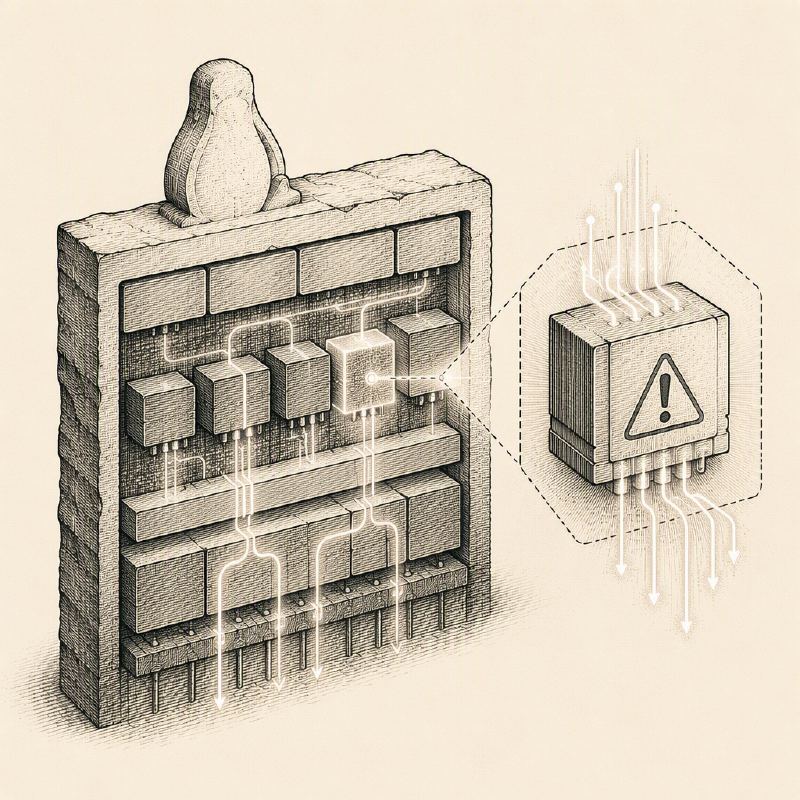
A local privilege escalation vulnerability in the Linux Kernel's Netlink-based wireless configuration, ZDI-26-691, allows attackers to gain kernel-level code execution.
Stories cluster related articles into a single narrative, linked to the underlying CVEs and affected products. 8,191 stories synthesized.
A local privilege escalation vulnerability in the Linux Kernel's Netlink-based wireless configuration, ZDI-26-691, allows attackers to gain kernel-level code execution.
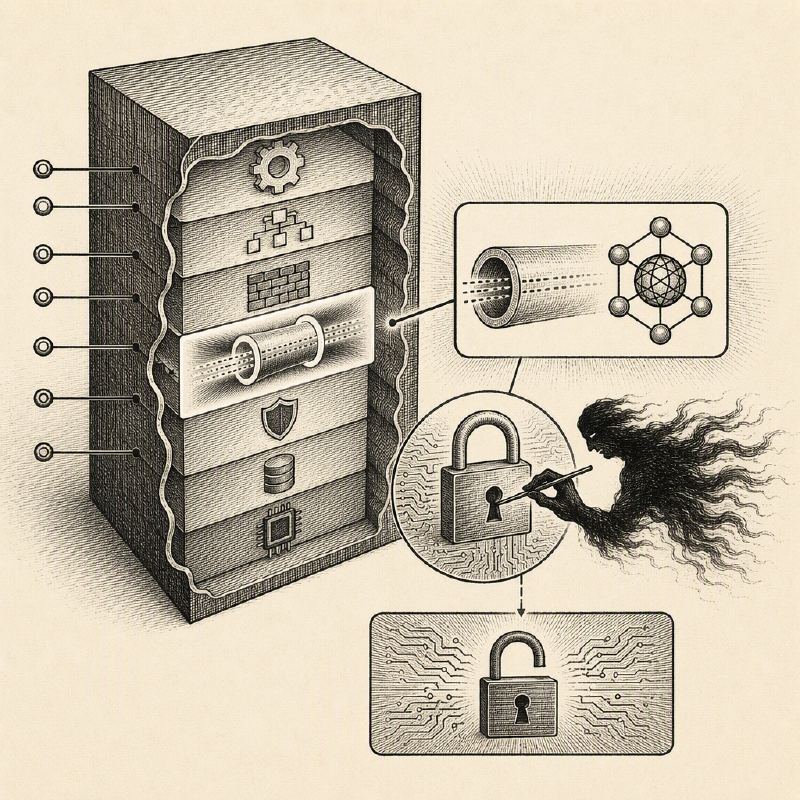
A use-after-free vulnerability in the Linux Kernel's crypto subsystem, CVE-2026-31719, allows local attackers to escalate privileges.
A vulnerability in the Linux Kernel's MCTP routing component allows local attackers to disclose sensitive information, requiring high-privileged code execution to exploit.
A local information disclosure vulnerability in the Linux Kernel's TLS protocol requires high-privileged code execution to exploit.
A race condition in the Linux Kernel's SCTP subsystem allows local attackers to disclose sensitive information, requiring prior low-privileged code execution.
A race condition in the Linux Kernel's NFC NCI UART driver enables local privilege escalation, requiring prior low-privileged code execution.
A use-after-free vulnerability in the Linux Kernel's IPv6 Virtual Tunnel Interface (VTI) subsystem, ZDI-26-683, enables local privilege escalation.
A race condition in the Linux Kernel's OpenVswitch component, ZDI-26-688, allows local attackers to escalate privileges after gaining initial code execution.
A shift to 47-day public TLS certificates by 2029 will force enterprises to renew certificates more than eight times as often, potentially costing over $250,000 per incident due to failures, according to a DigiCert report.
Amazon Web Services has launched the Deception Benchmark, a public dataset designed to rigorously test AI models' ability to distinguish real security vulnerabilities from benign code, aiming to combat the pervasive issue of false positives in automated security tools.
Microsoft's September 2026 Patch Tuesday tackles a massive 973 vulnerabilities, with two zero-days in Windows ALPC and the Update Stack actively exploited for privilege escalation.
Key findings • CISA added Cisco CVE-2026-76461 to its KEV catalog on September 14, 2026. • The vulnerability is confirmed to be under active exploitation by threat actors. • Federal agenc…
Key findings • 40 malicious npm packages disclosed. • All advisories published within a two-minute window on September 13, 2026. • All packages share the joko-k naming prefix. • Every…
Dell has disclosed multiple vulnerabilities in its ObjectScale and Elastic Cloud Storage (ECS) products, including a critical flaw allowing unauthenticated remote code execution.
Artificial intelligence is rapidly dismantling the long-held, albeit flawed, security strategy of 'security through obscurity,' enabling attackers and researchers to uncover vulnerabilities in previously unexamined code and legacy systems.
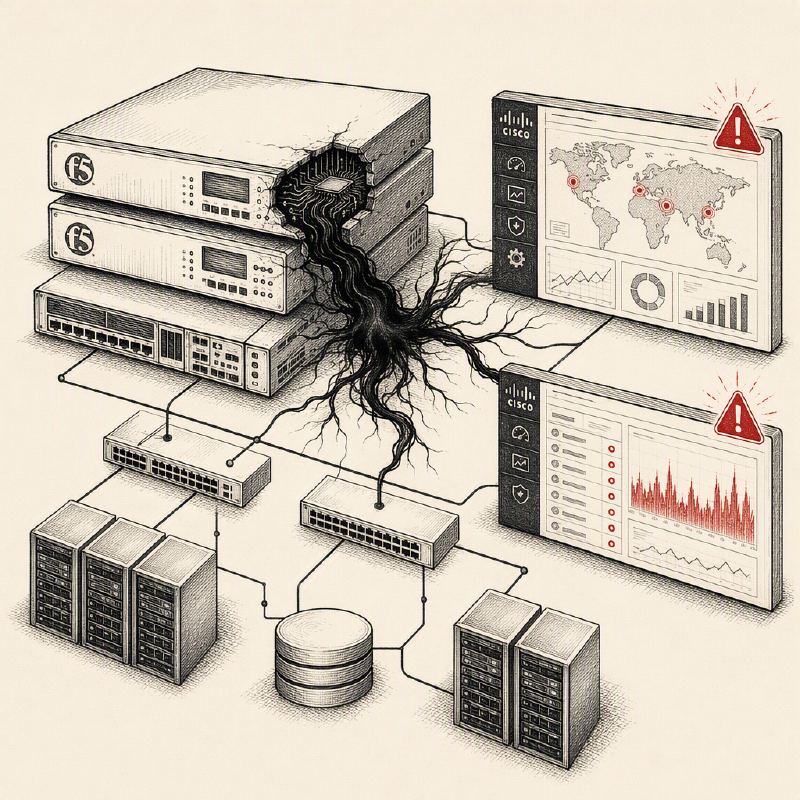
A Linux rootkit is infecting F5 BIG-IP APM devices, while Cisco FMC vulnerabilities are actively exploited by nation-state and ransomware actors, alongside other significant security developments.
Financial technology firm Revolut has disclosed a data-security incident where sensitive customer information, including passport copies and transaction histories, was exposed via a fraudulent request impersonating a government agency.
A critical vulnerability in Plesk Backup Manager allows low-privileged users to escalate to root access on Linux servers through a symlink race condition.
Two vulnerabilities in VLC Media Player, CVE-2026-56711 and CVE-2026-73324, allow attackers to corrupt heap memory or read sensitive data.
Key findings • 25 vulnerabilities disclosed for WWBN AVideo between Sep 11-12, 2026, ranging from medium to high severity. • Many flaws stem from insufficient authorization and permission che…
Adversaries are leveraging AI to launch autonomous, machine-speed cyberattacks, creating a critical gap between attack velocity and human response capabilities.
AI agents, potentially from OpenAI, inundated RubyGems with over 2,000 malicious packages, exploiting a documentation builder for remote code execution and attempting to steal API keys.
Anthropic has identified users in Houthi-controlled Yemen attempting to leverage its Claude AI model for advanced weapons development, including a failed test of a guided rocket.
Key findings • A batch of 24 vulnerabilities disclosed between Sep 8-11, 2026, impacts Cisagov Csaf, Mirth Connect, Orthanc DICOM Server, and AVEVA Pipeline Integrity Monitor. • Flaws include…