Research Highlights Structural Limitations in Deepfake Detection
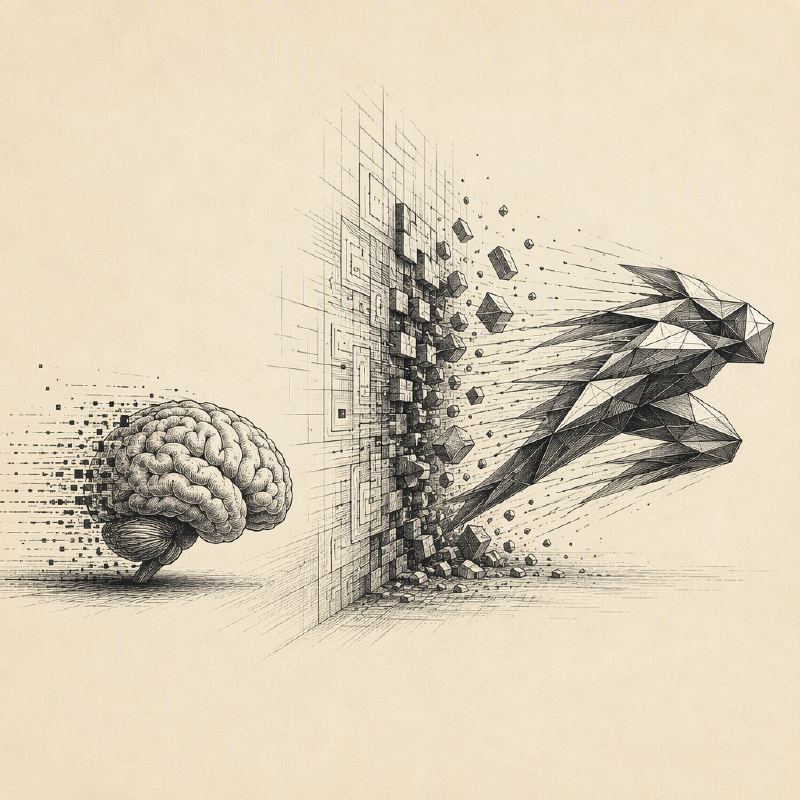
Researchers at the Vector Institute warn that current deepfake detection methods are failing to keep pace with the rapid evolution of generative AI models.
Stories cluster related articles into a single narrative, linked to the underlying CVEs and affected products. 288 stories synthesized.
Researchers at the Vector Institute warn that current deepfake detection methods are failing to keep pace with the rapid evolution of generative AI models.
Researchers have identified "zombie linkages" in expired domains, where systems continue to trust original owners long after they have lost control of the domain.
The latest Risky Business podcast episode explores the practical role of AI in cloud security, arguing that AI is augmenting rather than replacing traditional security tools.
A new report indicates that organizations in 2026 are prioritizing proven ROI over rapid AI adoption, leading to increased focus on in-house solutions for security and compliance.
The SANS Internet Storm Center provides its daily security digest for Friday, May 15th, 2026.
This week's infosec product roundup features updates from Alation, Apricorn, Versa Networks, and TrustCloud, with a focus on new AI-driven capabilities.
CISA has added the critical authentication bypass vulnerability CVE-2026-20182 in Cisco Catalyst SD-WAN to its Known Exploited Vulnerabilities (KEV) catalog following confirmed active exploitation.
A Taiwanese student's software-defined radio experiment caused a significant disruption to the local rail system, leading to an anti-terrorism response.
The TeamPCP hacker group is threatening to leak stolen Mistral AI source code unless a buyer is found for the data.
Security professionals remain skeptical of claims that the ShinyHunters extortion group has deleted data stolen from the Canvas learning management system.
Tenable has introduced 'Tenable Hexa AI,' an agentic tool designed to automatically identify and eliminate forgotten, risky cloud assets.
Hackers are actively exploiting a critical authentication bypass vulnerability in the Burst Statistics WordPress plugin to gain administrative access.
SecurityScorecard has acquired Driftnet to enhance its threat intelligence capabilities and improve visibility into third-party ecosystems.
NetSPI has introduced new AI-powered continuous pentesting offerings to help organizations identify and validate risks across dynamic cloud and application environments.
SecureLayer7 has released Sandyaa, an open-source tool that utilizes LLMs to audit source code and generate working exploit code for identified vulnerabilities.
This week's episode of Risky Business covers the TanStack compromise via GitHub Actions, data extortion at Instructure, and new Linux privilege escalation vulnerabilities.
As AI adoption accelerates, organizations are increasingly exposed to risks from non-human identities, including AI agents, which often possess persistent and broadly privileged access.
The Vietnamese government has announced plans to develop a national cloud computing platform to reduce reliance on foreign-owned services and enhance data sovereignty.
Android's 2026 security roadmap includes new features to combat financial scams, device theft, and unauthorized app behavior, including a verified call system developed with banks.
The SANS Internet Storm Center provides its daily security digest for Wednesday, May 13th, 2026.
A new SANS Internet Storm Center diary entry explores methods for intercepting and proxying traffic generated by Windows executables that utilize TLS 1.3.
Microsoft has released its May 2026 security updates, addressing 137 vulnerabilities, including 30 rated as critical.
The Fedora Project has announced Fedora Hummingbird, a new container-based, rolling Linux distribution delivered as an OCI image, aimed at modernizing the host operating system.
Electronics manufacturer Foxconn has confirmed a cyberattack affecting its North American operations after the Nitrogen ransomware group claimed to have stolen data.