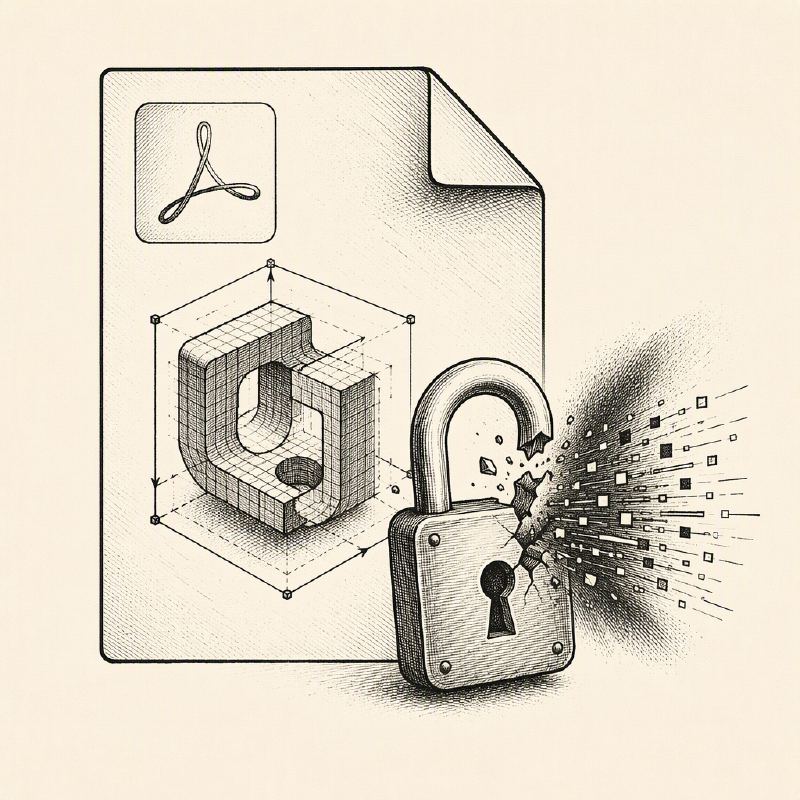
Foxit PDF Reader Suffers Remote Code Execution Vulnerability via U3D Parsing Flaw
A critical integer overflow vulnerability in Foxit PDF Reader's U3D file parsing component allows remote attackers to execute arbitrary code on affected systems.
Stories cluster related articles into a single narrative, linked to the underlying CVEs and affected products. 8,187 stories synthesized.
A critical integer overflow vulnerability in Foxit PDF Reader's U3D file parsing component allows remote attackers to execute arbitrary code on affected systems.
A critical vulnerability in Luxion KeyShot's BIP file parsing allows remote attackers to execute arbitrary code on affected installations, requiring only user interaction.
A new report reveals a dramatic 124% increase in malicious bot traffic over the past year, significantly outpacing human user growth and challenging website defenses.
Hackers are actively exploiting a critical zero-day vulnerability (CVE-2026-94127) in F5 BIG-IP APM OAuth servers, allowing unauthenticated remote code execution.
NetBSD 10.2 addresses a critical remote kernel vulnerability in its ipfilter component, allowing unauthenticated attackers to crash the system.
Rep. Josh Gottheimer has introduced the AI Cyber Defense Act, a bill aiming to provide critical infrastructure operators with free access to advanced AI models for enhanced cybersecurity defenses.
An estimated 80,000 AI relay servers are being used by individuals in China to mask their access to advanced large language models hosted in the US, likely for cloning purposes.
Dubai's Electronic Security Center has developed and plans to release an open-source AI model named Saraab, capable of detecting deepfake videos with 91% accuracy.
A malicious npm package, 'tw-pkgprobe-7731,' was discovered masquerading as a Twilio security tool, designed to exfiltrate developer credentials and sensitive system information.
Hackers stole customer data from BigCommerce merchants by exploiting a compromised application key belonging to the Ribon app developer.
The notorious ShinyHunters group claims to have breached the FBI's jobs website, exfiltrated terabytes of employee data, and is demanding the agency retract statements accusing them of harassment.
Check Point is warning of active exploitation of a critical zero-day vulnerability, CVE-2026-93616, in its Security Management Server, allowing unauthenticated remote code execution.
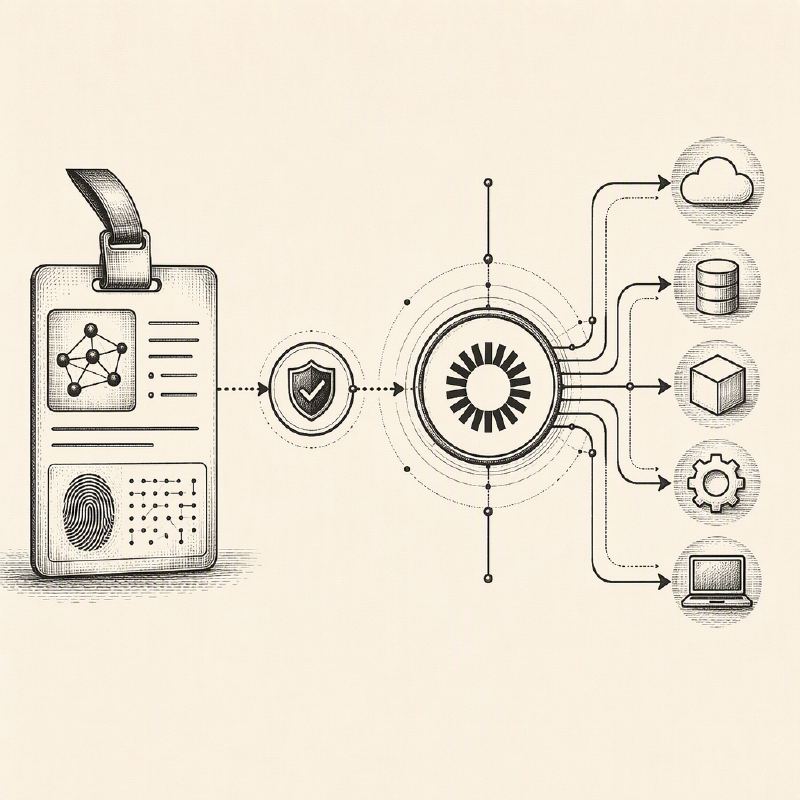
Aembit's IAM platform now supports Okta's Cross App Access protocol, simplifying how enterprise identities authorize AI agents for downstream applications.
ANY.RUN's new Threat Intelligence Lookup (TI Lookup) aims to reduce Security Operations Center (SOC) triage time and analyst burnout by providing contextualized threat intelligence.
A critical vulnerability (CVE-2026-90898) in Bifrost AI Gateway versions prior to 2.1.0 permits unauthenticated attackers to execute arbitrary commands on the gateway server.
A new proof-of-concept tool called BigDiskBuster by researcher NightmareEclipse exploits a flaw to prevent Microsoft Defender Antivirus from updating, leaving systems vulnerable.
AI developer Z.ai has apologized for its ZCode tool uploading user workspaces to Alibaba Cloud without consent, and has since open-sourced the project.
A financially motivated operator used three open-source AI tools to autonomously hack online retailers, stealing over 600,000 credit card records at a minimal cost per target.
A critical vulnerability in Siemens Siveillance Control and Siveillance Control Pro's Open Interface Services (OIS) web module allows attackers to upload arbitrary files, potentially leading to full system compromise.
Siemens SIMOVE Fleetmanager and SIPLANT products are affected by a critical path traversal vulnerability, CVE-2026-67367, allowing unauthenticated attackers to read arbitrary files.
A critical Client Code Execution vulnerability in Siemens Desigo CC versions V6 and V7 could allow attackers to execute arbitrary code on client devices by crafting malicious graphics documents.
Siemens WTV676 and WTV776 industrial devices are susceptible to a denial-of-service vulnerability, CVE-2026-89207, which can disable web access.
A critical out-of-bounds write vulnerability in the lwIP TCP/IP Stack MQTT Client Application could allow attackers to achieve full code execution on affected devices.
CISA has issued an advisory for OpenPLC Runtime v3, detailing CVE-2026-88020, a medium-severity cross-site scripting vulnerability that could allow attackers to control industrial processes.