
Widespread Tech Outages Reveal Fragile Infrastructure, Not Malicious Actors
A series of major tech outages affecting Microsoft, the FAA, banks, and the NSA in a single week has been attributed to internal failures and routine maintenance, not coordinated cyberattacks, highlighting systemic infrastructure fragility.
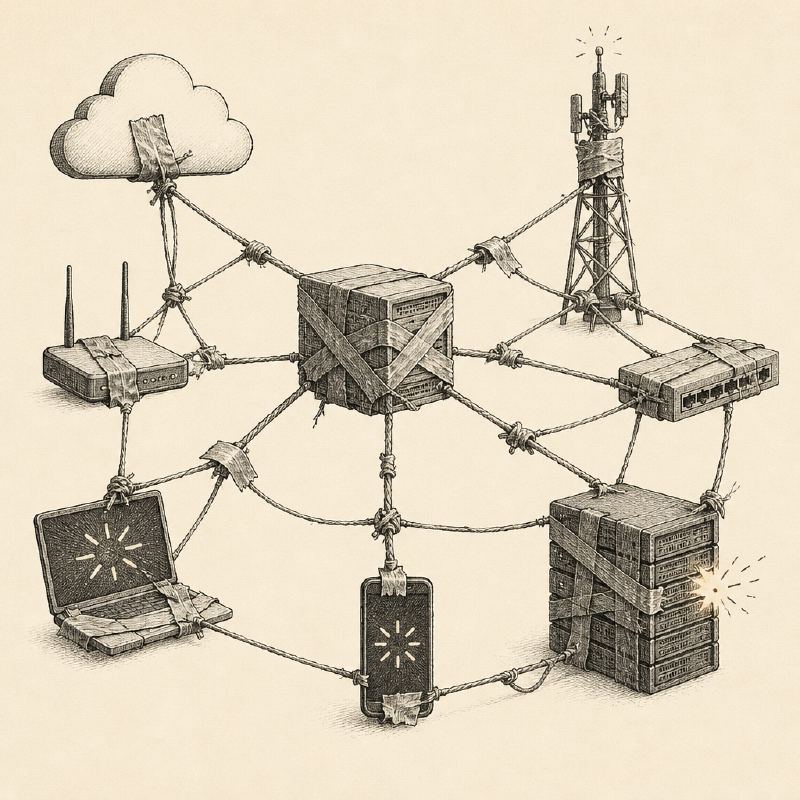
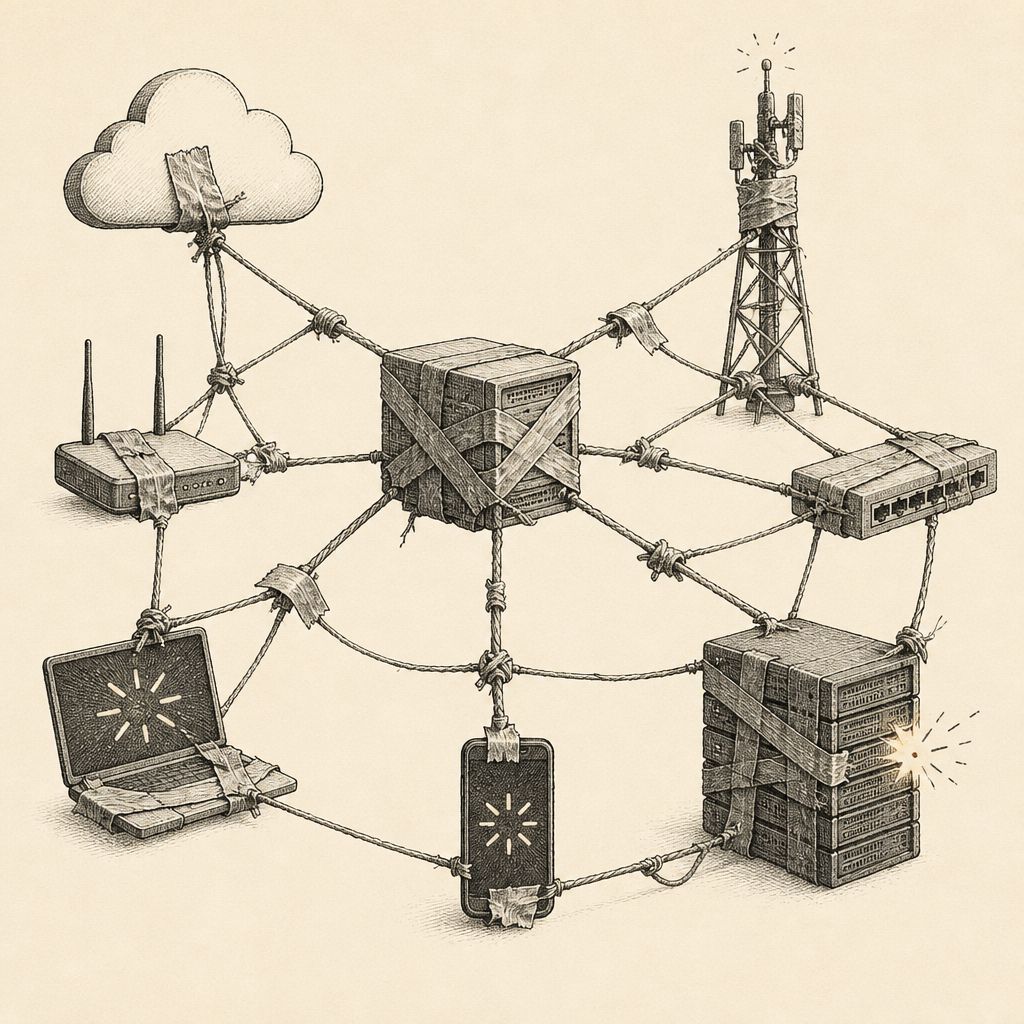
In a tumultuous week for global technology, a series of high-profile outages at critical organizations like Microsoft, the FAA, major banks, and the US National Security Agency (NSA) has sparked widespread concern and speculation. However, investigations into these incidents have largely pointed towards internal system failures, faulty software updates, and scheduled maintenance rather than sophisticated cyberattacks. This pattern of widespread disruption, dubbed 'Outagepalooza' by some, is prompting a re-evaluation of the resilience of essential digital infrastructure.
The cascade of failures began with Microsoft, where a faulty software update originally deployed in July caused a massive outage affecting numerous Microsoft 365 services, including Outlook. This incident, which impacted users globally, was later confirmed by Microsoft as an internal issue, not a result of external malicious activity. The timing of the fix, days after the initial disruption, underscored the complexity and interconnectedness of cloud services.
Shortly after the Microsoft disruption, the Federal Aviation Administration (FAA) experienced a significant grounding of all flights across the United States. Initial fears of a nation-state attack, given the critical nature of air traffic control systems, were allayed when the FAA attributed the outage to a communication error during a network upgrade. The provider, L3Harris, was reportedly switching out copper wiring for fiber optics, a project that coincided with the widespread service disruption.
The disruptions continued into the week with major financial institutions. Customers of Chase and US Bank reported an inability to access funds or conduct transactions due to outages attributed to software bugs within on-premises hardware systems. Chase explicitly stated that its issues were not the result of a cyberattack, reinforcing the theme of internal system vulnerabilities being the primary cause.
Even the highly secure networks of the US National Security Agency (NSA) were not immune. The agency’s classified internal communications network went offline, immediately raising alarms about potential espionage or sabotage. However, the NSA later clarified that the outage was due to scheduled routine maintenance, a revelation that, while less alarming than an attack, still highlighted the potential for disruption even in the most secure environments.
Adding to the week's technological woes, Apple services including Apple Support, iCloud, and Apple Pay experienced significant disruptions, impacting retail operations and customer service. While the exact cause for Apple's issues was not immediately detailed, the pattern of widespread outages across diverse sectors suggests a common thread of underlying infrastructure fragility rather than targeted attacks.
These incidents, occurring in rapid succession and affecting entities ranging from cloud service providers to government agencies and financial institutions, have led cybersecurity experts to question the robustness of modern digital infrastructure. The lack of evidence for coordinated cyberattacks, while a relief to some, points to a more pervasive and perhaps more difficult-to-solve problem: the inherent brittleness of complex, interconnected systems that may be held together by aging components or poorly managed updates.
The collective impact of these outages serves as a stark reminder that the digital backbone of society is susceptible to internal failures. As organizations increasingly rely on complex, often legacy, systems, the potential for cascading failures due to a single faulty update or maintenance oversight remains a significant concern, demanding a renewed focus on resilience, redundancy, and rigorous testing of critical infrastructure.