
VMware, Apache, and KVM Vulnerabilities Demand Urgent Attention
VMware has issued critical advisories for vCenter and Cloud Foundation, while Apache and Linux KVM also face significant security flaws.
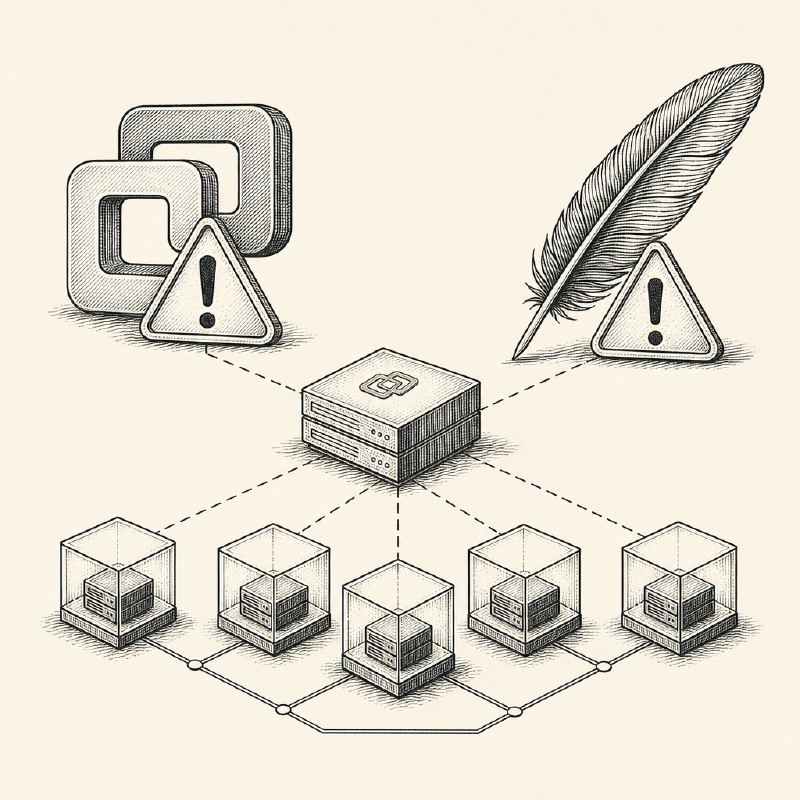
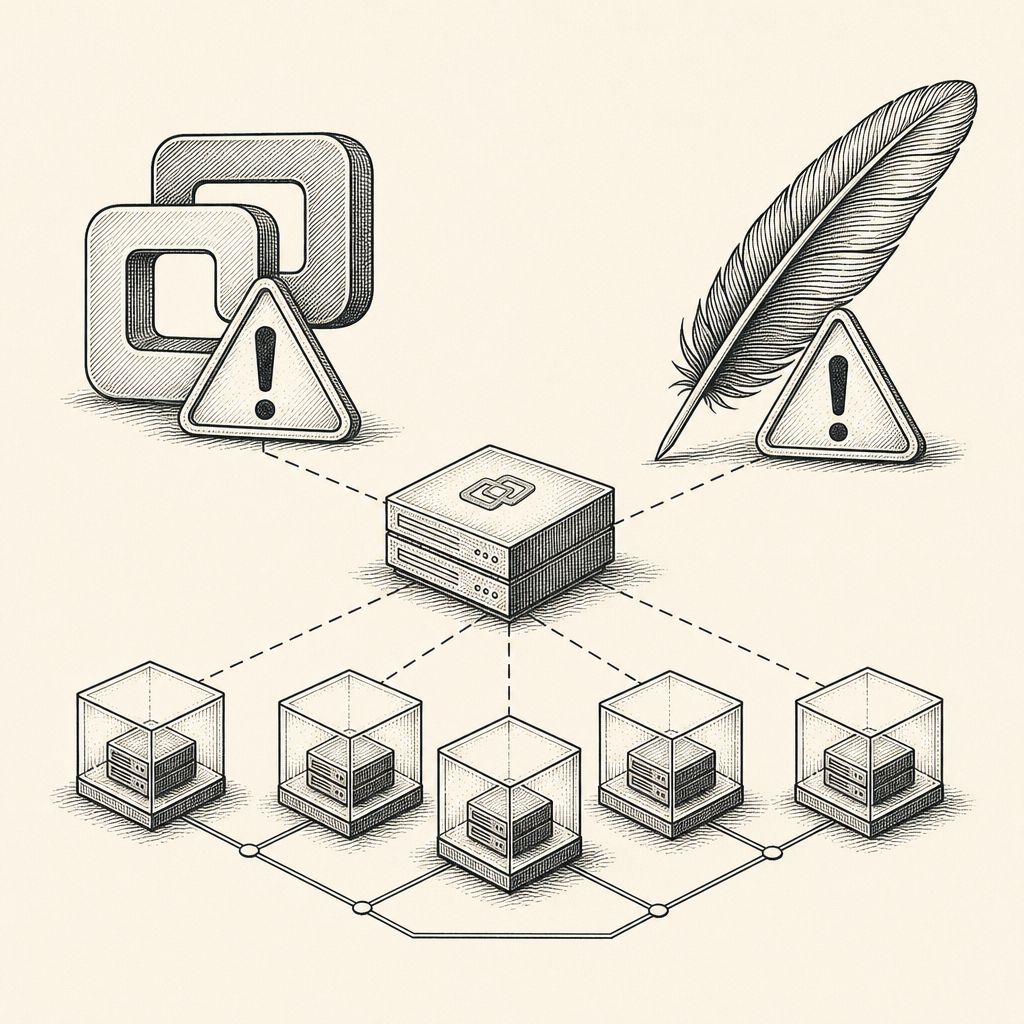
VMware has released two critical security advisories, VMSA-2026-0009 and VMSA-2026-0010, that require immediate attention from system administrators. The first advisory addresses CVE-2026-123890, a severe vulnerability in vCenter, VMware's central management console for virtual machines. Rated at a critical 9.8 CVSS score, this flaw allows a remote attacker with network access to bypass authentication and gain unauthorized control over the system. This vulnerability specifically impacts VMware Cloud Foundation.
VMSA-2026-0009 also details four additional CVEs, some of which carry high severity ratings, further underscoring the broad security concerns within VMware's ecosystem. The second advisory, VMSA-2026-0010, highlights a critical 9.8-rated remote code execution (RCE) vulnerability, identified as CVE-2026-119618, present in the Apache software used by several VMware products. This affects VMware Cloud Foundation, Aria Operations, and HCX, posing a significant risk of system compromise.
Beyond VMware's offerings, the Linux Kernel Virtual Machine (KVM) is also subject to a newly disclosed vulnerability, CVE-2026-99312. This flaw, rated 5.5 CVSS, allows an attacker within a guest virtual machine to launch Denial of Service (DoS) attacks or trigger memory corruption on the host system. While not a full guest-to-host escape, it poses a risk to shared infrastructure, particularly in cloud environments that utilize nested virtualization.
This KVM vulnerability is particularly concerning for users employing nested virtualization, a technique where a hypervisor runs inside a virtual machine. Security researcher Oren Tomtov demonstrated the ability to access a significant amount of host RAM (127 GB) on a Digital Ocean "Droplet." The flaw was introduced in 2022 as part of a fix for CVE-2022-3344, indicating a potential for regressions in complex codebases.
While the KVM vulnerability is less severe than the RCE flaws in VMware and Apache, its impact on nested virtualization environments cannot be ignored. The good news is that this specific KVM issue can be mitigated by disabling nested virtualization in KVM configurations, offering a workaround until patches are fully deployed.
Administrators are urged to prioritize patching these vulnerabilities across their VMware environments and to assess their exposure to the Apache and KVM flaws. The confluence of critical issues across multiple foundational technologies underscores the persistent challenges in maintaining secure virtualized and cloud infrastructure.