
Verified AI Crawlers Shift to High-Frequency POST Requests on E-commerce Sites
Akamai reports that verified AI crawlers, including ChatGPT, are increasingly using POST requests on online stores and travel sites, mimicking user actions and expanding the attack surface.
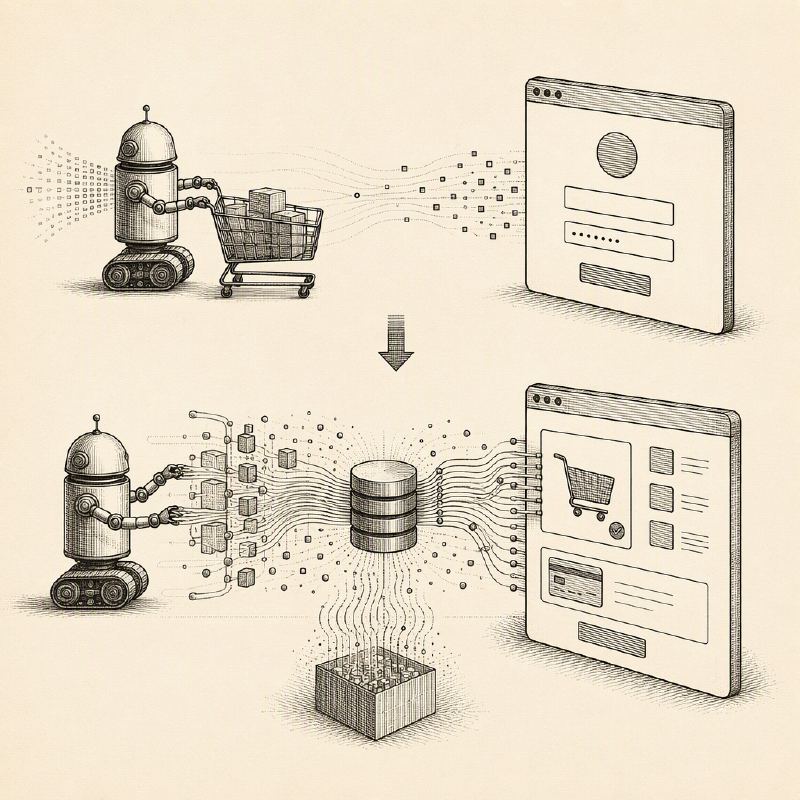

Akamai has observed a significant shift in the behavior of verified AI crawlers, most notably ChatGPT, moving beyond simple GET requests to employ high-frequency POST requests on e-commerce and travel websites. This change in behavior, detailed in a 30-day analysis of Akamai's global customers, saw e-commerce platforms account for 44.8% of these AI bot POST transactions, with the travel industry close behind at 30% within a single month.
While GET requests are used to retrieve web pages, POST requests instruct a website to perform an action. This means that verified AI bots are now engaging in the same types of requests that online stores and travel sites use for critical functions such as user logins, adding items to shopping carts, and completing checkouts. This evolution in AI crawler activity presents a new dimension to the potential attack surface for online retailers.
Steve Winterfeld, Advisory CISO at Akamai, noted that the company is observing a wider variety of transaction types from these AI bots, including a consistent rise in non-GET requests for training and searching purposes. He advised retailers to ensure they have robust AI bot visibility and to implement a well-informed security strategy for governance. This approach aims to protect assets and infrastructure from unauthorized access while simultaneously optimizing the bot experience for Answer Engine Optimization (AEO) and Generative Engine Optimization (GEO), especially as the holiday shopping season approaches.
Distinguishing legitimate AI shopping agents from malicious bots impersonating them is a growing challenge. Ryan Gao, who leads Akamai Threat Intelligence Services, explained that effective detection relies on a combination of techniques. These include leveraging generative engine optimization (GEO) with specialized bot tracking, monitoring transactional shifts in behavior (GET vs. POST), and employing adaptive behavioral analytics to identify evasion tactics and validate non-human identities and schemas. Gao emphasized that these methods are in a constant state of evolution to keep pace with emerging threats.
The emergence of the Model Context Protocol (MCP) also introduces new risks. MCP allows AI models to connect to external databases, code, and APIs. Akamai's analysis found that MCP traffic constituted 4.1% of the AI bot POST transactions observed. The primary risks associated with MCP include the potential for unsanctioned services to run without proper authentication and the possibility of Personally Identifiable Information (PII) exposure, as AI agents increasingly interact with sensitive data stores.
Akamai has also been involved in Anthropic's Project Glasswing, gaining early access to the Mythos model for vulnerability hunting. While Akamai cannot disclose specific findings due to agreements and security policies, they continue to use such data to identify and fix issues internally. The company's Chief Security Officer, Boaz Gelbord, has stressed the need for enterprise security teams to reassess long-held assumptions about their security posture and adapt to a 'post-Mythos world,' where AI can accelerate vulnerability discovery significantly.
Akamai suggests that until patches are available for newly discovered vulnerabilities, organizations should implement runtime protection, edge controls, or network segmentation. They also assert that existing defenses such as edge protections, east-west segmentation, and DDoS prevention remain effective against the majority of AI-generated exploits. This evolving landscape underscores the need for continuous vigilance and adaptation in cybersecurity strategies.