
US SOCs Grapple with Overwhelming Alert Fatigue, Seek Smarter Threat Intelligence
US Security Operations Centers are drowning in alerts, leading to missed threats and inefficient operations, with experts urging better threat intelligence to cut through the noise.
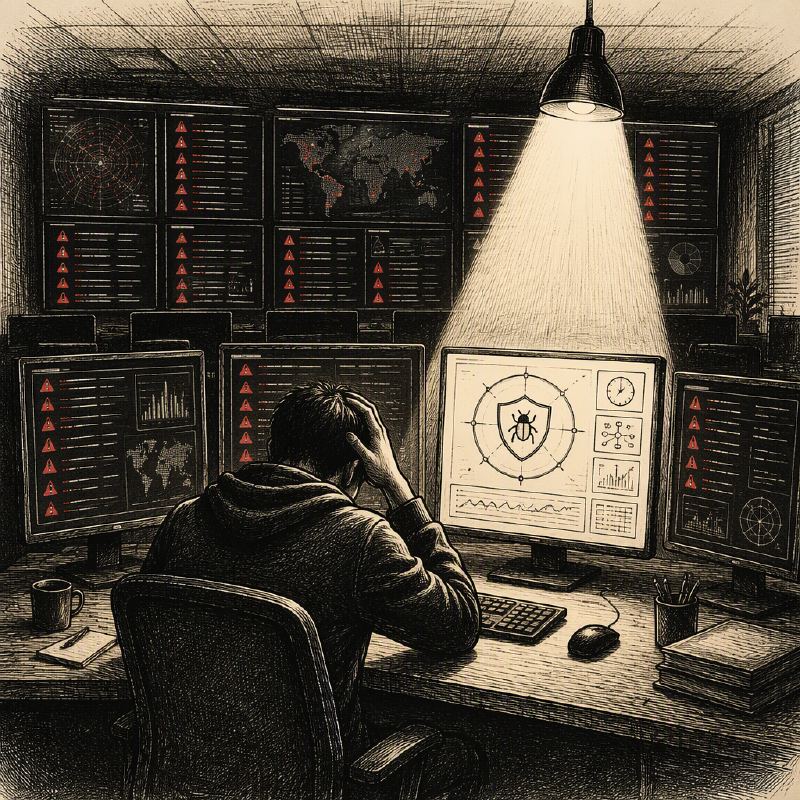

Security Operations Centers (SOCs) across the United States are facing a critical challenge: alert fatigue. The sheer volume of security alerts, coupled with limited analyst time and constrained budgets, is overwhelming many teams. This deluge of information means that analysts often spend an inordinate amount of time investigating low-risk signals, inadvertently delaying or even missing the detection of truly critical threats.
The root cause of alert fatigue extends beyond mere volume. Duplicate detections from various security tools, low-confidence signals that frequently turn out to be false positives, insufficient context accompanying alerts, and the need for manual data enrichment all contribute to a cumbersome and inefficient investigation process. This friction slows down triage, increases the cost of each security incident, and erodes the capacity of already stretched SOC analysts.
When alerts lack essential context, analysts are forced to switch between multiple tools and manually gather information, significantly extending the time it takes to assess a threat. Similarly, stale or overly broad indicators of compromise (IOCs) generate irrelevant matches, adding noise rather than actionable intelligence. The ultimate consequence is a SOC that expends valuable resources on deciding what to investigate, rather than actively investigating and mitigating genuine risks.
High-performing SOCs are tackling this problem by refining how they prioritize, enrich, and investigate security signals. The objective is to minimize repetitive tasks, equip analysts with more robust evidence, and enable a sharper focus on activities that pose the greatest risk. This involves prioritizing signals that are recent, relevant, and demonstrably linked to actual malicious activity, thereby reducing the number of dead-end investigations.
Enhancing threat intelligence is paramount. This includes leveraging fresher indicators of compromise (IOCs) derived from real-world malware and phishing investigations, such as those contributed by large communities of security professionals. By feeding these high-quality, up-to-date IOCs into existing security stacks, SOCs can more effectively distinguish between genuine threats and benign activity, freeing up analyst time for critical tasks.
Furthermore, providing analysts with richer context around each alert is crucial. Instead of investigating every suspicious IP address or URL from scratch, tools that link indicators to related sandbox sessions, infrastructure, files, and observed behaviors can dramatically speed up assessment. This allows analysts to quickly determine if an alert aligns with known threat campaigns, such as the Kali365 phishing campaign, and prioritize accordingly.
Finally, proactive threat hunting and strategic prioritization based on emerging trends are essential. By analyzing threat intelligence reports that consolidate recent findings on malware, campaigns, and attacker techniques, SOC leaders can identify growing threats and adjust their detection strategies. This not only helps in managing the current alert queue but also in fortifying defenses against future attacks, ultimately reducing the workload on SOC teams without necessarily increasing headcount.