
US Indicts Malaysian National, Disrupts Madagascar-Based NFT Scam Operation
The U.S. Department of Justice has indicted a Malaysian national and dismantled a sophisticated scam operation based in Madagascar that defrauded Americans out of over $500,000 through fake NFT investments.
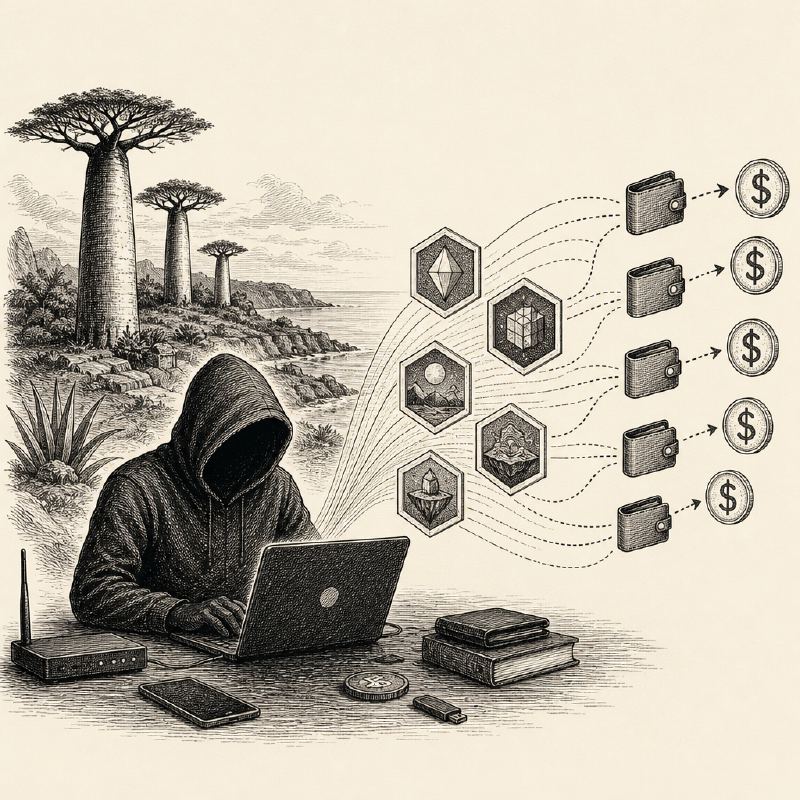
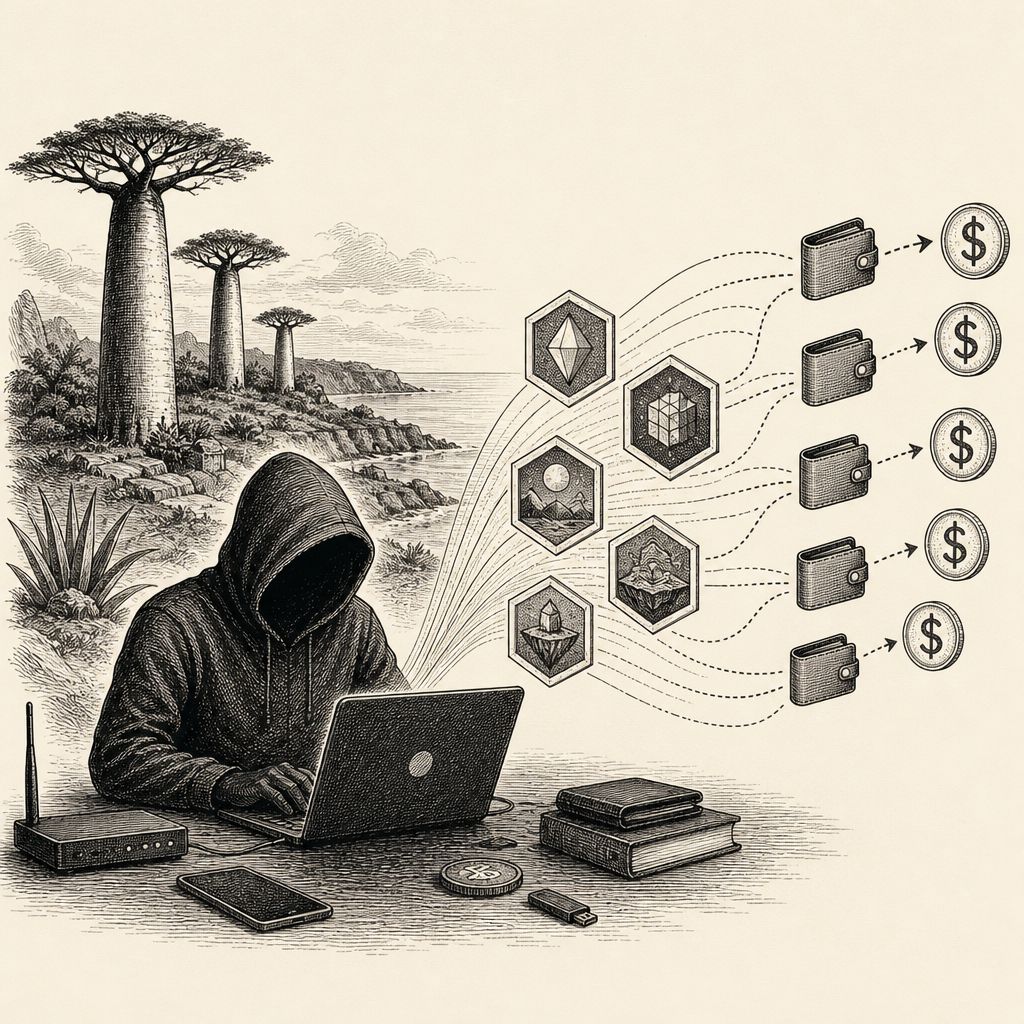
The U.S. Department of Justice has announced the indictment of Chui Kok Wa, a Malaysian national, along with five accomplices, for their alleged roles in a large-scale scam operation based in Madagascar. The operation, which targeted individuals across multiple U.S. states, is accused of defrauding victims out of more than $516,695 by luring them into fictitious non-fungible token (NFT) investment schemes.
Prosecutors revealed that Wa coordinated the scheme with individuals in China and that the operation relocated to Madagascar last year following law enforcement actions in Cambodia. An FBI unit deployed to Madagascar in August gained access to over 3,000 devices, uncovering the intricate workings of the scam centers and establishing direct links between victim reports in the U.S. and the scammers operating from compounds in the capital city, Antananarivo.
During the investigation, U.S. officials visited 13 scam compounds with the Madagascar National Police (MNP). However, their efforts to interview suspects were reportedly hindered, as Madagascar repatriated numerous individuals to China before the investigation could be fully concluded. The U.S. has formally requested cooperation from the Madagascar government, including the extradition of the six charged defendants.
Adding to the complexity, 15 employees of the scheme, who claimed to be victims of human trafficking and abuse by Wa, are believed to be held in jail in Madagascar. The U.S. has secured a material witness warrant to interview these individuals, highlighting the blurred lines between victims and perpetrators within the scam compounds.
The indictment details how Wa's group, comprising about 20 individuals, used dating sites to initiate contact with victims. They then persuaded them to invest in fake NFTs, providing scripts and fabricated images to maintain the illusion. Victims were encouraged to deposit funds into cryptocurrency wallets, which were then siphoned off by the scammers and transferred to Wa's accounts on platforms like Binance before being moved to China.
Law enforcement agencies in Madagascar arrested approximately 400 people, including 40 Chinese leaders of the operation. However, the FBI was reportedly denied access to interview these leaders before their repatriation to China or release. The status of Wa and his co-conspirators remains unclear, with the Justice Department declining to comment on their current whereabouts.
This operation underscores a broader trend of scam centers migrating to African nations as law enforcement pressure intensifies in Southeast Asia. The U.S. government estimates that billions of dollars are lost annually to such scam operations, with dating sites increasingly serving as initial contact points for cybercriminals before communication shifts to messaging apps.
The DOJ, with assistance from blockchain analysis firms like Chainalysis and cryptocurrency platforms, has taken down several fraudulent websites and traced the stolen funds. This action by the DOJ’s Scam Center Strike Force is part of a larger effort to combat global cybercrime, which has seen the seizure of thousands of dollars and communication equipment from various locations worldwide.