
Underground 'Search Your Target' Market Turns Stolen Credentials into On-Demand Weapon
Flare researchers reveal a booming underground market where attackers pay for targeted searches of massive stolen credential databases, enabling precise account takeover without sifting through bulk dumps.

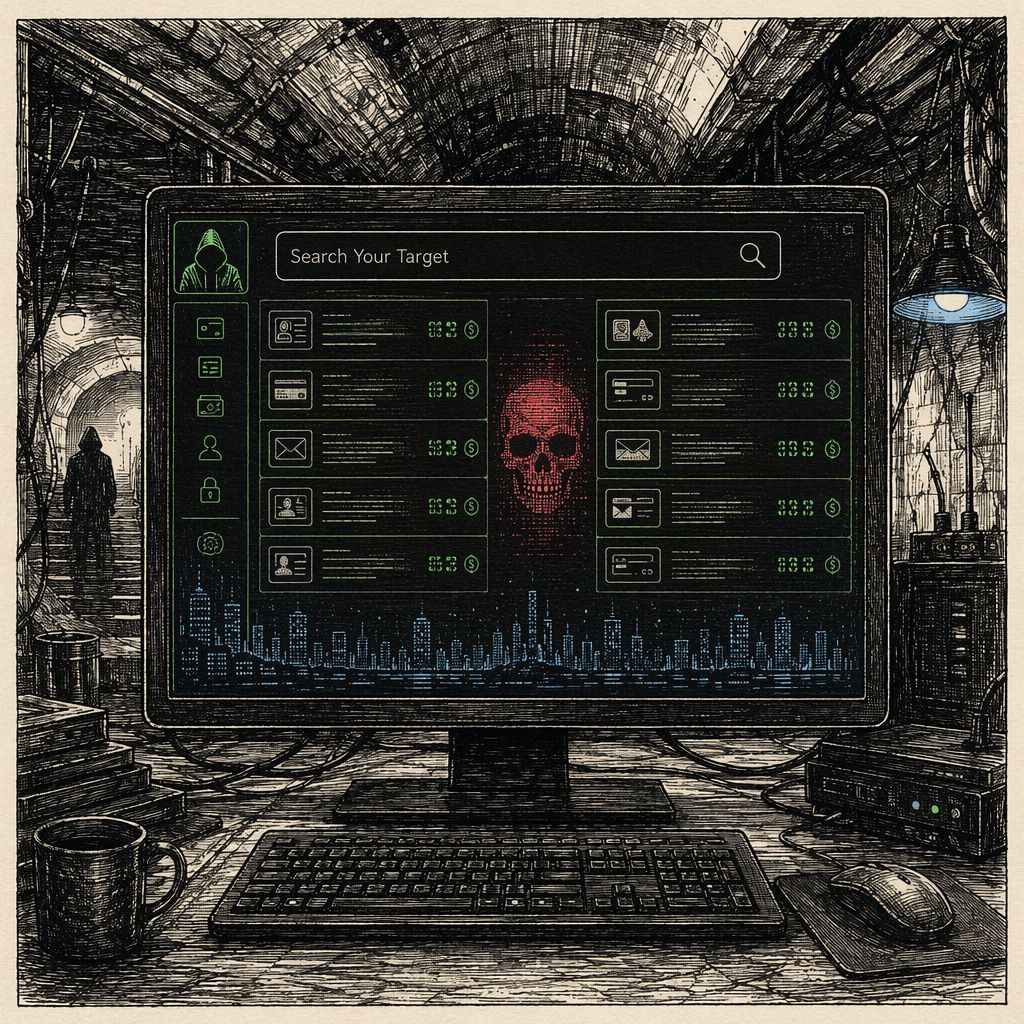
Threat actors are increasingly turning massive infostealer-derived credential collections into searchable underground services, allowing buyers to request credentials for a specific company, platform, domain, geography, or account type. Flare researchers analyzed 470 underground forum posts published between January 2025 and June 2026, across different sources, related to actors offering to search for and extract stolen credentials from their databases. The dataset included advertisements, reposts, buyer feedback, pricing references, and disputes around quality and validity.
The findings show a dedicated service layer sitting between infostealer infections, raw logs trading and account takeover activity. The profile of the threat actors who offer these services is divided between the Malware-as-a-Service (MaaS) providers and the MaaS consumers. In many cases, they function as credential brokers or data processors, monetizing the vast number of logs and their ability to search, filter, format, and deliver targeted results from large stolen credential collections.
The “search your target” market sits in the middle of the account takeover chain. First, infostealers infect devices and collect credentials, cookies, autofill data, and browser artifacts. Then logs are aggregated and inserted into private clouds, ULP databases, public dumps, or exchange-based collections. Next, the “search-service” threat actors extract rows based on buyers' requests. Buyers then validate the credentials and use them for account takeover, fraud, spam, phishing, crypto theft, or corporate intrusion. This means the sellers in this dataset are often neither the first nor final step. They are the processing layer that turns stolen credential noise into targeted attack material.
From a threat intelligence framework perspective, this service model represents a practical example of T1589.001 (Gather Victim Identity Information: Credentials), where adversaries actively research and acquire credentials prior to exploitation, and potentially T1650 (Acquire Access), given that some sellers deliver results indistinguishable from direct access provisioning.
Much like in the DDoS market, where the buyer submits a domain and the service provider attacks it, the service is duplicated and offers the same pipeline. A buyer sends a target, and the seller returns matching credentials. That target can be a company domain, login URL, ecommerce site, gaming platform, application, geographic market, or a list of emails. The output is usually delivered in formats such as URL:LOGIN, URL:LOG, MAIL, LOGIN, PHONE, or other combinations depending on the request.
Several sellers in the underground specify the size of their database as a selling point. One actor advertised an “ULP 5kkk+ lines” database (5,000,000,000), quick access within 10–15 minutes, daily updates, and sources that allegedly included private logs, private clouds, personal streams, and public data. Another actor promoted a 10kkk+ line, 1TB+ URL:LOG database, while others claimed access to collections ranging from hundreds of millions to tens of billions of records. The size of the database isn’t the only selling point. Threat actors also indicate other capabilities, as part of their sales pitch. The sellers are also advertising their search capabilities, freshness, formatting, and relevance.
Customer feedback indicates that the sellers are over-promising and under-delivering. They claim that some sellers aren’t credible. Some claim that the credentials are invalid, and sellers answer in return that they didn’t ever check if the credentials were valid. This gap between advertised and actual results highlights a market still maturing, but the commoditization of credential access lowers the barrier for targeted attacks against specific organizations, making it a significant threat vector for enterprises worldwide.