
Unauthorized Flock Cameras Discovered in Florida Raise Surveillance Concerns
A dozen Flock Safety cameras were found in St. Lucie County, Florida, with no clear ownership or county authorization, sparking fears of unregulated surveillance.
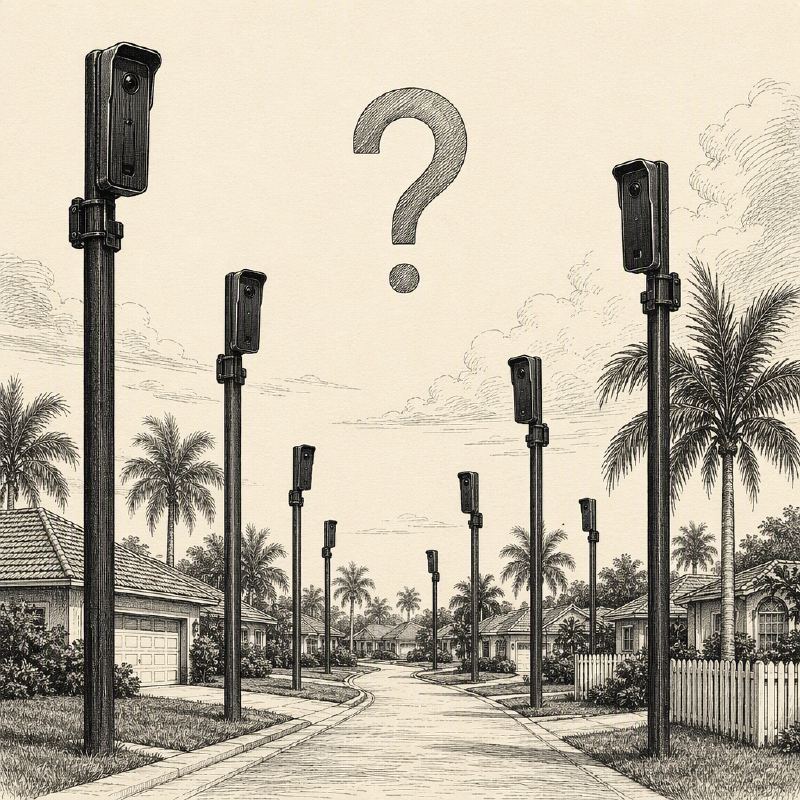
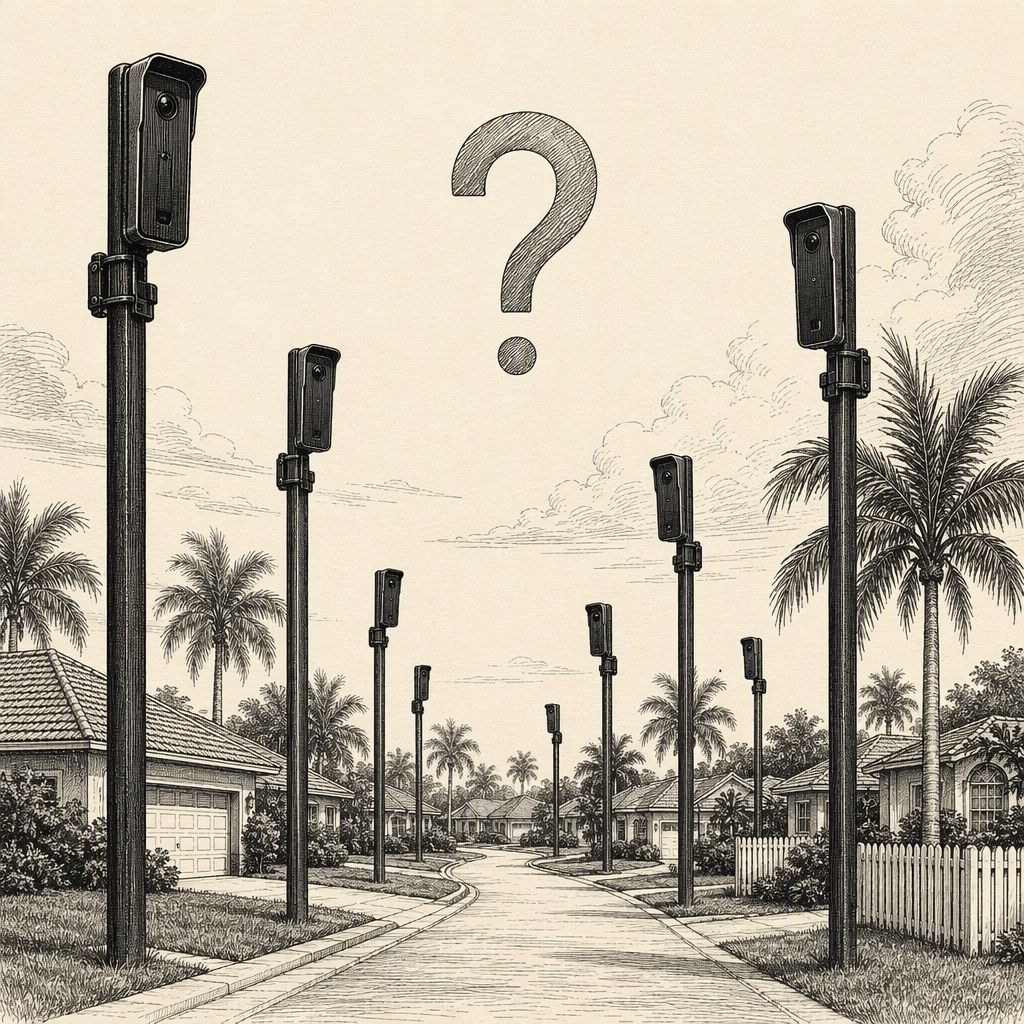
Authorities in St. Lucie County, Florida, have discovered a dozen Flock Safety cameras deployed within the county without any record of ownership or official authorization. The discovery has ignited concerns about the proliferation of unauthorized surveillance infrastructure and the potential for misuse.
Flock Safety cameras are typically used by law enforcement agencies and homeowners' associations to capture license plate data and images of vehicles. Their deployment usually requires official approval and integration into existing public safety networks. The presence of these cameras in St. Lucie County, operating without the county's knowledge or consent, raises significant questions about who installed them and for what purpose.
This incident echoes past controversies surrounding the deployment of surveillance technology, such as the discovery of StingRay cell-site simulators in Washington D.C. a decade ago. In that case, the operators of the devices were also unknown, leading to speculation about their origin and intent, with some suggesting foreign actors might have been involved.
The author of the original report speculates that the Flock cameras in Florida are more likely operated by a local entity that bypassed standard approval processes, rather than a sophisticated foreign adversary. However, the potential for exploitation by various actors remains a concern. The article posits that a foreign actor might find it more advantageous to hack into existing, authorized Flock networks, similar to how Israel reportedly compromised Tehran's surveillance cameras, rather than risk installing their own unauthorized equipment.
The core issue highlighted is the normalization of surveillance infrastructure. Once such systems become commonplace, they create opportunities for a wide range of actors, both friendly and adversarial, to leverage them for their own purposes. This normalization can inadvertently lower the barrier for unauthorized data collection and monitoring.
The discovery underscores a broader trend of increasing surveillance capabilities and the challenges in maintaining oversight and accountability. As more surveillance technologies become accessible and deployable, ensuring transparency and preventing misuse becomes increasingly critical for public trust and security.
While the immediate concern is the unauthorized presence of these specific cameras, the incident serves as a cautionary tale about the potential for surveillance systems, once normalized, to be exploited by anyone, including domestic and foreign entities with varying intentions. The lack of clear ownership and authorization leaves the door open for potential privacy violations and misuse of collected data.