
UK Employees Over-Trusting AI with Passwords, Posing Major Security Risks
A new study reveals a significant portion of UK employees are sharing sensitive credentials and granting broad access to AI tools, creating substantial blind spots for enterprise security.
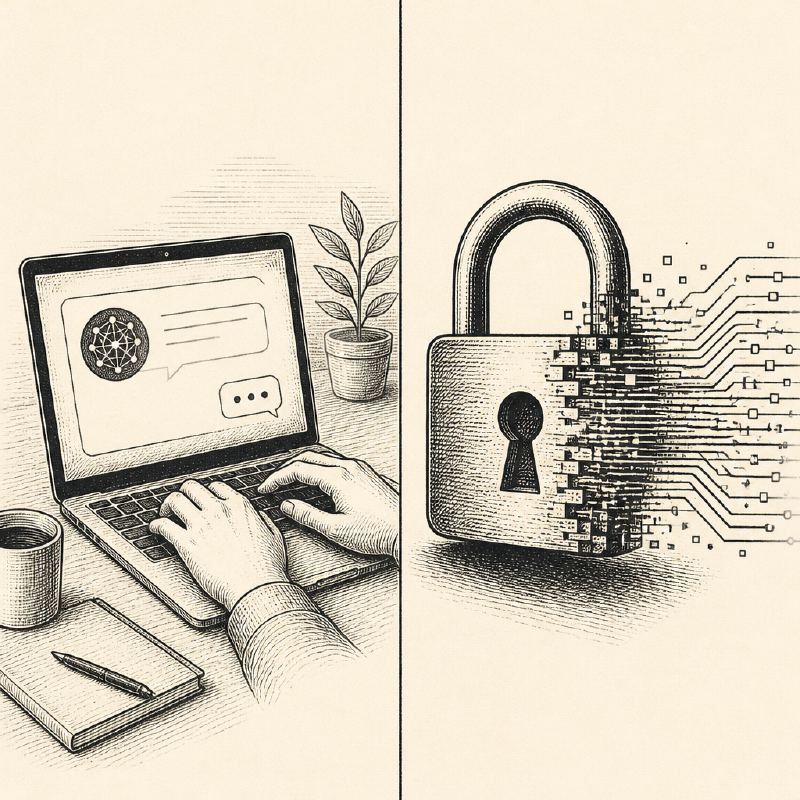
A concerning trend is emerging in UK workplaces, where a substantial number of employees are sharing sensitive credentials and granting unauthorized access to artificial intelligence tools, according to a recent report by Dashlane. The study, which surveyed 1000 UK workers and 250 IT executives, found that nearly one-fifth (19%) of employees have shared passwords, API keys, or login credentials with AI tools or agents. This practice, dubbed the 'AI Colleague Effect' by Dashlane's Chief Product Officer Christophe Frenet, signifies an "overextension of trust" to AI systems.
Beyond credential sharing, the research highlights a broader issue of employees allowing AI to perform actions without explicit permission. Almost half (48%) of UK workers surveyed admitted to letting AI access their accounts for tasks such as reading emails, accessing company files, and handling customer information without prior authorization. This lack of oversight creates significant challenges for security teams tasked with monitoring and preventing misuse of corporate data.
The findings also point to a worrying disregard for data sensitivity, with 23% of employees admitting to copying sensitive information into AI tools that they would not typically share with colleagues or other work systems. Furthermore, 21% have not verified where the information they input into AI would be stored or transmitted, and only a quarter (25%) consistently consider security risks when using AI agents at work. This indicates a widespread gap in cybersecurity awareness concerning AI adoption.
These practices introduce substantial compliance and security risks. Sensitive information shared with AI could end up on third-party servers, potentially exposed to breaches or used to train AI models, which could then inadvertently reveal proprietary data in future responses. Moreover, AI agents themselves can become targets for hijacking by threat actors, leveraging the access and permissions they have been granted.
Despite these risks, IT and security executives appear to be overconfident in their visibility and control. While 72% of these executives reported their organizations had experienced a security incident involving AI agent credentials or access in the past year, a vast majority (92%) claimed confidence in knowing about every AI agent operating within their organization. This confidence is directly contradicted by a quarter of employees who admitted to using AI tools unknown to their employers.
Security leaders are feeling the pressure to adopt AI rapidly while maintaining security. Two-thirds (68%) of UK IT security executives feel caught between the demand for quick AI deployment and the imperative to secure their organizations. Frenet emphasized that the pace and potential consequences of AI misuse are unprecedented, requiring security principles like just-in-time provisioning, least privilege, and robust credential hygiene to be applied to AI agents as rigorously as they are to human users.
The study underscores a critical need for organizations to implement clear policies and robust security measures for AI usage. This includes establishing distinct identities and granular permissions for AI agents, akin to how human employee access is managed. Without such controls, the potential for data breaches, compliance violations, and operational disruption due to AI misuse will continue to grow, creating a significant blind spot in enterprise security strategies.