
Top 10 Container Image Scanning Tools for 2026 Ranked by Context and Prioritization
A new ranking of container image scanning tools for 2026 emphasizes context and prioritization over raw CVE detection, with Aqua's Trivy leading as the best free option.
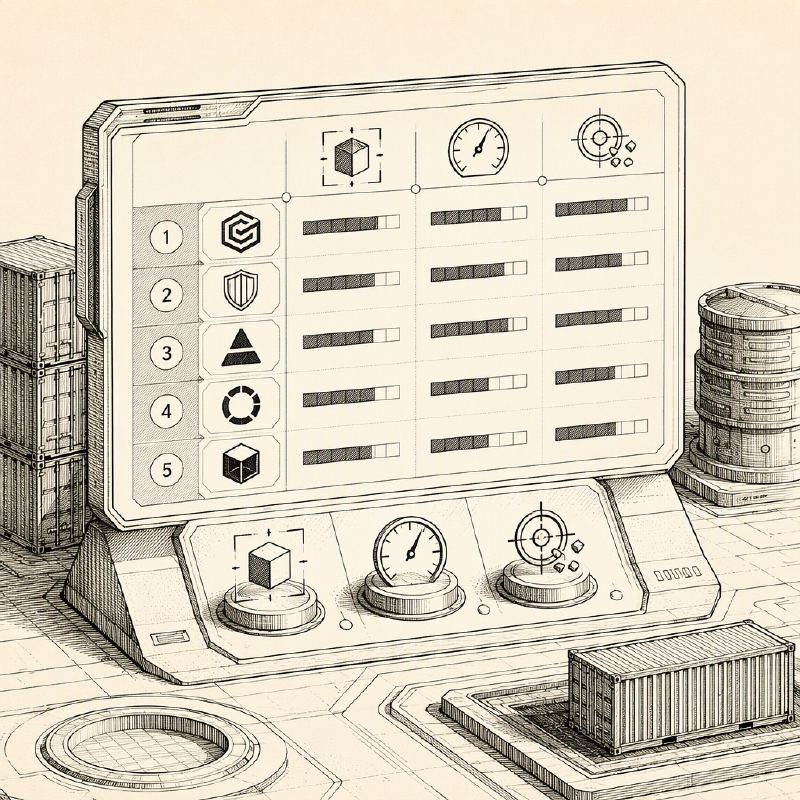

The cybersecurity landscape in 2026 continues to grapple with the sheer volume of vulnerabilities, particularly within containerized environments. A new analysis of the top 10 container image scanning tools highlights a critical shift in evaluation criteria: moving beyond simple CVE counts to focus on context, prioritization, and elimination strategies. This approach aims to provide actionable insights that genuinely reduce risk, rather than overwhelming security teams with an unmanageable list of potential issues.
Aqua's Trivy emerges as the top-ranked free tool, lauded for its ubiquity, speed, and accuracy across images, Infrastructure as Code (IaC), and dependencies. While the threat of supply chain attacks on registries remains a concern, Trivy's multi-target engine is positioned as an essential baseline for any CI/CD pipeline. Its integration with Aqua's enterprise platform offers advanced features like admission control and runtime security, extending its utility beyond basic scanning.
Sysdig secures the second spot for its "in-use prioritization" capabilities. By correlating image vulnerabilities with actual runtime behavior, Sysdig can reduce the triage burden by over 90 percent. This method prioritizes risks based on execution truth rather than static theoretical danger, leveraging its heritage with Falco and threat research on container escapes to link image flaws directly to live Kubernetes activity.
Wiz ranks third, recognized for its "exposure-graph ranking." This tool correlates image findings with workload exposure, cloud entitlements, and network reachability to identify which vulnerable container images pose the greatest risk to critical assets. Wiz's approach, informed by its threat research on cloud attack paths, effectively distinguishes between isolated images and those exposed to external threats, offering a consequence-driven prioritization.
Chainguard offers a distinct "eliminate-first strategy," focusing on providing minimal, continuously rebuilt, and cryptographically signed base images that inherently contain zero CVEs. This proactive approach aims to combat alert fatigue by removing vulnerabilities before they can be detected by scanners. While requiring migration engineering, this strategy fundamentally shrinks the software bill of materials and eliminates false positives at the source.
Other notable tools include Snyk, praised for its "fix-oriented workflow" that provides pragmatic advice for base image upgrades and automated remediation. Anchore's Grype and Syft are highlighted as the best "SBOM-first OSS" pair, with Syft generating standardized Software Bills of Materials and Grype scanning them with precision. JFrog Xray is recognized for its registry-native integration, Palo Alto's Prisma Cloud for its CNAPP unity, Docker Scout for its workflow-native capabilities, and Clair for its legacy as an OSS registry veteran.
The methodology for scoring emphasizes detection quality, SBOM support, context and prioritization, registry and workflow fit, and pricing transparency. Context and prioritization are given the highest weight (30%), followed by detection and SBOM support (25%), and workflow fit (20%). This scoring reflects the industry's growing need for tools that not only identify vulnerabilities but also help teams effectively manage and remediate them within their existing development and deployment processes.
The analysis underscores that static vulnerability counts alone are insufficient to prevent breaches. Attackers often exploit misconfigurations or target vulnerabilities that are actively running in production. Therefore, tools that provide runtime context, exposure analysis, and actionable remediation advice are becoming increasingly crucial for robust container security.