
The 'Harness' is Key to Safe and Effective AI-Powered Penetration Testing
While AI can generate attack vectors, the surrounding 'harness' infrastructure is crucial for ensuring safe execution, accurate results, and practical application of AI in penetration testing.
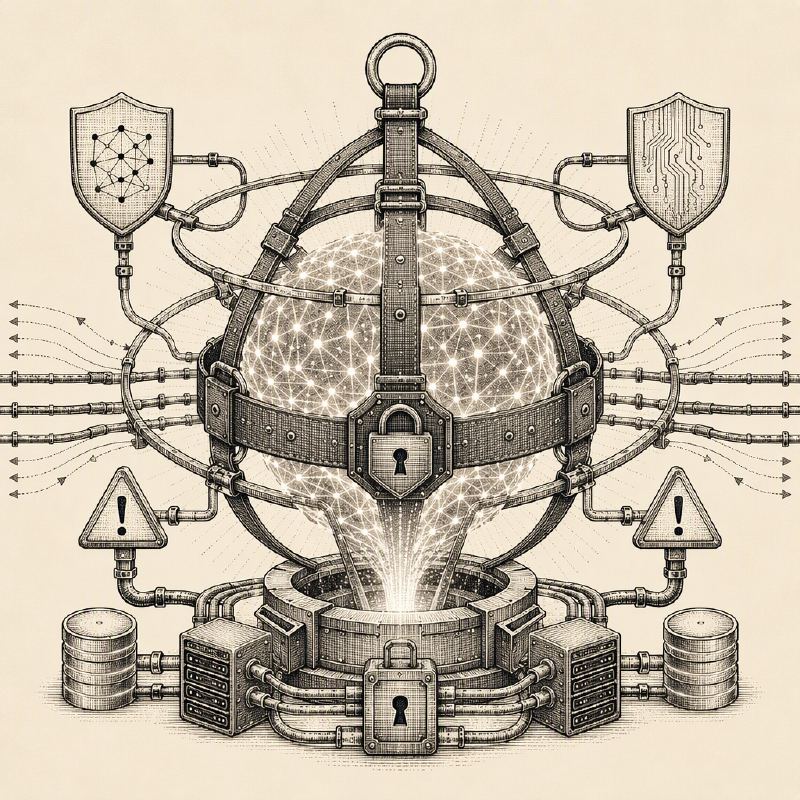
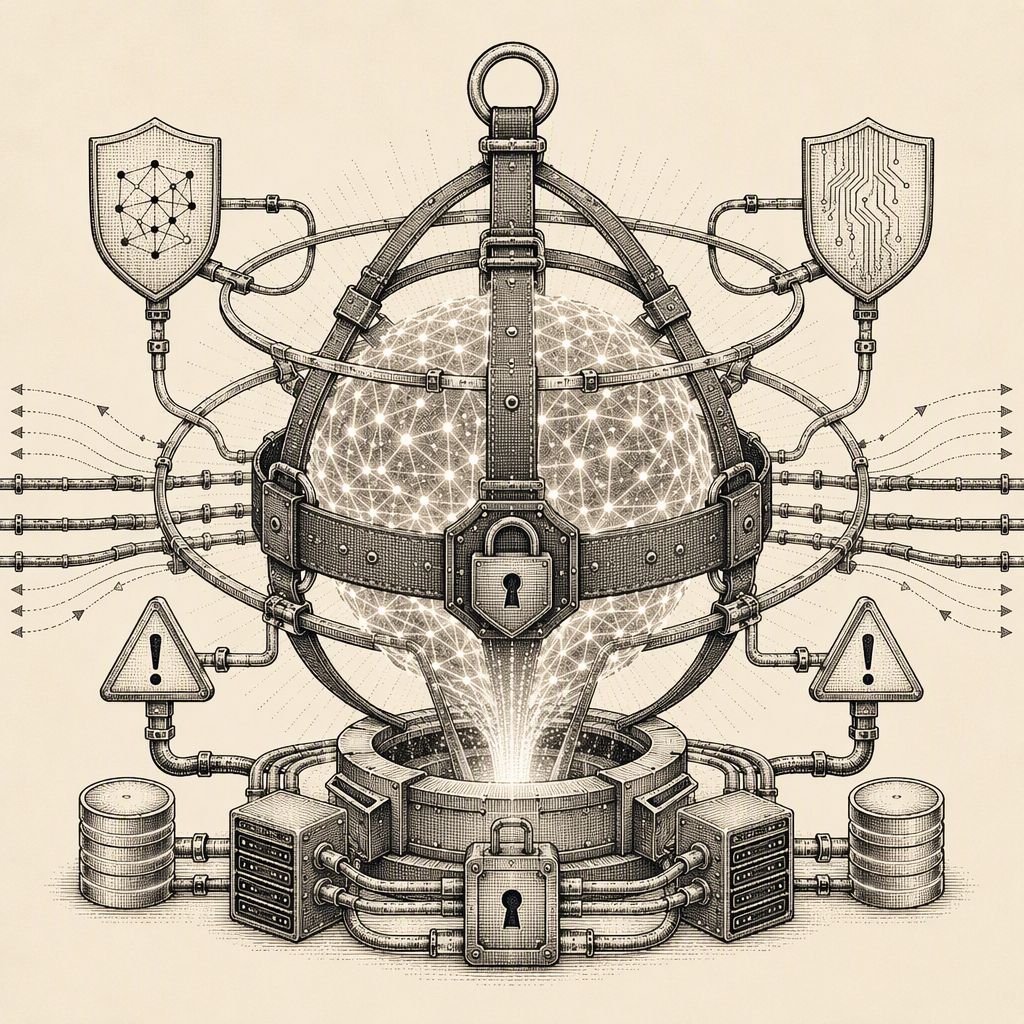
The burgeoning field of AI-driven penetration testing, while promising, hinges critically on a robust "harness" that translates AI-generated attack ideas into safe, actionable security tests. This underlying infrastructure is where the real engineering effort lies, ensuring that AI agents can probe systems without causing unintended damage and that their findings are meaningful and reproducible.
AI models are adept at generating novel attack vectors, but their direct application in production environments poses significant risks. The "harness" acts as a vital intermediary, implementing rigorous controls to manage the AI's actions. These controls are essential for enforcing the scope of testing, preventing the agent from straying into unauthorized areas or executing dangerous commands. For instance, code inspecting every outgoing request and a deterministic policy engine are necessary to keep the AI within defined boundaries, especially when dealing with privileged actions.
Handling credentials securely is another complex challenge. AI agents may encounter sensitive information during their tests, and the harness must dictate which credentials can be used, for what purpose, and under what conditions. This involves policy decisions implemented in code surrounding the AI model, ensuring that discovered credentials are not misused and that human oversight is applied where necessary.
Prompt injection remains a significant threat to AI applications, and the harness plays a crucial role in mitigating its impact. While no foolproof prevention exists, the harness can limit the damage an AI model can inflict if compromised. This is achieved by tightly constraining each action the AI can take and by implementing mechanisms for further inspection and human sign-off on critical operations. The goal is not to prevent the model from being fooled, but to minimize the consequences when it is.
Reproducibility of findings is paramount for effective penetration testing. The harness is responsible for generating "proof" of a vulnerability, which includes running the exploit, capturing its impact, and packaging the results in a replayable format. This allows developers to verify the vulnerability independently and confirm that fixes are effective. Without this rigorous proof generation, findings may be dismissed as invalid, similar to the surge in automated, non-valid submissions that led Google to stop accepting reports to its open-source bug bounty program.
Furthermore, the harness must be dynamic, adapting to changes in both the AI models and the applications being tested. Each model upgrade can alter an agent's behavior, and application releases introduce new potential vulnerabilities. The surrounding systems, including change-triggered testing, secure data handling, and integration with threat intelligence, are also integral parts of this harness, providing context and ensuring that findings are traced across the entire attack surface.
Pentera Apps exemplifies this approach by separating AI reasoning from deterministic execution. Their platform pairs an AI that decides what to test with a harness that controls what runs, logs every action, and allows tests to be paused or stopped at any time. This mirrors Pentera's decade-long safety discipline in production testing.
The harness also ensures that findings are actionable, providing replayable exploit scripts, CVSS scores, and CWE mappings. This allows developers to reproduce and fix issues efficiently. Future enhancements include change-triggered testing within CI/CD pipelines to keep validation aligned with development. Pentera's surrounding systems further enhance this by minimizing data sent to the LLM, ensuring zero retention and no training on customer data, and integrating context from reconnaissance, security stacks, and threat intelligence to trace exploits across network, cloud, and identity.