
TeamViewer Patches Critical Flaw Enabling Remote Code Execution via File Transfers
TeamViewer has addressed CVE-2026-16444, a critical vulnerability allowing authenticated attackers to execute code by manipulating file transfers or clipboard operations.
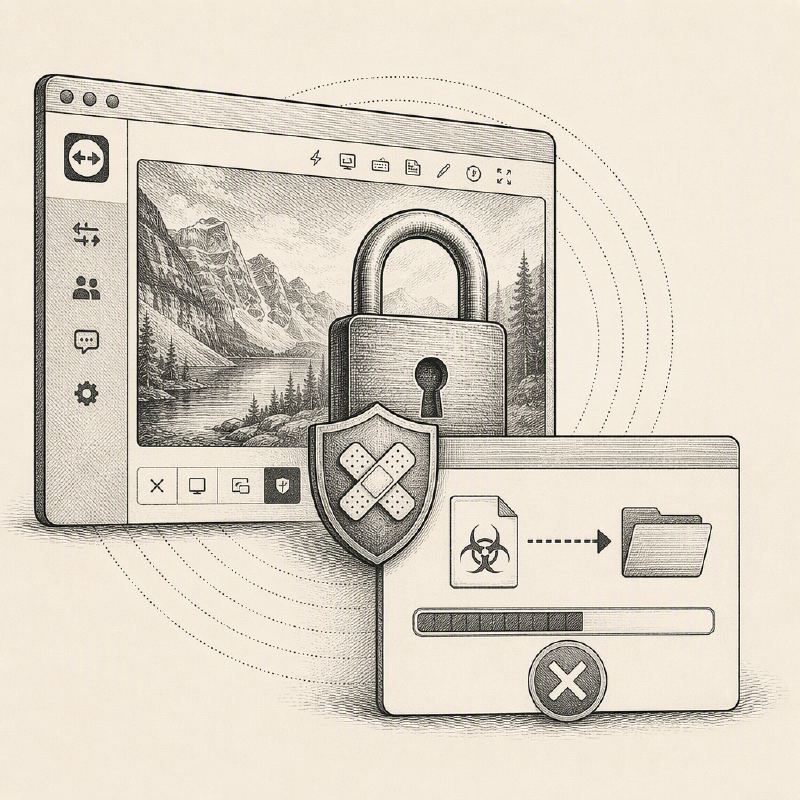
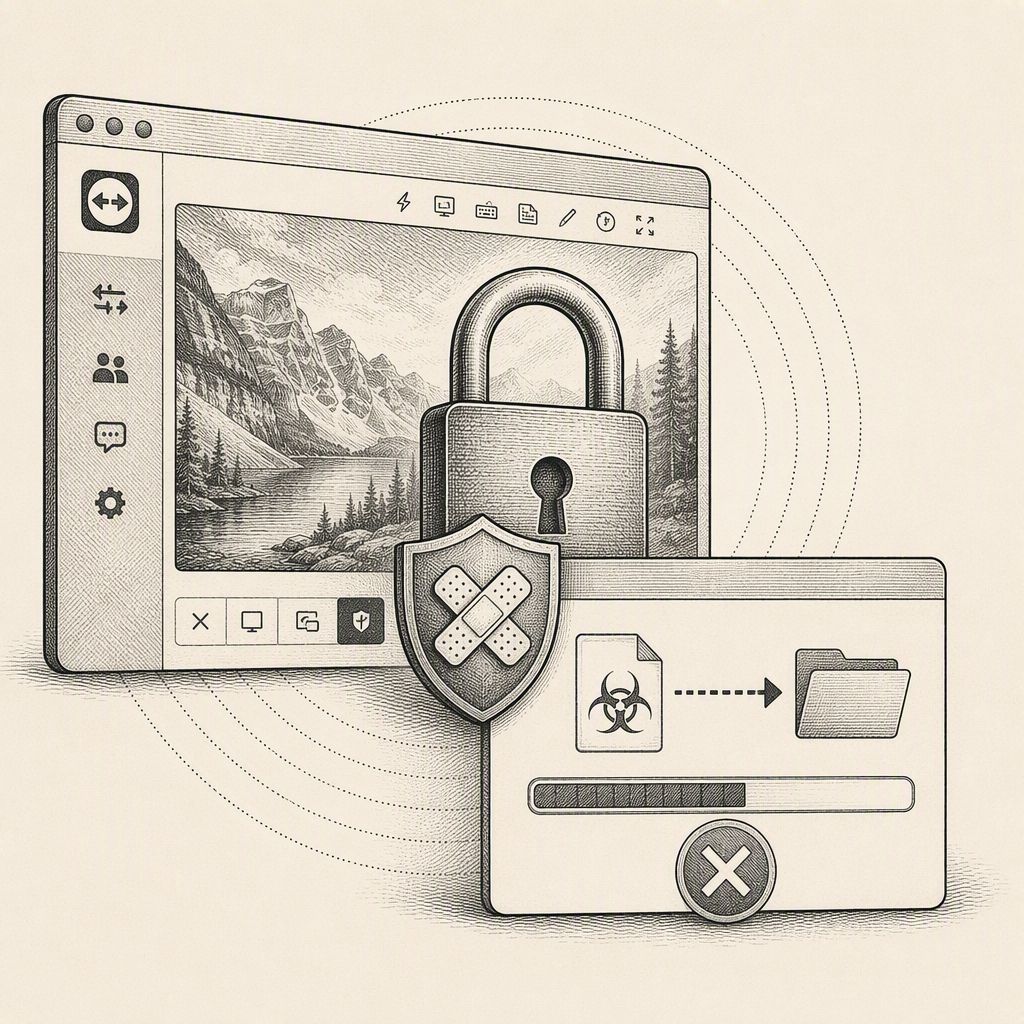
TeamViewer has released patches for CVE-2026-16444, a critical vulnerability that could allow authenticated remote session participants to execute arbitrary code on affected systems. The flaw, detailed in security bulletin TV-2026-1008, stems from improper path validation during file transfer and clipboard operations within TeamViewer's desktop clients.
This vulnerability enables an attacker, already authenticated within a TeamViewer session, to exploit path-traversal sequences in filenames. Instead of the file being saved to the intended download directory, it can be written to any location on the victim's file system. This arbitrary file-write capability could be leveraged to overwrite critical system files or place malicious executables in directories that are later accessed by the user or system processes.
The potential impact ranges from system compromise to full remote code execution, depending on the attacker's ability to place a malicious payload in an executable path or overwrite a configuration file. TeamViewer rates the vulnerability as 'Important' with a CVSS score of 7.5, noting that exploitation requires network access and user interaction within an active remote session.
The affected products include TeamViewer Remote, TeamViewer Tensor, and TeamViewer ONE desktop clients across Windows, macOS, and Linux. TeamViewer has provided specific version requirements for patching, recommending updates to version 15.81.5 or later for most current installations. Older versions, including 14 and 13, also have corresponding patch versions that must be applied.
While exploitation requires an existing authenticated session, this does not diminish the threat. Attackers could gain initial access through compromised credentials, social engineering, or by impersonating legitimate support personnel. The ability to write files to arbitrary locations could also be used for establishing persistence, exfiltrating data, or facilitating further privilege escalation.
TeamViewer stated that it is unaware of any public disclosure or in-the-wild exploitation of CVE-2026-16444 prior to the advisory. The company credited researchers Jamir0quai and sam91281 for their responsible disclosure through the TeamViewer bug bounty program.
To mitigate this risk, administrators are strongly advised to update all TeamViewer installations to the latest available versions. Additionally, reviewing remote support session logs, restricting file transfer capabilities where not essential, enforcing multi-factor authentication, and implementing endpoint monitoring for unusual file activity are recommended security practices.