
Tailscale SSH Vulnerabilities 'Tailworm' Allow Root Access and Lateral Movement
Security researcher Erica Windisch has detailed critical vulnerabilities in Tailscale SSH, dubbed 'Tailworm,' that could allow attackers to gain root access and move laterally across servers.
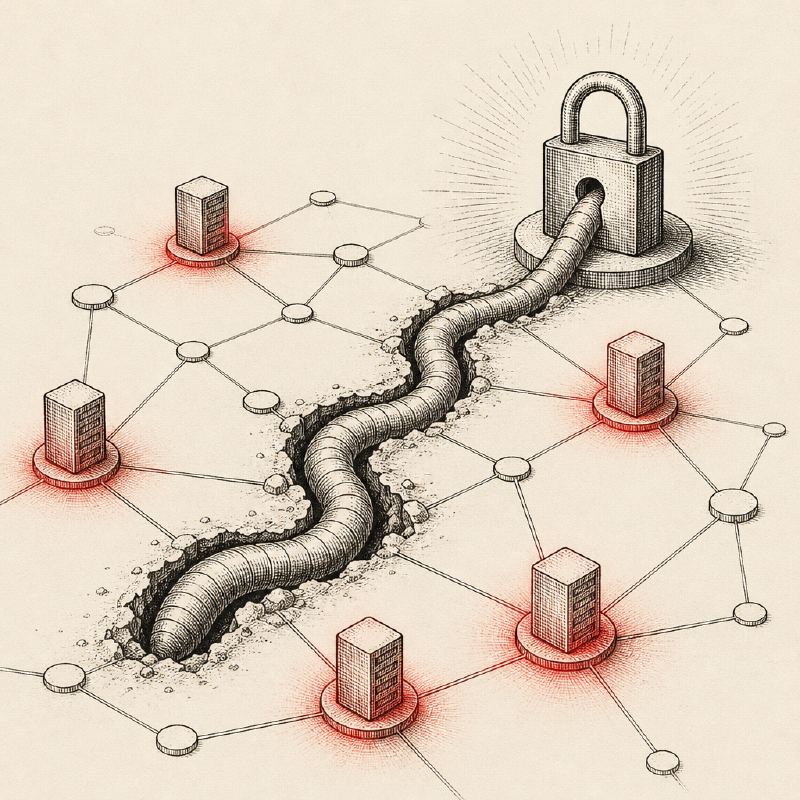
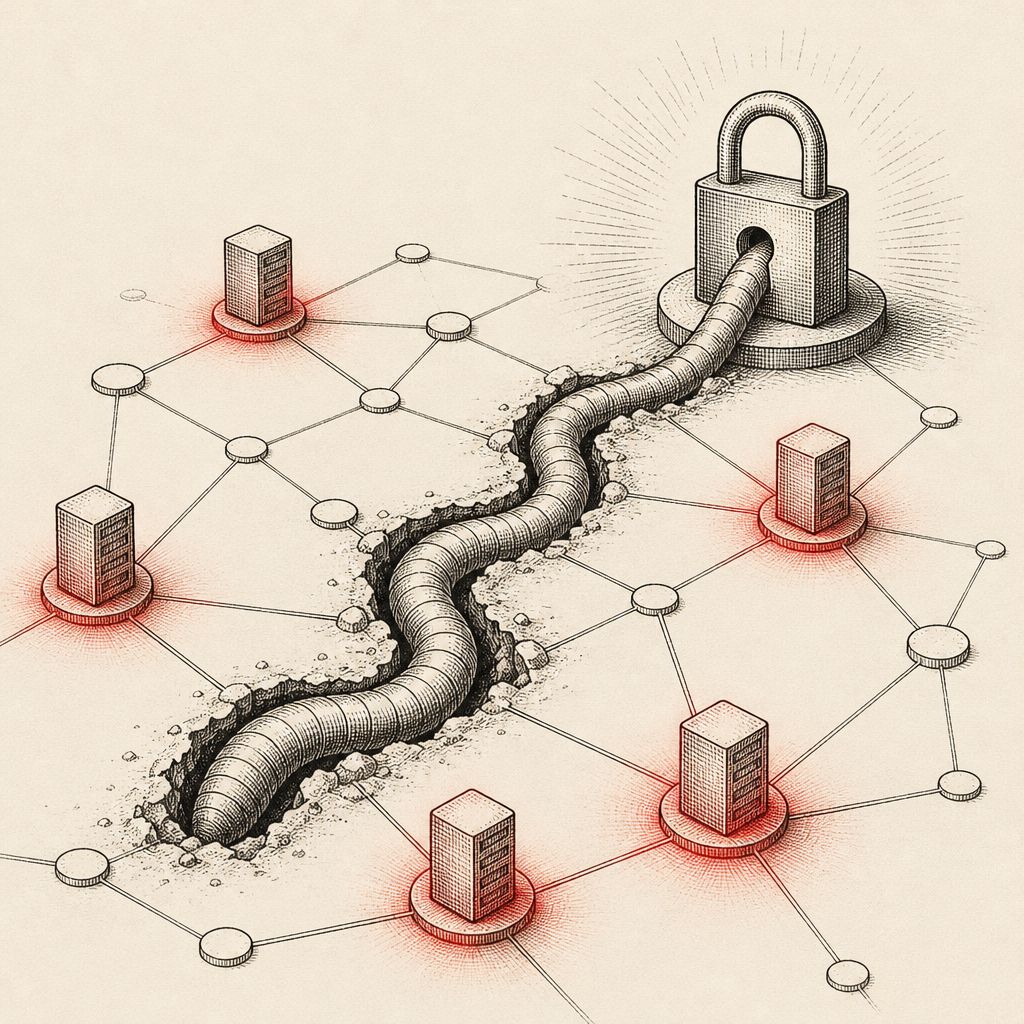
A new report, "Tailworm," authored by security researcher Erica Windisch of Cyberdione Labs, has uncovered critical vulnerabilities within Tailscale's SSH server and related components. These flaws, if exploited, could allow an attacker with initial access to one compromised device to escalate privileges to root access on other servers within a Tailscale network and facilitate lateral movement. The vulnerabilities were identified in Tailscale versions 1.104.2 and Headscale 0.29.5. As of the report's publication on October 25, 2026, Tailscale had not yet released patches or assigned CVE identifiers for these high-severity findings.
The Tailworm report outlines eleven distinct findings categorized into five groups, affecting Tailscale's SSH server, its 'serve' and 'app connector' features, the DERP relay client, and Headscale, an open-source server for managing Tailscale networks. The most severe issues are concentrated within the Tailscale SSH server. This server operates within 'tailscaled,' a background process with root privileges on the host machine. The vulnerabilities leverage Tailscale's SSH functionality, particularly socket forwarding, to achieve privilege escalation.
One critical finding (F1) involves local socket forwarding (ssh -L) which, when configured to reach root-only sockets, can grant an attacker root access and the ability to read sensitive files like /etc/shadow. Another significant vulnerability (F2) allows remote socket forwarding (ssh -R) to replace root-owned sockets, enabling root code execution through a command daemon. A race condition (F3) was also identified that could allow a malicious node to join the network by bypassing path checks.
The report details a potential attack chain where a compromised device can pivot to gain root access on other servers on the network. This lateral movement is facilitated by Tailscale's architecture, where each device typically has visibility into its peers. The researcher demonstrated in a lab environment that this spread could occur rapidly, potentially within a second per hop, without requiring passwords or stolen credentials. The initial foothold could originate from various sources, such as a vulnerable web application, a compromised software package, or phishing, but Tailscale's features can amplify a single breach into widespread network compromise.
Beyond SSH, the report highlights issues with the experimental 'conn25' app connector feature. A device with connector permissions could potentially send traffic to any destination, including cloud metadata services that often store server credentials, or internal services within Kubernetes clusters. Additionally, a memory exhaustion vulnerability in Headscale could prevent new devices from joining the network, and a 'serve' feature misconfiguration could expose the local admin interface to remote peers.
While Tailscale has not yet issued official patches or CVEs, the researcher notes that per-pair access rules, a feature within Tailscale that controls inter-device communication, were effective in containing the spread in lab tests. This suggests that proper network segmentation and access control policies are crucial mitigations. The report also points to a broader context of recent SSH-related security issues, including a previously disclosed Tailscale flaw (TS-2026-009) that allowed root sessions via specially crafted usernames, and general Linux privilege escalation vectors through SSH.
The implications of the Tailworm vulnerabilities are significant, particularly for organizations relying on Tailscale for secure remote access and network management. The ability for an attacker to move from a single compromised endpoint to root control across an entire fleet of servers poses a severe risk to data confidentiality, integrity, and service availability. The findings underscore the importance of prompt patching and robust security configurations, even in systems designed for secure connectivity.
This research highlights the ongoing challenges in securing complex networking solutions. As threat actors continually seek new avenues for exploitation, vulnerabilities in seemingly secure infrastructure like Tailscale SSH can provide critical pathways for sophisticated attacks. The Tailworm report serves as a stark reminder for organizations to stay vigilant, monitor for security advisories, and implement defense-in-depth strategies to protect their networks.