
Systemic Infrastructure Failures Plague Microsoft, Apple, and FAA, Prompting Calls for Resilient Architectures
Recent widespread outages at major organizations like Microsoft, Apple, and the FAA underscore systemic infrastructure vulnerabilities, sparking debate on the need for more resilient network designs.
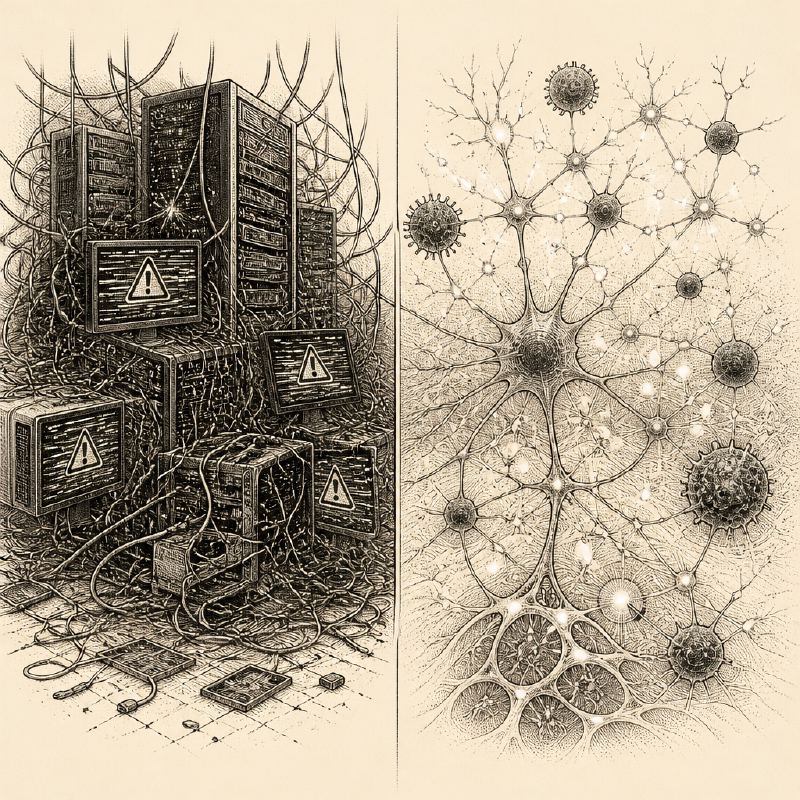
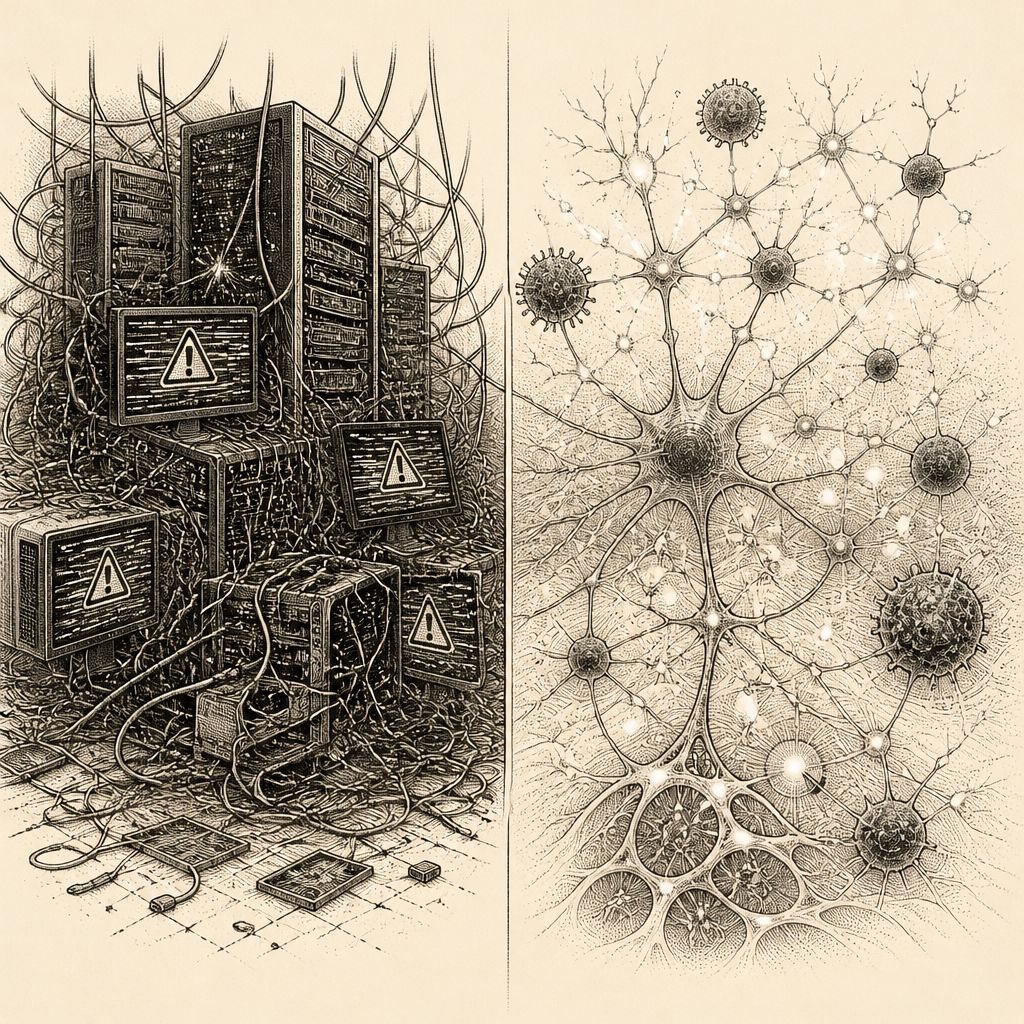
November has seen a cascade of significant outages affecting prominent organizations, including Microsoft, Apple, and the Federal Aviation Administration (FAA), leading to the coining of the term 'Outage As A Service' (OAAS) to describe these systemic infrastructure failures. These incidents, ranging from botched software upgrades to outdated hardware, highlight a persistent problem in digital infrastructure.
Microsoft's Azure cloud platform experienced a major disruption due to a cascading failure initiated by a faulty upgrade, impacting numerous services. Simultaneously, the FAA grappled with issues stemming from its reliance on aging hardware, described as 'living fossil' technology, which proved incapable of supporting modern operational demands. These events are not isolated; similar failures have been observed across various sectors, including European supermarkets and even government agencies, underscoring the pervasive nature of OAAS.
The article categorizes these failures into distinct classes, noting that while the specific causes vary—from flawed mental models of network interactions and chronic underfunding to supply chain weaknesses—the root causes often have obvious, yet unaddressed, fixes. The fundamental issue, according to the author, is that infrastructure that functions correctly remains invisible and is therefore neglected until it breaks, leading to a cycle of reactive maintenance rather than proactive resilience.
In response to these recurring failures, the piece advocates for a paradigm shift towards inherently resilient and self-monitoring infrastructure. It highlights SCION (Scalability, Control, and Isolation On Next-generation networks) as a promising architectural approach. SCION remodels internet routing to incorporate static paths, robust control and data planes, and enhanced trust management and node isolation, resulting in a highly resilient and secure network. The Secure Swiss Finance Network's adoption of SCION is presented as a testament to its reliability.
The author draws a compelling analogy between digital infrastructure and the human immune system, a complex and adaptive network capable of managing trillions of cells and countless threats daily. This biological model, with its emphasis on information signaling, pattern matching, resource management, and defense in depth, offers a blueprint for creating 'Digital Immune Systems.' While the concept of a Digital Immune System has been discussed for decades, it has largely remained a marketing term rather than a developmental reality.
The article posits that true resilience cannot be achieved by patching existing, flawed internet infrastructure. Instead, it calls for a ground-up re-engineering, akin to biological evolution, which continuously adapts and improves complex systems while they remain operational. This requires rigorous exploration of complex systems and cross-disciplinary research, moving beyond artificial selection driven by market analysis.
Academics are exploring these concepts, with research papers referencing biological systems to design resilient digital architectures. The current state of OAAS is presented as a chronic syndrome with potentially fatal outcomes for organizations, stemming from the inability of digital infrastructure to self-manage internal failures or external attacks.
Given the industry's willingness to invest heavily in AI for consumer applications, the author concludes by urging a serious commitment to researching and developing true Digital Immune Systems. The analogy of a doctor curing itself serves as a powerful call to action for the cybersecurity and IT industries to address the fundamental flaws in their infrastructure.