
Stolen Staff Logins Fuel Cross-District Attacks in K-12 Education
Cybercriminals are exploiting compromised K-12 staff credentials found on dark web marketplaces to launch attacks that spread between school districts, according to MS-ISAC.
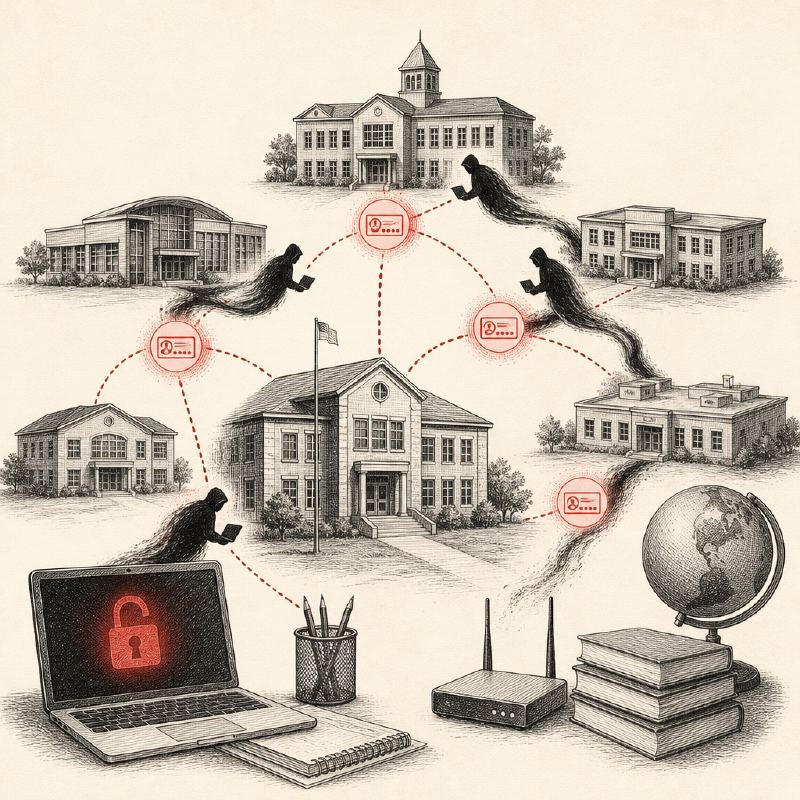
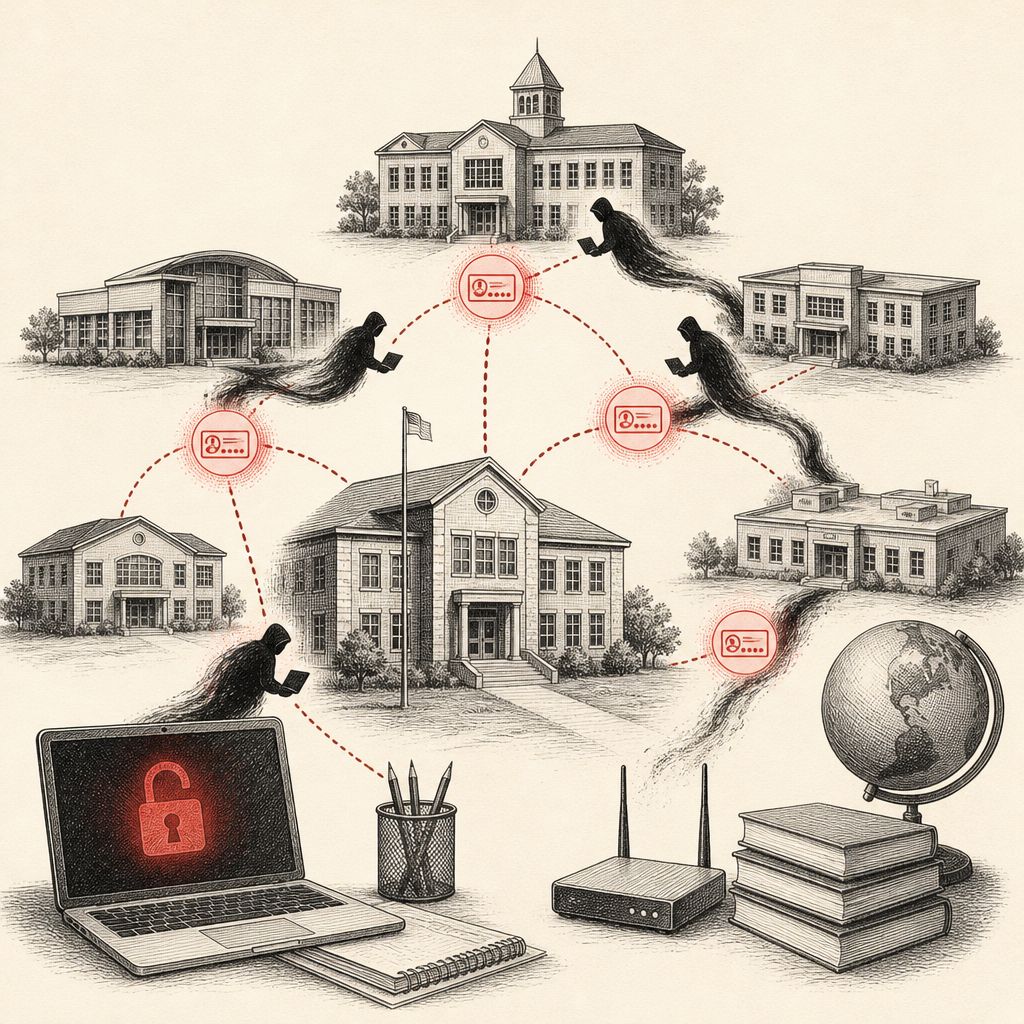
Last school year, a staggering 808 K-12 school organizations discovered that their staff credentials were being peddled on dark web marketplaces. This alarming trend, reported by the Multi-State Information Sharing and Analysis Center (MS-ISAC), represents a significant portion of the center's K-12 members and highlights a pervasive supply chain risk within the education sector. Attackers are not merely stealing credentials; they are actively using them as a springboard to infiltrate one district and then leverage that initial access to target others.
The modus operandi, dubbed "account takeover hopping" by the Center for Internet Security (CIS), involves attackers gaining initial access to a legitimate district account, often through phishing. Once inside, they exploit this trusted account to send further phishing messages to the victim's contacts, which frequently include staff members at other school districts. Because these malicious emails originate from seemingly legitimate, authenticated accounts, they are more likely to bypass standard email filters and defenses, making them highly effective.
Beyond direct phishing, attackers are also employing social engineering tactics, such as impersonating superintendents via hijacked K-12 accounts to commit fraud. The human element remains a primary vector, with Roy Park, Director of Cybersecurity & Digital Privacy at the San Joaquin County Office of Education, noting that "humans are curious and I believe want to help by nature. Criminals are criminals and usually will take the path of least resistance and prey on emotions." This inherent trust, coupled with sophisticated social engineering, makes staff a prime target.
Malware also finds its way into school networks through less direct means, often via web browsers. Analysis shows that a significant percentage of infections from common malware families originate from malicious advertisements displayed on legitimate websites. Furthermore, a tactic known as "ClickFix" lures users into executing malicious commands themselves, often disguised as helpful software updates or fixes, demonstrating that even passive web browsing can pose a substantial risk.
The cybersecurity staffing and resource landscape within K-12 institutions presents a critical vulnerability. A recent survey by CIS and MS-ISAC revealed that 66% of surveyed districts have only one or two individuals responsible for cybersecurity, and 11% have no dedicated security staff at all. Compounding this issue, 70% of districts reported delaying security projects, purchases, or hiring due to budget constraints, leaving them ill-equipped to handle the escalating threat landscape.
While many districts have adopted basic security measures, their ability to recover from incidents remains a concern. Eighty-three percent of surveyed districts have deployed Multi-Factor Authentication (MFA) and employ email filtering, but only 59% possess an incident response plan. Even fewer, 15%, conduct regular incident response exercises, and a mere 9% consider their security strategy fully implemented, indicating a gap between preparedness and actual resilience.
MS-ISAC's Security Operations Center analyzed thousands of incidents, finding that attackers frequently attempt to evade detection by disabling or modifying security tools, a tactic observed in a substantial number of cases. This highlights the need for vigilant monitoring and rapid response, especially in environments with limited security personnel. The impact of these attacks is tangible, with 51% of surveyed districts experiencing a cyber incident in the past year, leading to disrupted classroom instruction in 22% of cases and even school closures in 2%.
To combat these pervasive threats, CIS recommends that school districts enhance MFA deployment, actively monitor for exposed credentials, rigorously review privileged accounts, and conduct regular incident response exercises involving leadership. For state-level support, recurring funding for shared monitoring and incident response services is crucial to bolster the cyber resilience of K-12 institutions.