
Stack-Based Buffer Overflow in X.Org Server Font Alias Handling (CVE-2026-50256) Enables Local Privilege Escalation
A stack-based buffer overflow in X.Org Server's font alias resolution, tracked as CVE-2026-50256 with a CVSS score of 7.8, allows local attackers to escalate privileges to root on affected Linux systems.
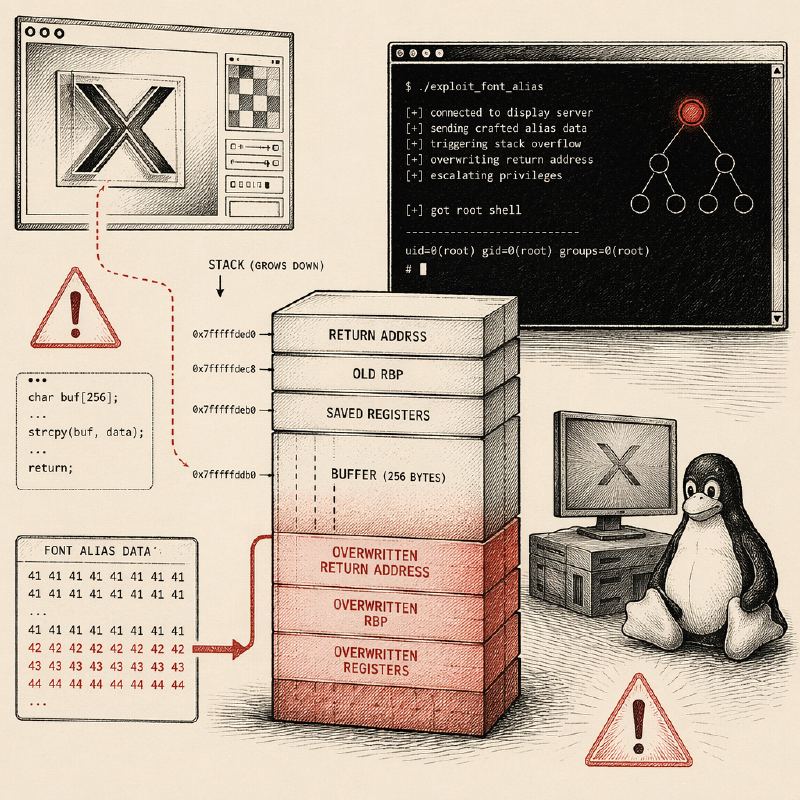
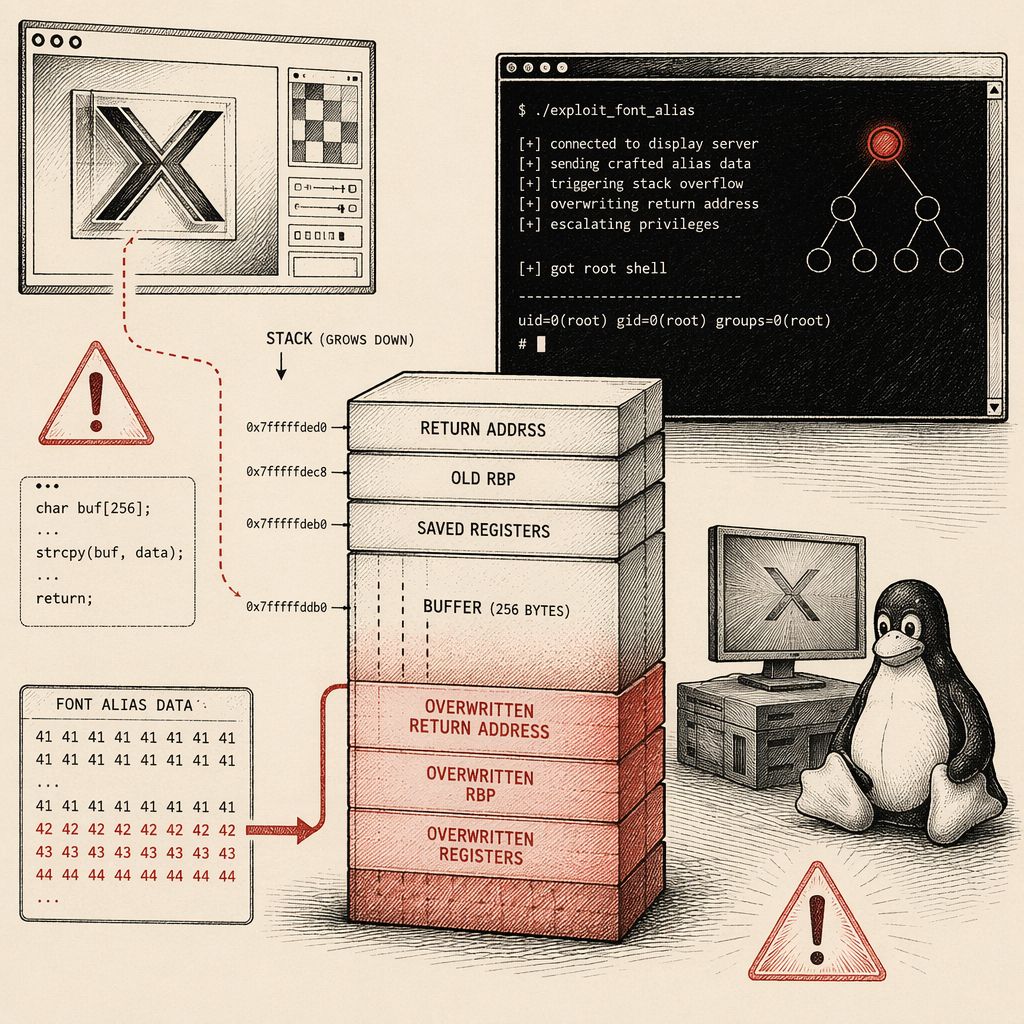
A new vulnerability disclosed by the Zero Day Initiative (ZDI-26-390) reveals a stack-based buffer overflow in X.Org Server's font alias handling, tracked as CVE-2026-50256. The flaw, rated with a CVSS score of 7.8, allows local attackers who have already obtained low-privileged code execution to escalate their privileges to root, potentially compromising the entire system.
The vulnerability resides in how X.Org Server processes font alias data. Specifically, the issue stems from a lack of proper validation of the length of user-supplied data before copying it to a fixed-length stack-based buffer. This oversight can lead to memory corruption, which an attacker can leverage to overwrite critical data structures and execute arbitrary code with root privileges.
X.Org Server is the standard display server for most Linux distributions and Unix-like operating systems. It is widely deployed on desktop and server environments, making this vulnerability relevant to a broad range of systems. The flaw can be exploited only by an attacker who already has the ability to execute low-privileged code on the target system, but once that foothold is gained, the vulnerability provides a straightforward path to full system compromise.
X.Org has issued a patch to address the vulnerability. The fix is available in a commit to the X.Org Server repository on GitLab, referenced as commit bb5158f962dc935e58ef8b4b5fcb31be201a6e07. System administrators and users are strongly advised to update their X.Org Server installations to the latest patched version as soon as possible.
The disclosure timeline indicates that the vulnerability was reported to the vendor on April 17, 2026, with the coordinated public release of the advisory occurring on June 24, 2026. The credit for discovering the flaw is attributed to an anonymous researcher.
This vulnerability is part of a broader pattern of memory corruption issues in X.Org Server that have been disclosed in recent months. Multiple stack-based buffer overflows and use-after-free bugs have been reported in various components of the server, including Xkb Key Types handling (CVE-2026-50258), SetMap request handling (CVE-2026-50259), and several use-after-free flaws. The cumulative effect of these vulnerabilities underscores the importance of keeping X.Org Server updated, particularly on systems where local users may have low-privileged access.
While the vulnerability requires local access and low-privileged code execution, it remains a significant threat in multi-user environments, such as shared hosting, academic labs, or enterprise desktops where users are not granted administrative rights. An attacker who gains initial access through other means—such as a phishing attack or a web application exploit—could use this flaw to escalate privileges and take full control of the affected system.