
Signal Restricts Screenshots to Protect User Privacy from AI Assistants
Signal is implementing screenshot restrictions on iOS and Android to prevent AI assistants like Siri and Google Gemini from accessing private chat content, bypassing end-to-end encryption.
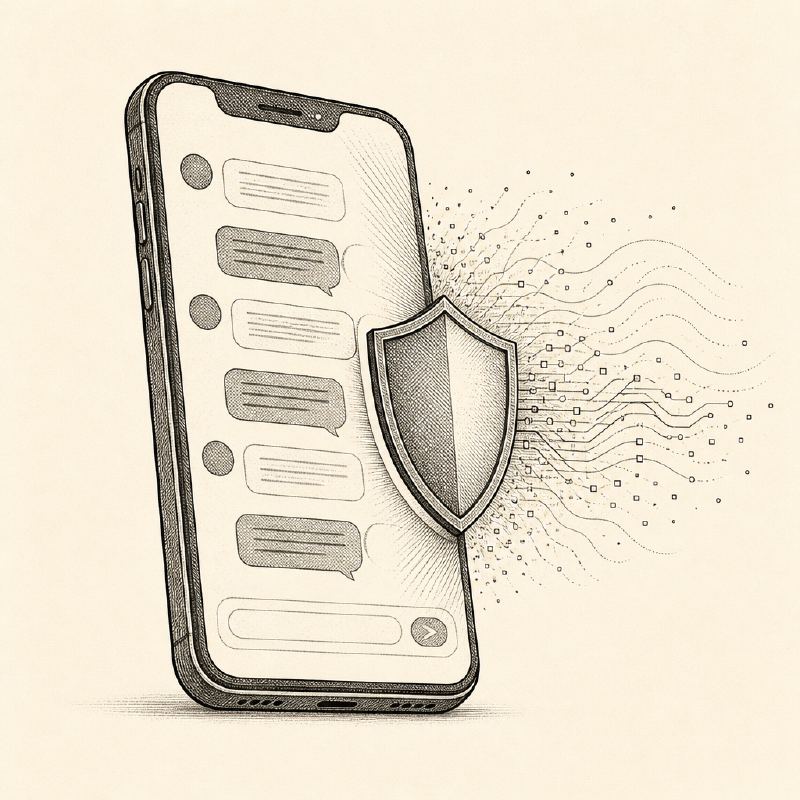

Signal, the privacy-focused messaging application, is rolling out new features to restrict screenshots on its iOS and Android applications. This move is specifically designed to prevent artificial intelligence assistants, such as Apple's Siri and Google's Gemini, from accessing and processing the content of private user conversations displayed on screen. The core issue addressed is that while Signal employs robust end-to-end encryption for messages in transit, the content becomes visible on the user's screen once decrypted. AI assistants capable of screen reading can capture this visible text without needing to break the encryption itself, thereby gaining access to sensitive information.
On iOS 27, Signal is introducing a "Block Siri AI" setting. When enabled, this feature will prevent Siri from scanning Signal content and will also block screenshots from being taken within the app and from the App Switcher. For Android users, Signal is implementing an automatic detection mechanism. The app will activate its "Screen security" feature when it detects an AI assistant attempting to read the screen. However, Signal notes that the effectiveness and implementation of this detection can vary across different Android versions and devices, meaning the protection might not be uniform.
This initiative by Signal follows a similar decision made in 2025 to block screenshots by default in its Windows 11 desktop application. That measure was taken to prevent Microsoft's Recall feature from capturing and storing sensitive chat data in its searchable history. In contrast, other applications, like the Brave browser, have opted to block Microsoft Recall while still allowing regular screenshots, highlighting different approaches to managing AI-driven data access.
Apple states that Siri's on-screen awareness is intended to help it answer questions or act on what users are viewing. Similarly, Google's Gemini help pages indicate that some screen actions may upload visible content to provide context to the assistant. While neither assistant is described as routinely recording every Signal chat, the risk lies in the potential for unauthorized access once a message is captured. Signal emphasizes that once an AI assistant captures a screenshot of a message, Signal loses control over how that copied data is subsequently handled or stored.
Users will have the option to disable these screenshot restrictions within Signal's privacy settings if they wish to take screenshots again. However, Signal warns that doing so could also expose messages from other participants in a chat. For iOS users, the Electronic Frontier Foundation suggests an alternative: navigating to Settings > Siri > Excluded Apps and adding Signal to block Siri's access, including its on-screen awareness capabilities. This offers a more granular control over Siri's interaction with the app.
Despite these measures, Signal acknowledges that screenshot blocking does not cover all potential avenues for data exposure. The application cannot provide similar protection on macOS and cautions that AI assistants might still access content that has already been saved on a device. Furthermore, Meta's Muse has previously demonstrated the ability to read Signal message text through Android notifications and Mac permissions without compromising Signal's encryption, indicating other vectors for data access exist.
Signal is actively advocating for platform makers like Apple, Google, and Microsoft to implement clearer mechanisms for developers to opt out of AI access to screens, files, and notifications. The company also calls for better documentation regarding what data AI assistants can access and where that information is ultimately stored. These controls are largely managed at the operating system level, making it crucial for Signal to press platform providers for more robust limitations to safeguard user privacy.
The distinction between different data access methods is critical for users sharing sensitive information. While a screenshot block can effectively close one pathway for unauthorized access to private chats, it does not dictate how operating systems handle notifications or grant permissions to other applications. Signal's push for platform-level controls underscores the broader challenge of balancing AI functionality with user privacy in an increasingly interconnected digital environment.
Signal's latest update extends its privacy protections by specifically targeting OS-level AI agents like Google Gemini and Apple Siri. This move, prompted by concerns over these agents scanning screen content and potentially exfiltrating private messages to third-party servers, mirrors previous defenses against tools like Microsoft Recall. While users can disable these screenshot blocks, Signal warns this action compromises the privacy of their communications.
Signal's latest announcement extends these privacy protections to Apple's upcoming iOS 27 and unspecified Android AI assistants, building upon its prior restrictions against Microsoft Recall. The company is specifically targeting 'agentic systems' that scan screens, citing them as an 'existential threat' to user privacy and Signal's core mission. Signal's leadership has called on major OS vendors to provide clearer technical tools and documentation for developers to prevent unauthorized AI data access.
This updated report from The Hacker News details Signal's implementation of default screenshot restrictions on both Android and iOS platforms. The new measure specifically targets AI agents, including those integrated into iOS 27 and detected AI assistants on Android, aiming to prevent them from accessing private chat content via screen capture. While Signal acknowledges the protection is not entirely foolproof, it represents a significant proactive step to safeguard user privacy against the growing threat of AI-driven data access.