
Satellites Face Growing Cybersecurity Threats from Ground Infrastructure
The expanding space economy is increasingly vulnerable to cyberattacks targeting ground-based systems, posing significant risks to satellite communications and operations.
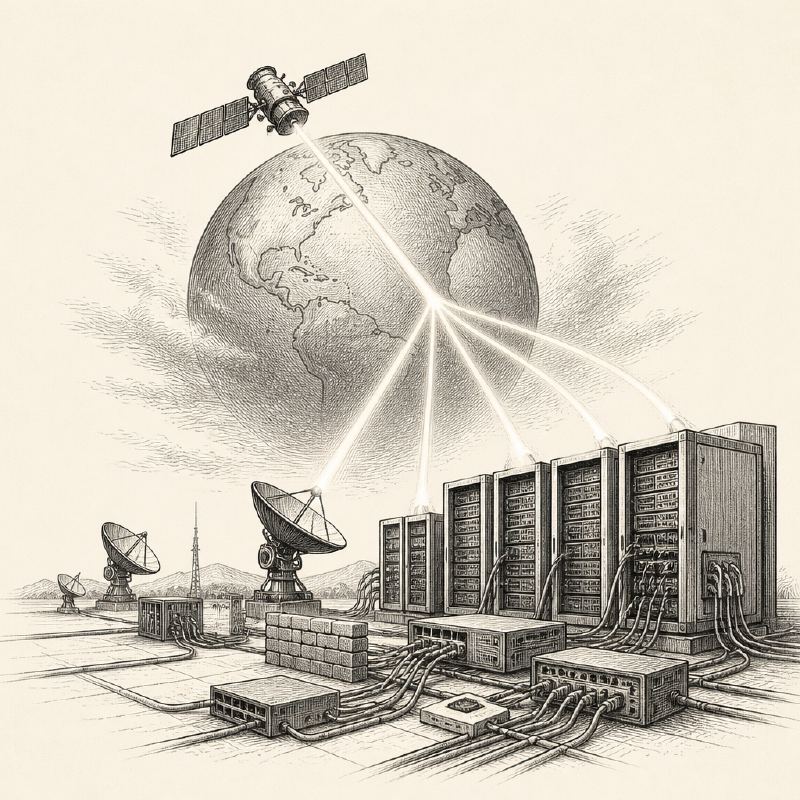
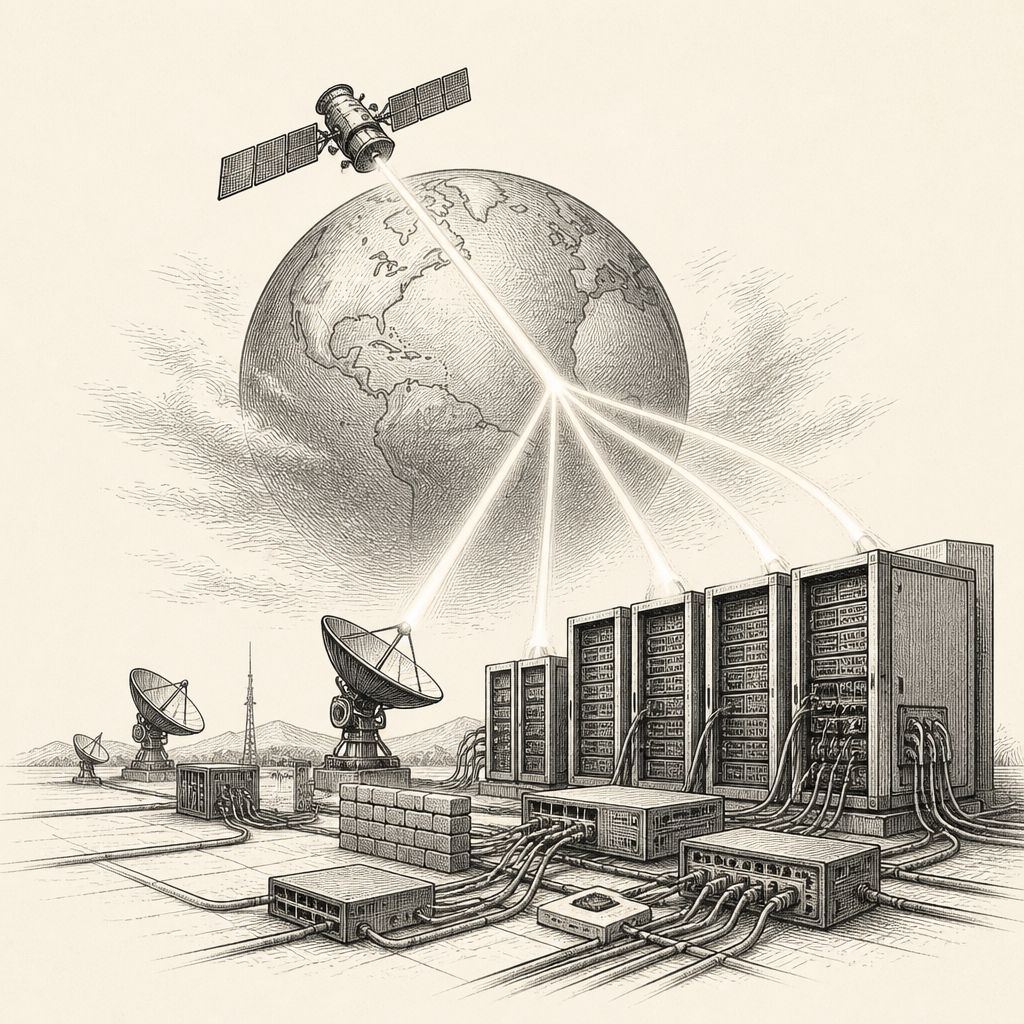
While satellites operate in the vacuum of space, the terrestrial networks and infrastructure that support them are proving to be a significant cybersecurity weak point. As the number of satellites and the services they enable rapidly expand, the attack surface for these critical systems grows, making them increasingly consequential targets for cyber threat actors.
Recorded Future's Insikt Group highlights that in 2025 alone, over 4,500 satellites were launched, with 87% being commercially owned, contributing to a booming global space economy. This proliferation means that everyday services like communications and navigation, as well as vital infrastructure monitoring and shipping operations, are becoming more reliant on satellite technology. A disruption to these services, whether through direct satellite compromise or, more commonly, through attacks on ground systems, could have widespread ramifications.
The militarization of space and the development of orbital AI data centers further introduce complex security challenges. Recorded Future points to several real-world incidents where ground-based vulnerabilities were exploited. A notable example occurred in February 2022, when Russian attackers used the destructive malware AcidRain to disable thousands of Viasat modems, disrupting satellite broadband services. This attack, originating from a misconfigured VPN appliance, impacted Ukrainian military communications and even affected remote monitoring systems for wind turbines in Germany.
Similar attacks have targeted critical infrastructure and commercial operations. In 2025, the Iranian group Lab-Dookhtegan disabled satellite communications on dozens of tankers and cargo vessels by compromising an IT provider serving the fleet. Attackers gained administrator-level control of shipboard Linux systems, disabling essential communication and tracking software. Another incident involved an oil tanker losing communications for over 30 hours, with investigators focusing on compromised satellite terminals and remote maintenance systems as potential entry points.
"In none of these cases did anyone touch an object in orbit. The attackers went for the vendor, the terminal, the management plane," Recorded Future researchers noted. This underscores that the primary vulnerabilities lie not in the satellites themselves, but in the terrestrial components of the space ecosystem. The report emphasizes that "Every satellite has a terrestrial address: the ground stations that command it, the links that carry its telemetry, the user terminals at the edge, and the software supply chain behind it all. That is where attackers go, because that is where the doors are."
Further research from institutions like the University of California, San Diego, and the University of Maryland corroborates these concerns. Their findings revealed that approximately half of the geostationary satellites they could observe were transmitting data unencrypted, exposing sensitive telecommunications, corporate, and military data. The US National Security Agency (NSA) has also issued warnings, highlighting the expanding attack surface created by the proliferation of low-Earth-orbit (LEO) satellite networks.
In a joint advisory, the NSA and international partners detailed risks across the satellite communications ecosystem, including satellites, ground stations, control centers, user terminals, and third-party suppliers. They warned that "The ground segment is highly exposed to cyber threats due to its extensive connectivity with terrestrial networks." Recommended mitigations include continuous monitoring of ground systems, enhanced endpoint security, robust access controls, and technical safeguards like frequency-hopping signals and anti-jamming antennas.
Recorded Future recommends treating space infrastructure as critical national infrastructure, enforcing stronger security standards for vendors, and implementing fundamental security measures such as encryption for satellite communications. Addressing these terrestrial vulnerabilities is paramount to securing the rapidly growing and increasingly vital satellite services that underpin modern society.