
Russian Spies Leverage Cloud Breaches for Sophisticated Phishing Campaigns
The Russian cyberespionage group COLD RELIC, linked to the FSB, is exploiting compromised cloud environments to launch highly targeted phishing attacks against government officials, defense contractors, and NGOs.
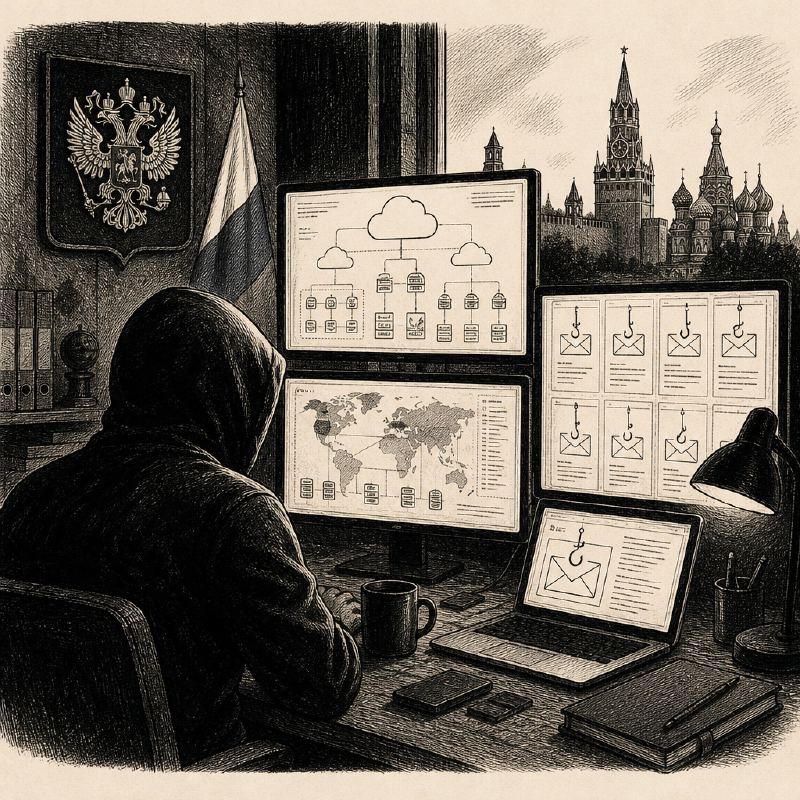
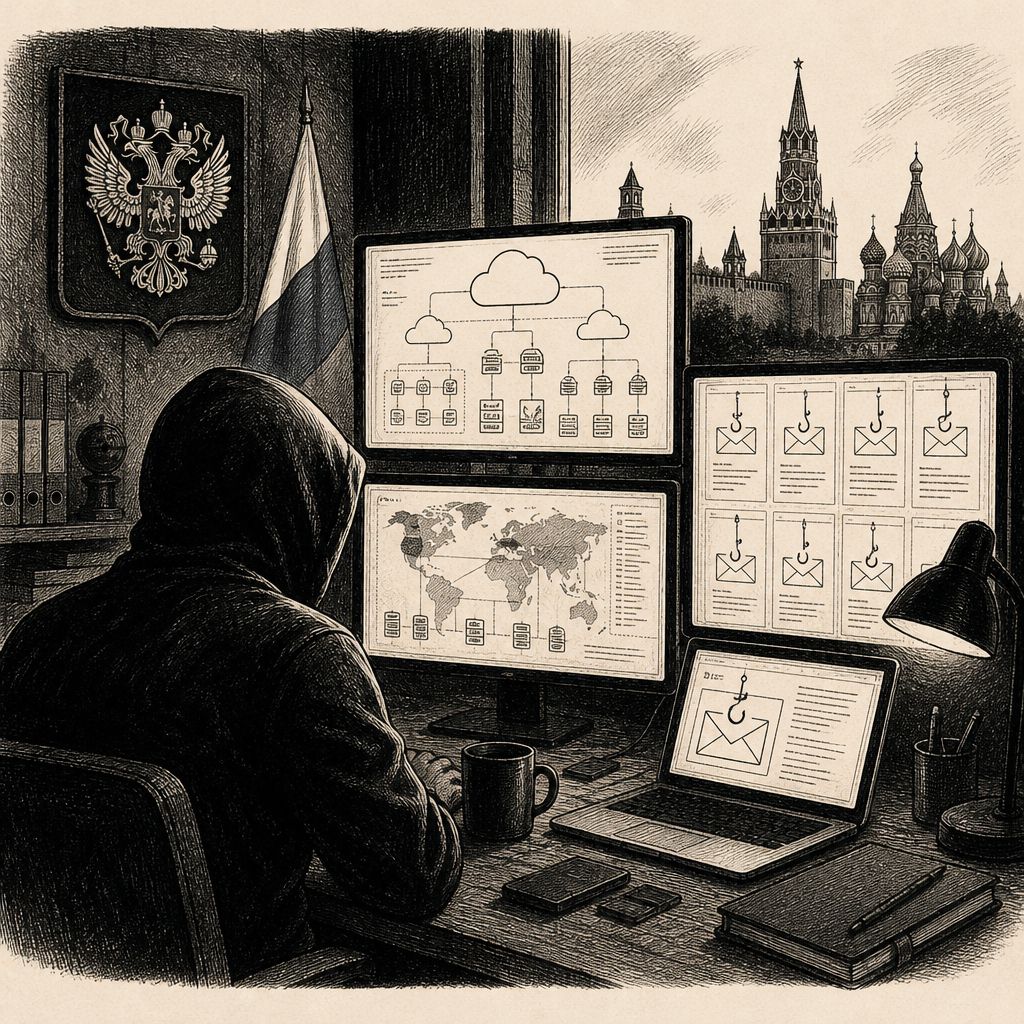
A sophisticated cyberespionage campaign orchestrated by the Russian group COLD RELIC, also tracked as Star Blizzard, Callisto, and Gossamer Bear, has been identified by Google Threat Intelligence Group (GTIG). This group, believed to operate under the direction of Russia's Federal Security Service (FSB), is employing a novel tactic: using compromised cloud environments as a springboard for subsequent phishing operations. Their primary targets include government officials, defense contractors, and non-governmental organizations (NGOs) located in Europe and North America, aiming to acquire information of strategic or political value to the Russian government.
The group's methodology involves a multi-stage approach that begins with the compromise of a target organization. In one observed incident, attackers gained initial access through stolen credentials for a Super Admin account. To evade detection, they logged in using a US residential proxy that closely matched the victim's location, thereby avoiding "impossible travel" alerts. The attackers then relentlessly sent Multi-Factor Authentication (MFA) prompts until the legitimate account holder inadvertently approved one, granting them administrative privileges.
Once inside the compromised cloud environment, COLD RELIC executed a broad data exfiltration strategy. They downloaded the entire contents of the organization's cloud drive, exported lists of employees, and initiated a domain-wide data export via Google Workspace Customer Takeout. To cover their tracks, they meticulously reviewed audit logs to understand the defenders' visibility and actively manipulated or deleted Alert Center notifications. To ensure persistent access, the attackers enrolled their own passkeys and MFA backup codes, and even added their own MFA devices, effectively maintaining control for several months.
The attackers further exploited the compromised environment by leveraging employee-stored passwords found in the company's cloud storage. This allowed them to gain access not only to other corporate accounts but also to employees' personal accounts, which are often less rigorously monitored by employers. Even after the initial intrusion was detected and the intruders were supposedly removed, GTIG observed COLD RELIC sending phishing emails from accounts impersonating the compromised organization's employees to their colleagues and professional contacts.
In a subsequent phase, the group demonstrated an ability to pivot to new targets by impersonating individuals from previously breached organizations. In one instance, an attacker posing as an employee of the first victim contacted an individual at a second US organization via an encrypted messaging app. During the conversation, the attacker introduced phishing links designed to steal credentials and authentication tokens for Entra ID. These links directed victims to document lures relevant to the ongoing discussion, aiming to minimize suspicion. Upon successful authentication, COLD RELIC registered a new MFA device within the Single Sign-On (SSO) solution to maintain access to the compromised user account.
The connection between these separate intrusions was further solidified by the phishing links themselves. COLD RELIC typically routes targets through a compromised intermediary website that screens visitors before redirecting them to the final phishing domain. Crucially, the attacker often includes a link parameter that references a previous victim or the specific lure used. A redirector URL from the second intrusion, submitted to VirusTotal, contained a parameter that explicitly named the first victim organization, providing a clear link between the two attacks.
Google warns that traditional security measures like password resets are insufficient against such sophisticated tactics. In at least one case, even after passwords were reset, COLD RELIC maintained access by hijacking active sessions that were never revoked. The group's campaigns highlight a dangerous convergence of human-centric social engineering and advanced cloud identity abuse. By weaponizing legitimate business communications and exploiting trust within professional networks, Russian intelligence services are effectively turning internal communications into potent attack vectors against their targets.
The Russian state-sponsored APT group Cold Relic, also known as Star Blizzard, has demonstrated a sophisticated evolution in its tactics by leveraging data stolen from a previous cloud breach to facilitate a subsequent social engineering attack on a new victim. This new article details how the attackers used harvested internal communications and employee data from the first compromise to impersonate an employee of that organization, successfully tricking an individual at a second organization into clicking phishing links. This highlights a concerning convergence of cloud identity abuse and traditional social engineering, where compromised cloud environments provide the necessary intelligence for highly convincing impersonations.
Google's analysis provides further technical details on Star Blizzard's (also known as Cold Relic) recent intrusions, specifically detailing two incidents at US-based organizations. These incidents highlight the group's evolving tactics, including the use of residential proxy networks, MFA push notification fatigue attacks, and the exploitation of cloud identity abuse for mass data exfiltration and persistent access. The new report also details how the actor impersonates employees from compromised organizations to target new victims via secure messaging apps and phishing links.