
Russian Influence Operation 'Dark Clark' Leverages AI to Target Latin America
A Russian influence operation, dubbed 'Dark Clark,' has been identified using AI to impersonate educational authorities in Peru and Ecuador, manipulating schools into hosting events that were then exploited to amplify political controversies and sow division.
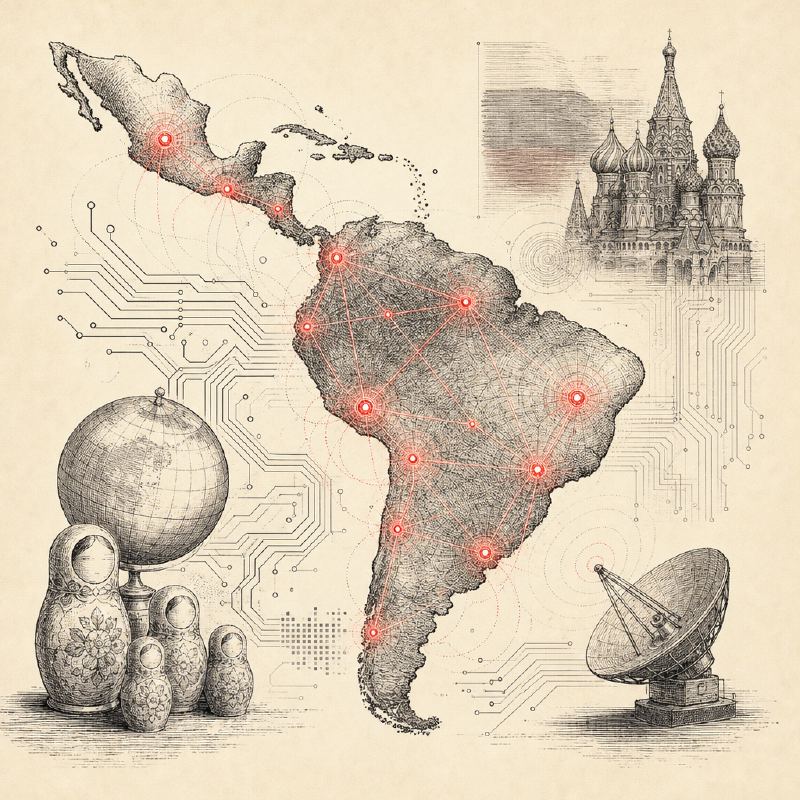
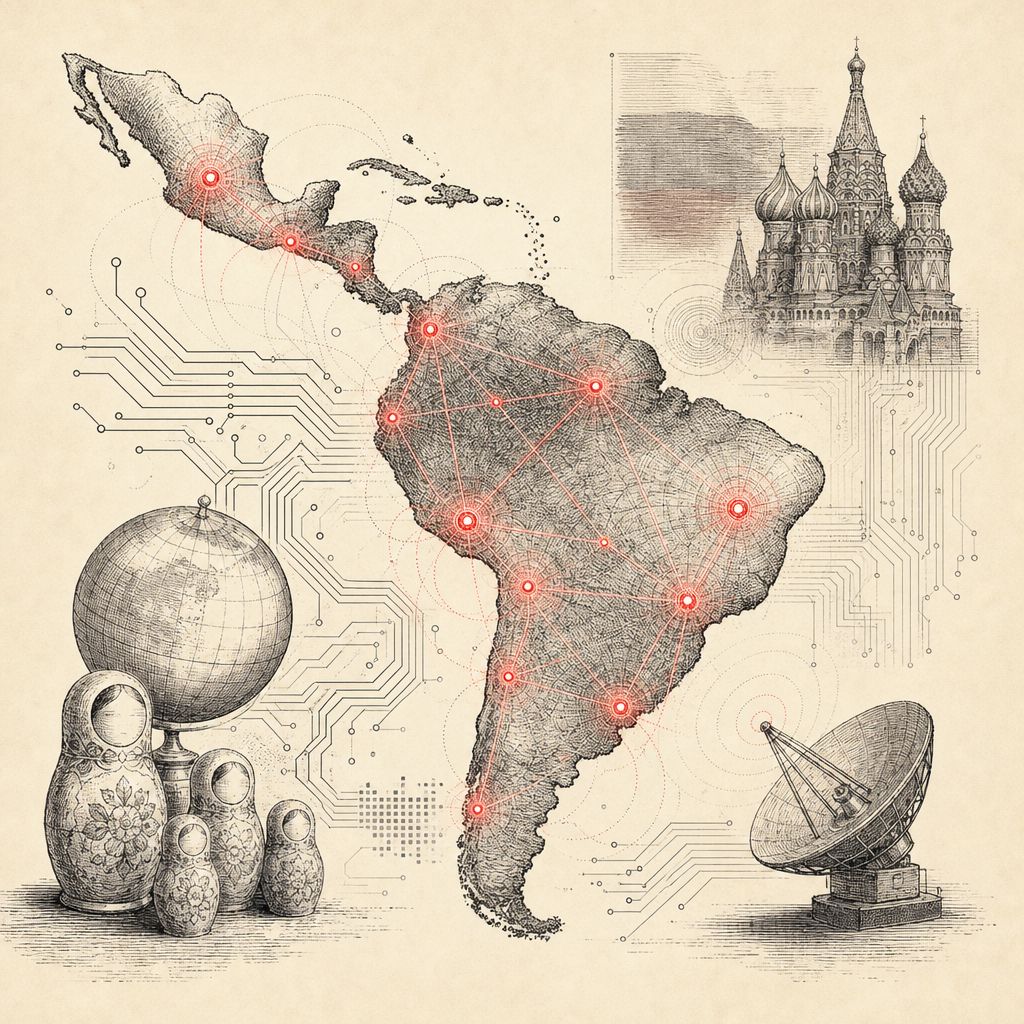
A sophisticated Russian influence operation, codenamed 'Dark Clark,' has been actively targeting Latin America by employing artificial intelligence to impersonate educational authorities in Peru and Ecuador. The operation successfully tricked schools into hosting events, which were subsequently used by the actors to amplify political controversies and foster societal division within the region. OpenAI's analysis reveals that the operation's primary objective was to influence local politics across Latin America, utilizing AI to enhance efficiency, generate reports, and create content at scale.
The 'false front' operation, 'Dark Clark,' combined AI-driven planning and reporting with more traditional tactics. It convinced school administrators to celebrate a fabricated 'National Day of Cultural and Linguistic Diversity' on May 21st and to highlight three Ukrainian political figures. These figures were then leveraged in an attempt to sow discord. In parallel campaigns targeting Argentina and Bolivia, Russian operations appeared focused on influencing domestic political landscapes. OpenAI noted that AI can significantly boost the scale, efficiency, linguistic fluency, and editorial capabilities of such influence operations, enabling actors to exploit unsuspecting victims and disseminate their content with greater reach and less transparency.
Latin America has become a critical cyber battleground for espionage and influence operations among global powers, emerging as the most targeted region worldwide. This operation is part of a broader trend where Russia is expanding its cyber intelligence and disinformation efforts, largely aimed at countering U.S. influence in the region, according to a RAND report. The tactics employed by 'Dark Clark' are consistent with Russia's broader strategy of using cyber capabilities for targeted intrusions and disinformation campaigns designed to create political division and undermine U.S. messaging during crises.
OpenAI's investigation linked the 'Dark Clark' operation to an entity known as 'Politology' or 'La Compania,' which has alleged ties to the late Russian oligarch Yevgeniy Prigozhin. The detailed operational reports shared with OpenAI's AI models included information about the group's past activities, further connecting them to Prigozhin's networks. This suggests a coordinated effort to influence global politics through sophisticated disinformation campaigns.
One notable campaign targeted schools in Lima, Peru. The actors created a seemingly official directive for school administrators, citing a fictitious 'Day of Cultural and Linguistic Diversity.' This directive instructed students to participate in short activities focused on three Ukrainian political figures. Subsequently, the operators directed administrators to submit photos of these events. OpenAI's research team, led by Ben Nimmo, corroborated some of the operators' claims by finding supporting evidence online, though they acknowledged that some claims could not be verified.
The impact of the Peruvian campaign was significant enough for a politician in Poland to reference the events, leading OpenAI to assign a high impact score on its Influence Operations Impact Scale. Similar tactics were used in Ecuador, where schools were induced to hold a loyalty pledge ceremony for President Daniel Noboa and Erik Prince, the former head of the private military company Blackwater. These events garnered media attention and prompted an official denunciation from the Ecuadorian Minister of Education.
While the operators claimed success in other influence campaigns, OpenAI could not find independent evidence for them. These unverified claims included spreading a story about a Brazilian social media influencer being trafficked to Ukraine and disseminating an audio clip alleging that Bolivian banks planned to limit cash withdrawals. The operators also reportedly used ChatGPT to identify regional incidents they could falsely claim credit for, underscoring the multifaceted use of AI in their operations.
The 'Dark Clark' operation highlights the evolving landscape of cyber influence operations, where AI is increasingly used to automate, scale, and enhance the sophistication of disinformation campaigns. The targeting of Latin America underscores the region's growing importance as a geopolitical battleground, with state-sponsored actors leveraging advanced technologies to achieve their objectives.