
Researcher Discovers Six Zero-Day Flaws in Danfoss Refrigeration Controllers
A cybersecurity researcher found six critical zero-day vulnerabilities in Danfoss AK-SM800A refrigeration controller firmware, enabling unauthenticated remote code execution and posing risks to food supply chains.
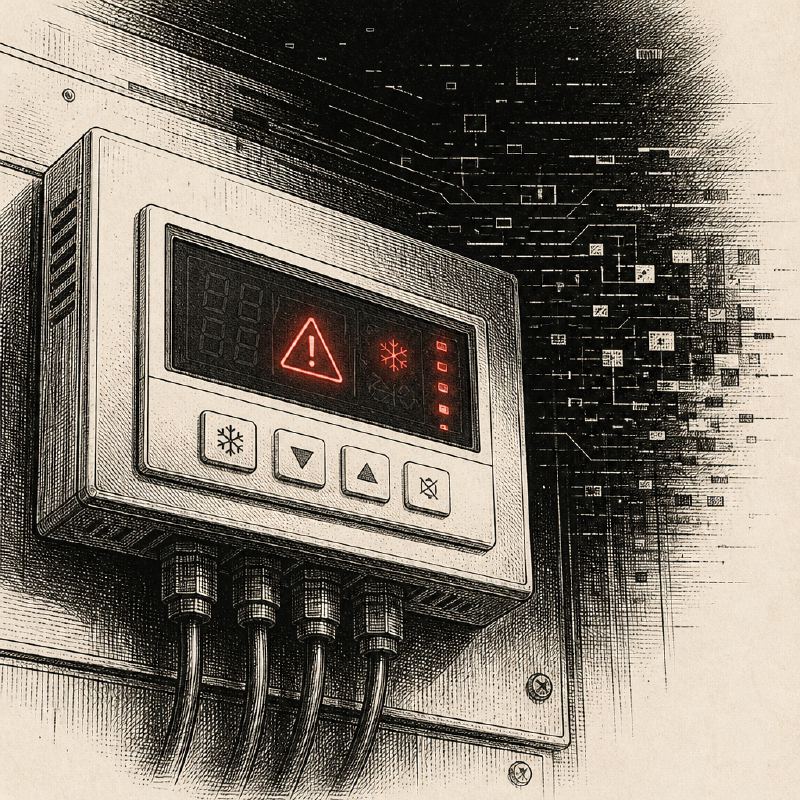
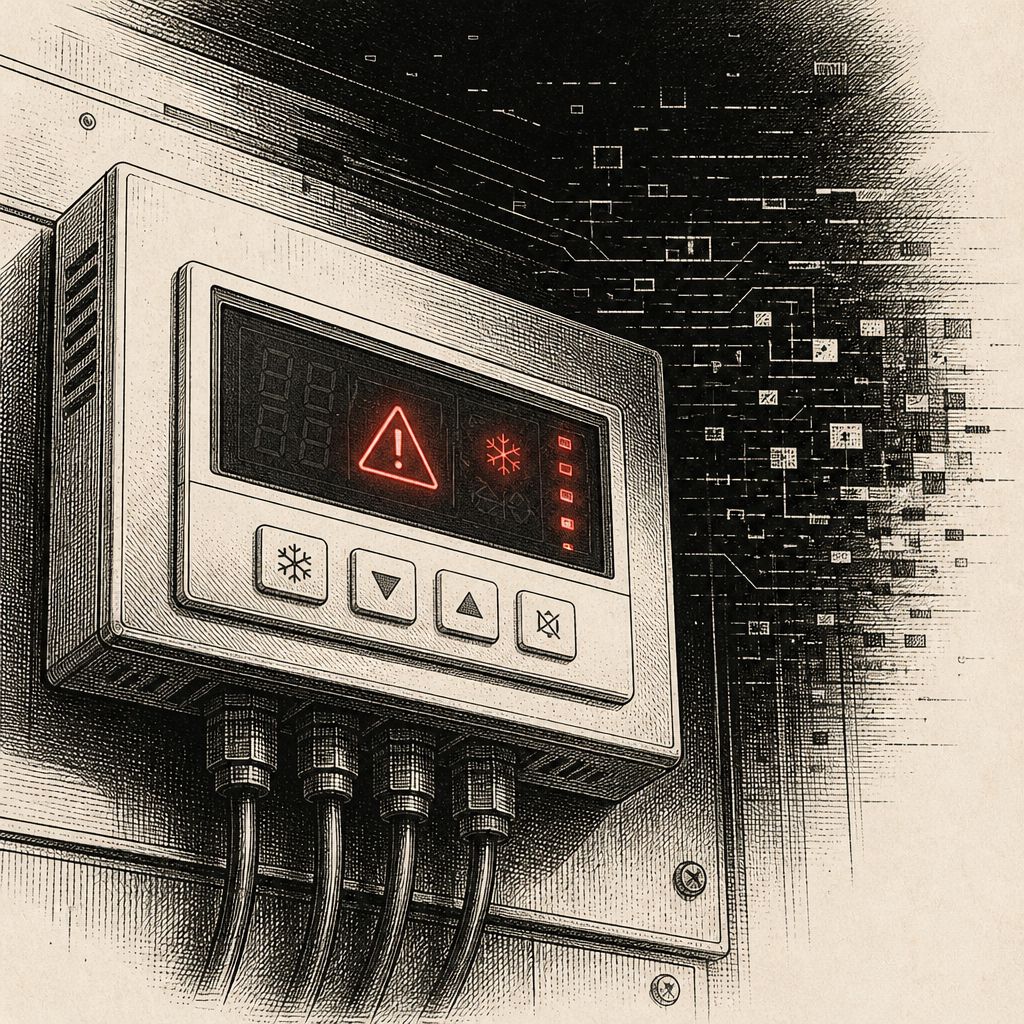
A Dutch cybersecurity researcher, Carlo Meijer of Midnight Blue, has uncovered six zero-day vulnerabilities in the firmware (v5.3.2) of Danfoss AK-SM800A refrigeration controllers. Meijer reported that the discovery process was remarkably swift, taking less than an hour, and highlighted significant weaknesses in the vendor's approach to memory corruption vulnerabilities.
The primary flaws identified are stack-based buffer overflows, largely stemming from the "extremely liberal use" of the unsafe strcpy() function within the firmware. This function does not adequately check buffer sizes, allowing attackers to overwrite memory regions. Meijer demonstrated that a simple cURL command could trigger a segmentation fault, which could then be escalated to achieve remote code execution (RCE).
Meijer noted that exploiting these straightforward buffer overflows on ARM Linux systems, which appear to lack robust exploit mitigations like stack canaries or position-independent executables, is "very straightforward." He further pointed out that the exploited application runs with root privileges, significantly increasing the potential impact of a successful exploit.
Even the firmware's added "session control" security feature, intended to block unauthenticated access, was not immune. Meijer discovered a pre-authentication memory corruption bug within this protective layer, which, despite requiring additional effort, could also be leveraged for RCE.
The implications of these vulnerabilities are severe. Attackers could gain persistent access, potentially surviving device resets due to the absence of secure boot features. This could allow for prolonged control, enabling malicious actors to spoil food batches or even permanently disable controllers by bricking the devices, mirroring tactics seen in attacks on critical infrastructure.
Meijer strongly advised operators to immediately remove direct internet exposure for these controllers, deeming patching efforts a less efficient use of scarce security resources. The Centre for Cybersecurity Belgium (CCB) echoed this recommendation, urging immediate removal from the internet while also advising users to apply patches once they become available.
The researcher criticized Danfoss for not implementing basic security features like stack canaries and PIE, which have been standard for decades and require minimal engineering effort to enable. The lack of these fundamental defenses in network-facing applications updated recently is a significant concern.
Danfoss has not yet responded to requests for comment regarding these findings. The company has a history of not responding to inquiries related to security vulnerabilities, including previous incidents involving supermarket and blood bank attacks, as well as issues with US commissary appliances.