
Remus Stealer Malware Deploys Hidden Chrome Extension to Read Gmail Messages
The Remus Stealer malware has been observed installing a covert Chrome extension disguised as Google Sheets, enabling it to exfiltrate unread Gmail messages without requiring user credentials.
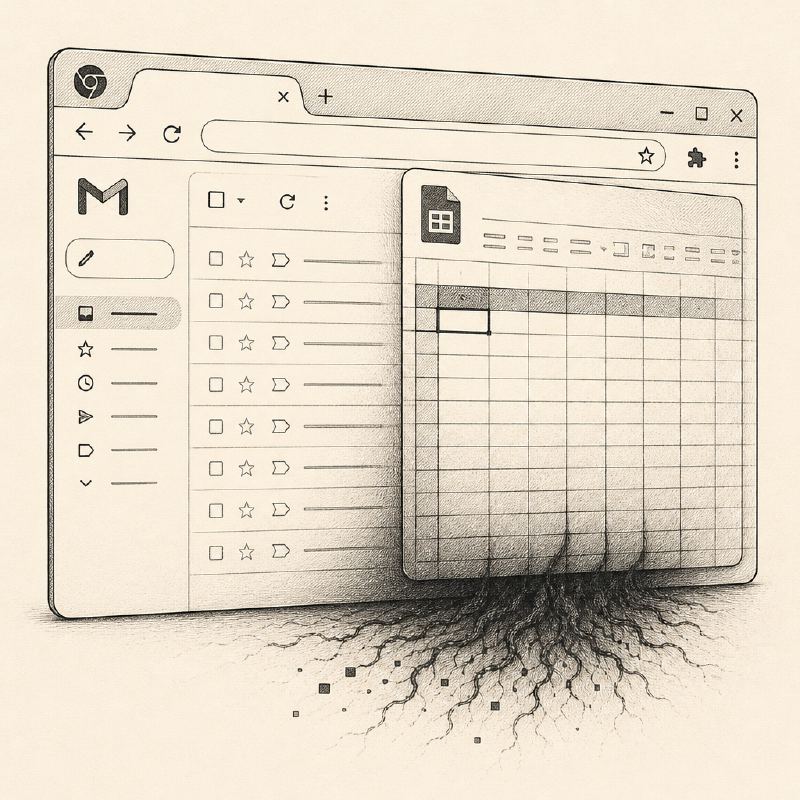

Cybercriminals are employing a sophisticated tactic to pilfer sensitive information directly from Gmail inboxes without needing to steal user passwords. The Remus Stealer malware, a known data-thieving tool, has been updated to include a malicious Chrome extension that masquerades as a legitimate Google Sheets application. This hidden extension operates by leveraging existing, active Gmail sessions within the victim's browser, allowing it to read unread messages without any user interaction.
The implications of this attack are significant, as the extension can access and exfiltrate a wide range of sensitive data. This includes private conversations, one-time passwords (OTPs), and crucial password reset links that are often sent to a user's primary email account. Researchers have noted that the extension does not require the victim to open any specific email for the data to be collected, making the threat pervasive for any active Gmail user on an infected machine.
While the attackers initially claimed to have discovered a Gmail zero-day vulnerability, investigations by security researchers have found no evidence to support this. The extension appears to rely on exploiting active browser sessions rather than a fundamental flaw in Gmail's security. When Google revokes an active session, the extension is prevented from collecting new data. However, the threat is not entirely neutralized by this action.
The primary danger lies in the persistence of the malicious extension. Even after a session is revoked or a password reset is performed, the extension remains installed on the browser. If the user subsequently signs back into Chrome on the infected computer without first removing the underlying Remus Stealer malware, the extension can regain access to the Gmail account and resume its data exfiltration activities.
This Gmail interception module is not a universal component of all Remus Stealer infections. Security researchers have observed that the module is not present in every build of the malware, meaning that a Remus infection does not automatically guarantee the presence of this specific Gmail-reading capability. However, for those instances where it is deployed, the threat is substantial.
The malicious add-on identifies itself as "Google Sheets" with version 0.5.4, falsely claiming to offer offline document editing capabilities. Upon analysis, researchers found no spreadsheet interface. Instead, the extension operates by loading from local files rather than a standard installation from the Chrome Web Store, often requiring Chrome's Developer Mode to be enabled for it to function.
Once active, the extension periodically checks for unread emails across up to ten account slots within the affected Chrome profile. It then retrieves the full message content, including sender, subject, and body, transmitting this data to an attacker-controlled server. While attachments are not reported to be exfiltrated, the exposure of message content itself poses a severe risk.
To effectively combat this threat, users must not only revoke active sessions and change passwords but also ensure the complete removal of the underlying malware from their systems before re-establishing their Chrome login. Isolating the infected machine, preserving forensic evidence, and meticulously reviewing account security settings, including forwarding rules and delegated access, are critical steps in mitigating the damage from such sophisticated attacks.
New research from Gen Threat Labs has traced the supposed Gmail "zero-day" to a Chrome extension that masquerades as Google Sheets. This extension, installed by the Remus infostealer, checks Gmail every minute for unread messages and exfiltrates their content. While the attackers claimed it could read mail even after a password change, the extension merely resumes its activity once the victim signs back into Gmail on the infected device, rather than exploiting a true Google vulnerability.