
Phishing URLs Exploit Parser Discrepancies for Evasion
Attackers are crafting sophisticated phishing URLs that leverage inconsistencies in how browsers and security tools interpret URL syntax to bypass detection and deliver malicious payloads.
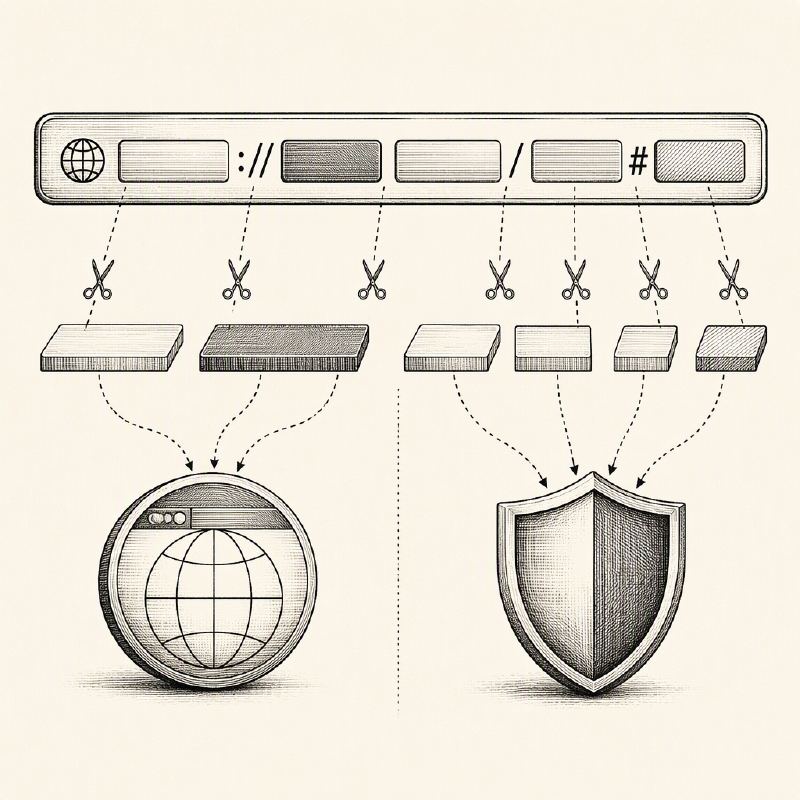
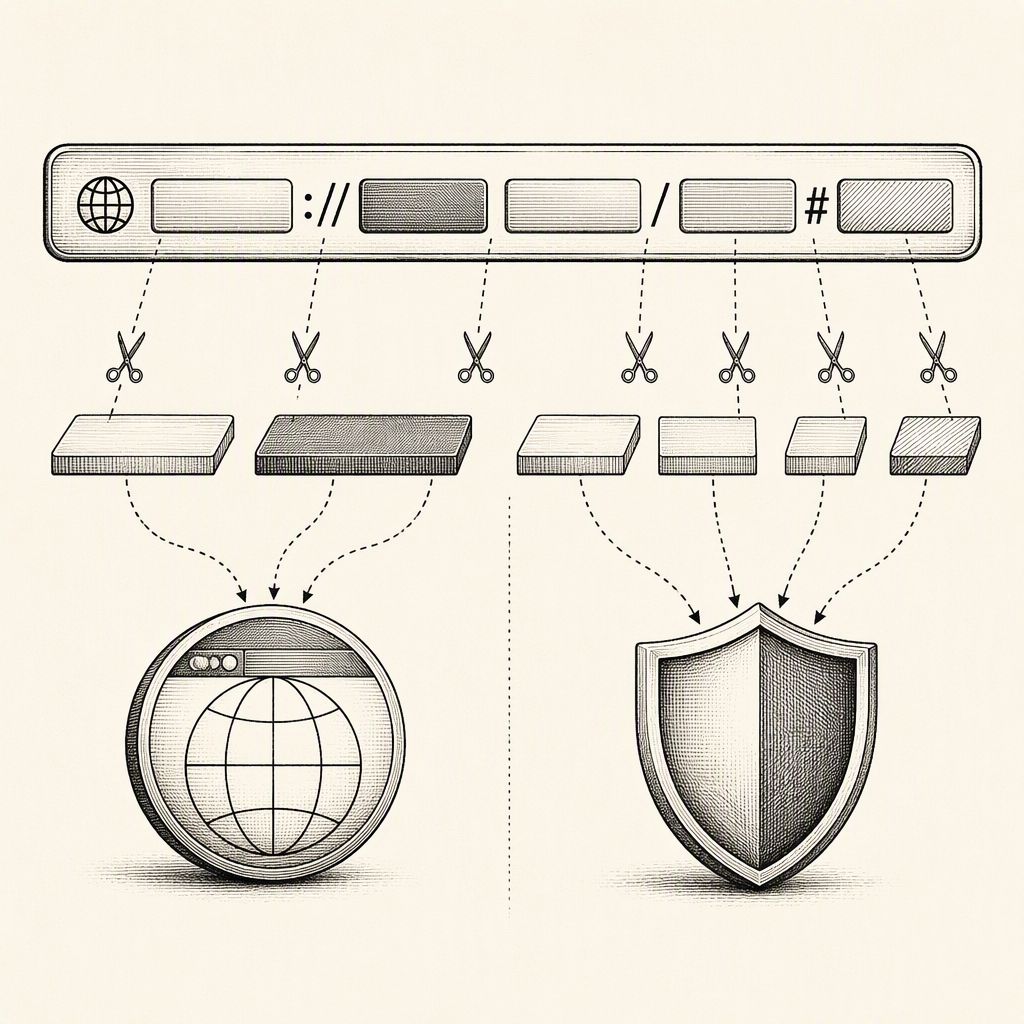
A recent phishing campaign has surfaced, employing a cleverly engineered URL designed to circumvent security controls by exploiting the subtle differences in URL parsing between web browsers and various security analysis tools. The malicious link, presented in a defanged format as hxxps://YKZjqa7A@gynd--[.]koncar-hr[.]com/[email protected], demonstrates a multi-pronged approach to evading detection.
The first layer of evasion utilizes the 'userinfo' field, a component of URL syntax defined in RFC 3986. This field, typically used for credentials like username and password, is placed before the '@' symbol. While browsers generally ignore this section, attackers leverage it to embed unique tracking tokens or random strings, such as 'YKZjqa7A'. This uniqueness defeats exact-match blocklists and URL reputation systems, making each phishing attempt appear distinct and harder to flag. Furthermore, the presence of the '@' symbol can trick less sophisticated parsers into interpreting the entire string as an email address, potentially causing it to be overlooked by URL-specific scanners.
The second trick lies within the hostname itself: 'gynd--.koncar-hr.com'. According to traditional hostname rules (RFC 952/1123), labels within a hostname should not begin or end with a hyphen. While the Domain Name System (DNS) itself is permissive, many security validators, regex-based URL extractors, and link-rewriting or sandboxing solutions may flag such hostnames as invalid and simply skip processing the URL. This effectively renders the malicious link invisible to these security tools, allowing it to reach the user's browser unimpeded. The use of a random subdomain, like 'gynd--', also suggests the potential use of wildcard DNS, ensuring each victim receives a unique, unknown hostname that has not yet been blacklisted.
The parent domain, 'koncar-hr.com', is a deliberate lookalike of the legitimate Croatian industrial group 'koncar.hr', with the country code top-level domain (ccTLD) altered to '.com' and hyphenated, further adding to the deceptive appearance.
The final element of the attack involves appending the victim's email address to the URL's path, a common tactic in phishing kits. This allows the landing page to pre-fill login forms with the user's email, personalizing the attack. More critically, it can mislead poorly implemented URL parsers. If a parser incorrectly splits the URL string at the last '@' symbol, it might mistakenly identify 'isc.sans.edu'—the recipient's own domain—as the legitimate host, while the browser, adhering to the WHATWG URL standard, correctly resolves the attacker's server. This creates a scenario where different systems interpret the same URL in drastically different ways.
The effectiveness of this attack hinges not on exploiting a software vulnerability, but on the inherent inconsistencies in how various software components parse and interpret URL structures. This technique highlights a persistent challenge in cybersecurity: ensuring that security tools and browsers maintain a unified and strict interpretation of web standards to prevent such evasive maneuvers.
To detect similar threats, security professionals are advised to look for URLs containing multiple '@' symbols, hostnames with labels starting or ending with hyphens, and paths that include the recipient's own email address. These indicators can help identify URLs that are designed to confuse automated analysis and bypass security filters.