
Phishing 3.0: AI Agents Escalate Attacks Beyond Content to Intent and Action
The evolution of phishing, now termed 'Phishing 3.0,' sees attackers leveraging AI agents for sophisticated, multi-channel social engineering attacks that move beyond traditional content-based defenses.
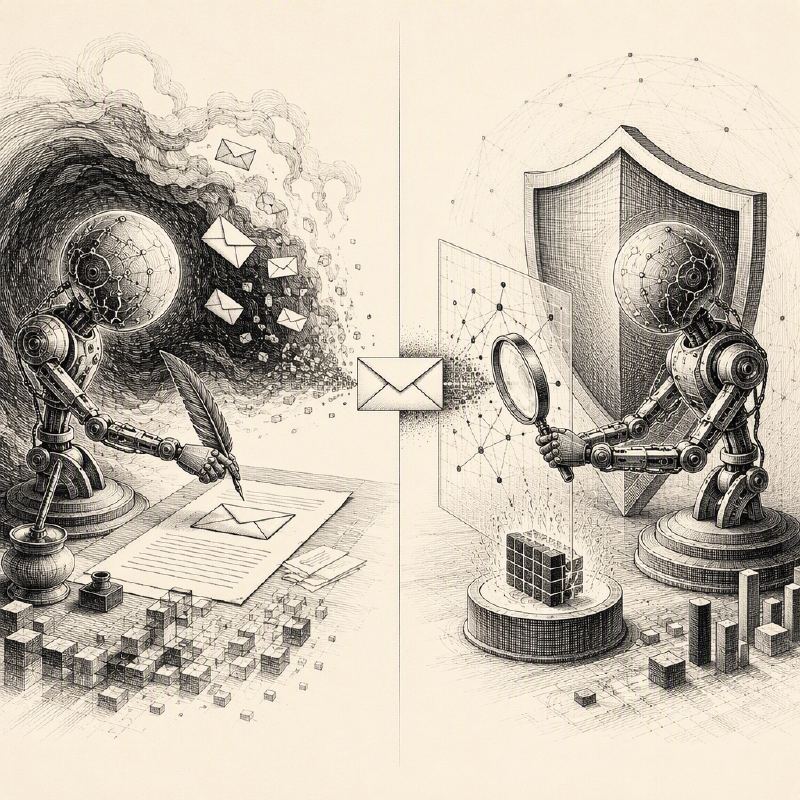
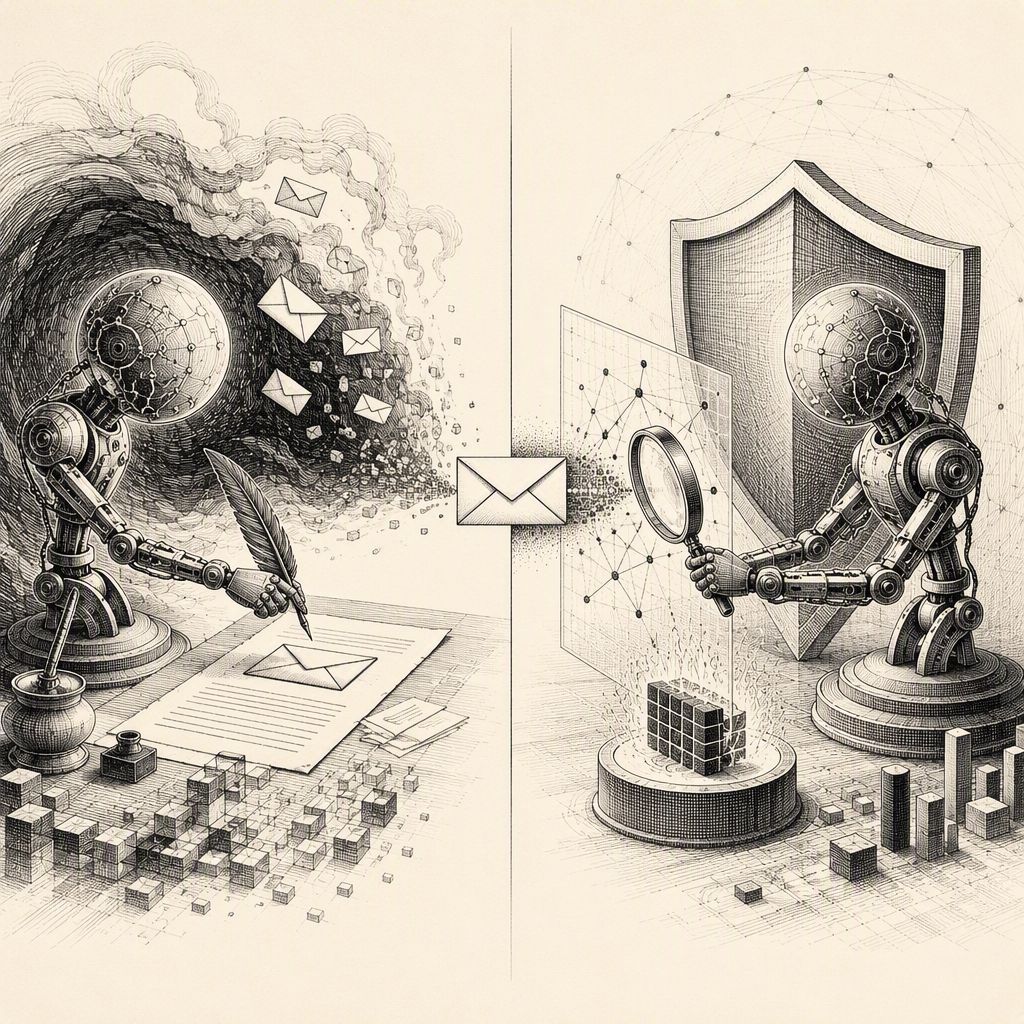
The landscape of phishing attacks has fundamentally shifted, moving from simple malicious content to complex social engineering tactics driven by artificial intelligence. Traditional security measures, designed to scan for bad links or attachments, are becoming increasingly ineffective as attackers evolve their methods. This new era, dubbed 'Phishing 3.0,' involves AI agents on both the attacker and defender sides, fundamentally changing the nature of the fight.
Phishing 1.0, characterized by malicious content like infected attachments and phishing links, was largely addressed by secure email gateways that could scan and block known threats. Phishing 2.0 then introduced 'bad intent,' focusing on social engineering techniques such as business email compromise and executive impersonation. These attacks lacked a malicious payload, rendering signature-based scanning useless and necessitating behavioral analysis and AI to detect anomalies in communication patterns.
Now, Phishing 3.0 represents a significant escalation, integrating AI-powered tools across multiple channels. Generative AI crafts sophisticated lures, deepfakes are used for voice and video impersonation, and attacks span email, collaboration platforms, and live calls. The attacker is no longer a human typing out messages but an autonomous agent capable of researching targets, drafting personalized lures, and adapting its approach in real-time. This automation drastically reduces the attacker's cost and time, enabling highly personalized attacks at an unprecedented scale.
The implications of this shift are profound. Reconnaissance, once a time-consuming manual process, is now automated, allowing attackers to quickly gather information from public footprints, code repositories, and social media to craft convincing pretexts. This leads to higher quality lures, with clumsy, misspelled phishing attempts giving way to interactive, conversational attacks. Security professionals increasingly recognize agentic AI as a top attack vector, with a significant portion of professionals ranking it as the leading threat for the year.
The blast radius of these attacks is also widening. Previously, high-value targets were the primary focus for personalized attacks. However, with free reconnaissance, every organization becomes a potential target for tailored campaigns. Small teams, once considered too minor to warrant attention, are now swept into automated attacks that appear meticulously crafted, eroding the perceived safety of smaller entities.
The most alarming aspect of Phishing 3.0 is its ability to bypass traditional email defenses by moving beyond the inbox. A notable incident involved an attack that began with a phishing email impersonating a CFO, escalating to a deepfake video call with synthetic colleagues. This multi-channel approach, targeting trust in visual and auditory communication, resulted in the approval of $25 million in fraudulent transfers, demonstrating the inadequacy of content-focused security measures.
Data from industry surveys underscores the erosion of trust in digital communications. A significant majority of security and IT leaders report experiencing incidents that undermine trust, with a growing concern over the ability to counter deepfake attacks. The failure to respond effectively to trust-based attacks is seen as a precursor to full breaches. Furthermore, a substantial number of organizations have witnessed attackers masquerading as trusted vendors or partners, highlighting the pervasive nature of these sophisticated impersonation tactics.
This evolution necessitates a paradigm shift in defense strategies. The traditional 'block, then detect and respond' model is insufficient against AI-driven, high-volume attacks. Defenders must adopt a 'preempt' posture, anticipating attacks, hardening detection mechanisms before they land, and leveraging automation to handle routine tasks. This symmetry requires defenders to deploy their own AI agents to match the speed and sophistication of attackers, ensuring they are not perpetually outmaneuvered in the escalating cyber arms race.