
Philips Hue Bridge Vulnerable to Information Disclosure via HomeKit Flaw
A vulnerability in the Philips Hue Bridge's HomeKit integration allows network-adjacent attackers to disclose sensitive information without authentication.
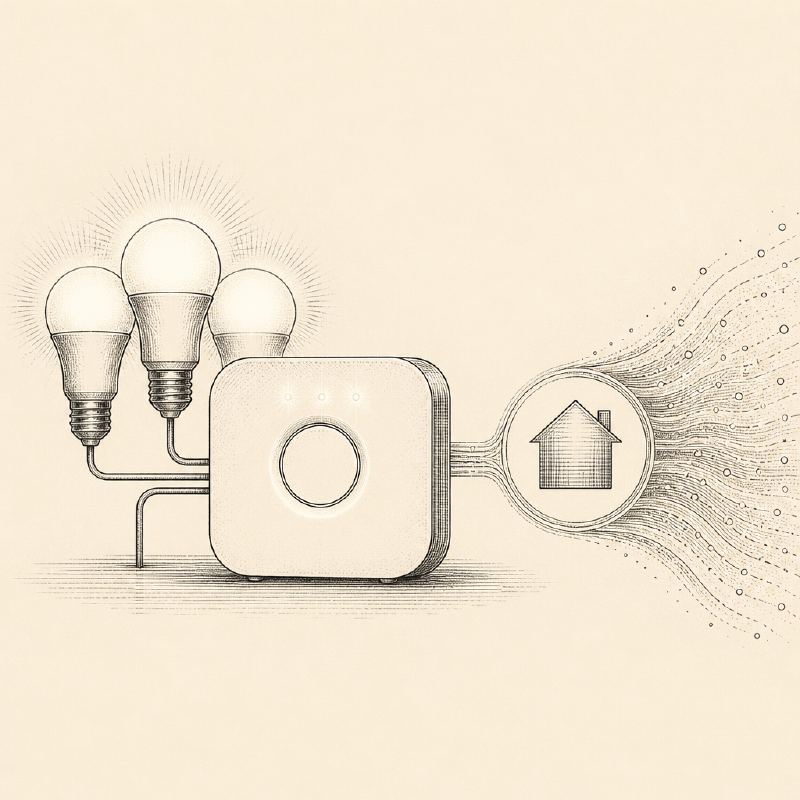

A newly disclosed vulnerability, tracked as ZDI-26-965, affects the Philips Hue Bridge, specifically its integration with Apple's HomeKit framework. This flaw enables network-adjacent attackers to extract sensitive information from the device without requiring any form of authentication. The vulnerability carries a CVSS score of 6.5, indicating a moderate severity.
The core of the issue lies within the HomeKit Authentication service, which typically operates on TCP port 8080. When the service processes specially crafted pairing requests, it inadvertently reveals internal device information through an observable discrepancy in its response patterns. This information disclosure could potentially be leveraged by attackers in conjunction with other vulnerabilities to achieve arbitrary code execution on the affected Hue Bridge.
This vulnerability was reported to Philips by researcher Xilokar on July 28, 2026. The coordinated public disclosure of the advisory occurred on November 13, 2026, with an update to the advisory also published on the same date. This timeline adheres to the standard disclosure practices of the Zero Day Initiative (ZDI).
Philips has addressed this vulnerability by releasing a software update for the Hue Bridge. The fix is included in Bridge v2 Software version 1975170000. Users are strongly advised to update their devices to this latest version to mitigate the risk of exploitation. Release notes for the update can be found on the Philips Hue support website.
While the vulnerability itself is an information disclosure flaw, its potential to be chained with other exploits to achieve remote code execution highlights the importance of timely patching. Attackers could use the disclosed information to better understand the device's internal workings, aiding in the development of more targeted exploits.
The disclosure of ZDI-26-965 underscores the ongoing security challenges associated with smart home devices and their interconnected ecosystems. As more devices become integrated into home networks, vulnerabilities in seemingly minor components like authentication services can open doors for significant security breaches.
The Zero Day Initiative advisory ZDI-26-966 details a critical authentication bypass vulnerability, CVE-2026-126981, affecting the Philips Hue Bridge's HomeKit integration. This new disclosure specifies that the flaw exists within the HomeKit Authentication service on TCP port 8080 and allows network-adjacent attackers to bypass authentication by manipulating the order of pairing messages. A fix is available in Bridge v2 Software version 1975170000.
This new advisory, ZDI-26-962, details a specific authentication bypass vulnerability within the Philips Hue Bridge's HomeKit Pair-Setup process. Unlike the previously reported information disclosure flaw, this vulnerability allows network-adjacent attackers to bypass authentication entirely by exploiting a blank password during the pairing request, with a CVSS score of 8.1.