
Palo Alto Networks Firewalls Exploited Via Critical PHP Vulnerabilities
Two unauthenticated remote code execution vulnerabilities in PAN-OS management interfaces are being actively exploited, impacting internet-exposed firewalls.
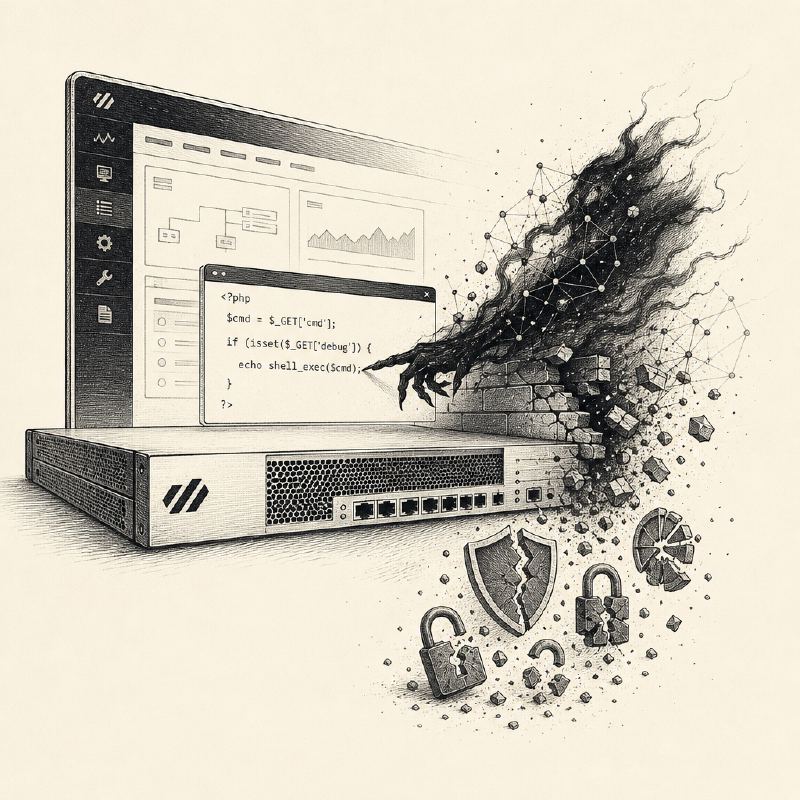

Palo Alto Networks has confirmed that attackers are actively exploiting two critical vulnerabilities, CVE-2026-109618 and CVE-2026-109619, within the management interfaces of its PAN-OS software. These flaws, present in the PHP components of the firewall's web server, allow unauthenticated remote code execution (RCE) on internet-exposed devices. The exploitation was first observed on October 28, with the vulnerabilities enabling attackers to gain control over the affected firewall systems without needing any prior credentials.
The vulnerabilities specifically target the web-based management interfaces, which are often exposed to the internet for remote administration. By leveraging these PHP flaws, threat actors can execute arbitrary code, potentially leading to the complete compromise of the firewall. This could allow them to disable security features, reroute traffic, exfiltrate sensitive data, or use the compromised firewall as a pivot point into the internal network.
Compounding the issue, the disclosure of these vulnerabilities has been reportedly mishandled, potentially leading to a wider window of opportunity for exploitation. While Palo Alto Networks has confirmed the exploitation and is working on patches, the exact timeline for remediation remains a critical concern for organizations relying on these devices for network security.
This incident highlights a recurring theme in cybersecurity: the inherent risks associated with exposing management interfaces to the public internet. Even robust security appliances like firewalls become vulnerable if their administrative portals are not adequately protected, either through network segmentation, strong access controls, or by limiting their exposure to trusted networks only.
The exploitation of these vulnerabilities underscores the importance of prompt patching and diligent security hygiene. Organizations using PAN-OS are strongly advised to review their exposure, implement immediate mitigation strategies if available, and prioritize the application of security updates as soon as they are released by Palo Alto Networks.
While specific details on the threat actors behind these attacks are still emerging, the nature of the exploit suggests a sophisticated actor capable of identifying and weaponizing zero-day vulnerabilities in widely deployed security infrastructure. The potential impact is significant, as compromised firewalls can undermine the entire security posture of an organization.
Palo Alto Networks has not yet released specific patch details but is expected to provide them imminently. In the interim, security teams should focus on reducing the attack surface by restricting access to the management interface and monitoring network traffic for any suspicious activity indicative of compromise.
This event serves as a stark reminder that even the most trusted security vendors can be targeted, and their products can harbor critical flaws. Continuous vigilance, rapid response to disclosures, and a proactive security posture are essential in defending against evolving threats.