
Optimizely Compromise Leads to Widespread Malware Distribution
A breach in the Optimizely platform allowed attackers to inject malware into websites of at least 178 organizations, including major brands, potentially exposing visitors to data theft and exploit kits.
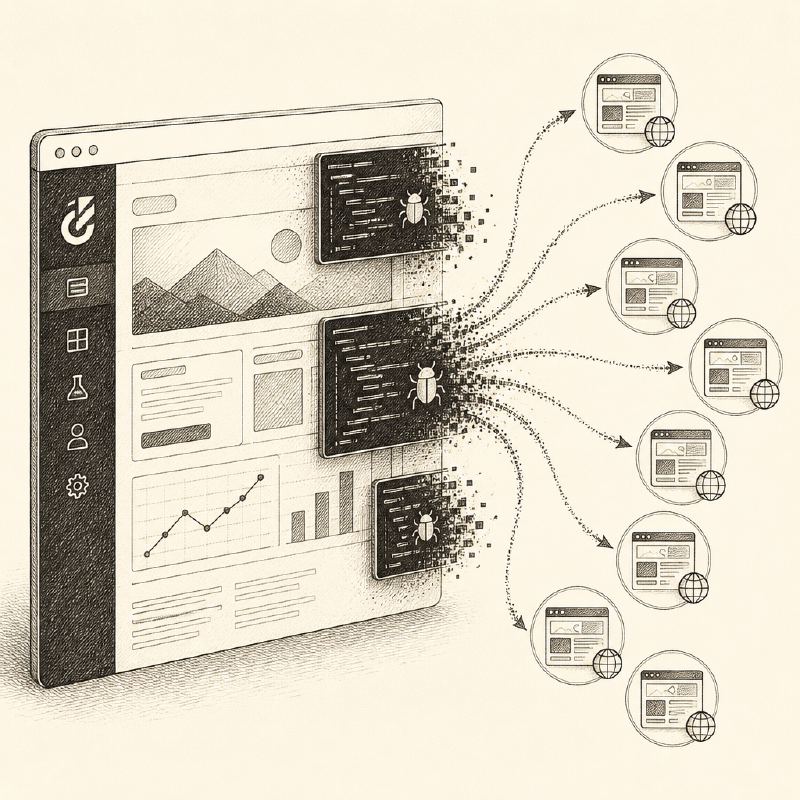

A sophisticated attack has leveraged the Optimizely platform, a popular tool for website testing and optimization, to distribute malware to a significant number of organizations. The attackers successfully injected malicious code into websites that utilize Optimizely's services, impacting at least 178 organizations and potentially exposing visitors to various threats.
The compromised Optimizely platform, used by many prominent companies such as Zoom, CNN, Salesforce, and IKEA, allowed attackers to insert malicious scripts into customer websites. This was reportedly achieved by exploiting a custom field called 'Project JavaScript,' which enables Optimizely customers to run their own code. The exact method by which attackers gained write access to these projects remains unclear, with security researchers speculating about a compromised Optimizely system, stolen credentials with cross-customer access, or another unknown vulnerability.
Security researchers at Report URI were among the first to detect the tampering, examining over 1,600 unique Optimizely scripts and finding malicious code in 188 of them. The malware, tracked by The Media Trust as 'Hydra-Cart,' is capable of stealing payment card details, hijacking cryptocurrency transactions, and delivering exploit kits for iPhones and iPads. While the threat is now considered contained, the incident underscores the pervasive risks associated with third-party vendor integrations.
Optimizely has acknowledged the incident, attributing it to a vulnerability in the platform's Experimentation account sign-up flow. The company stated that the vulnerability has been fixed, the injected code removed, and affected user accounts secured with additional protections. However, Optimizely has not yet provided a clear explanation of how a vulnerability in the sign-up process could have granted attackers the ability to modify customer projects.
This incident serves as a stark reminder for organizations about the critical need for robust controls over third-party scripts running on their websites. Security experts emphasize that vendor approvals are point-in-time decisions, and the risk profile can change significantly with any update to a vendor's code. The fact that the malicious code was served from Optimizely's own Content Delivery Network (CDN) under its own certificate highlights the challenge of detecting such compromises.
To mitigate risks from such supply-chain attacks, security professionals recommend implementing features like Subresource Integrity (SRI). SRI allows organizations to verify the integrity of externally hosted files, such as JavaScript, by checking their hashes before execution. While SRI requires additional management effort, it provides a crucial layer of defense against unauthorized modifications to trusted resources.
The attack on Optimizely demonstrates how trust in a third-party vendor can become an attack surface. Organizations that allow third parties to deliver executable code into their customers' browsers are inherently exposed if that trust is violated. The solution lies not in eliminating third-party technologies but in implementing stricter oversight and continuous monitoring of their behavior and code integrity.
As the investigation into the exact cause and scope of the breach continues, affected organizations are urged to scrutinize their vendor management practices and explore advanced security measures like SRI to protect against future supply-chain compromises. The incident highlights a broader trend of attackers targeting trusted platforms to achieve widespread impact.