
OpenAI Bans Russian ChatGPT Accounts Used in Influence Operation
OpenAI has shut down Russian-linked ChatGPT accounts that were actively used to run a sophisticated influence operation, promoting a think tank via AI-generated content.
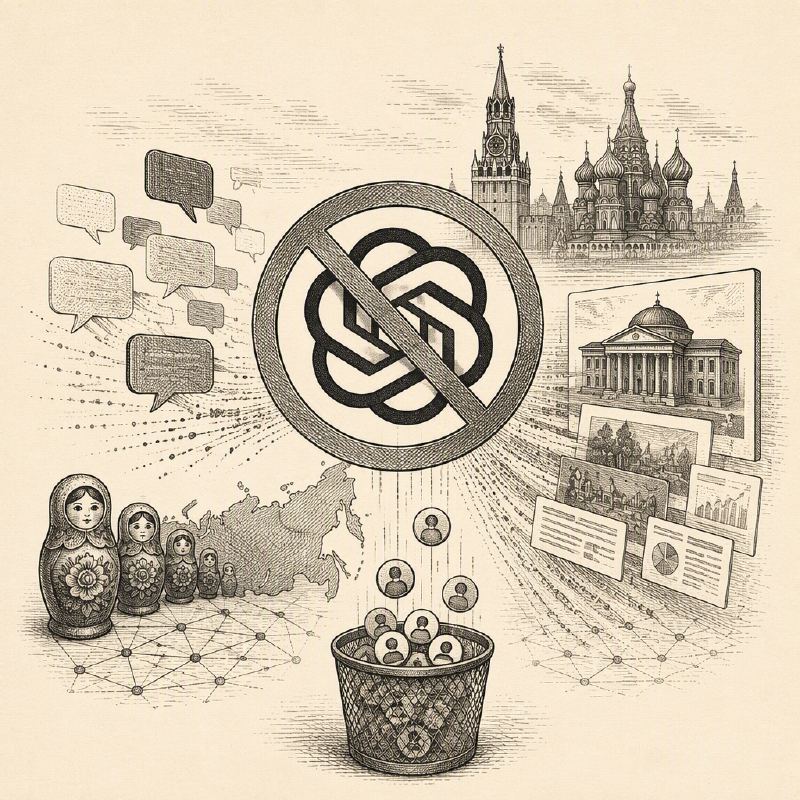
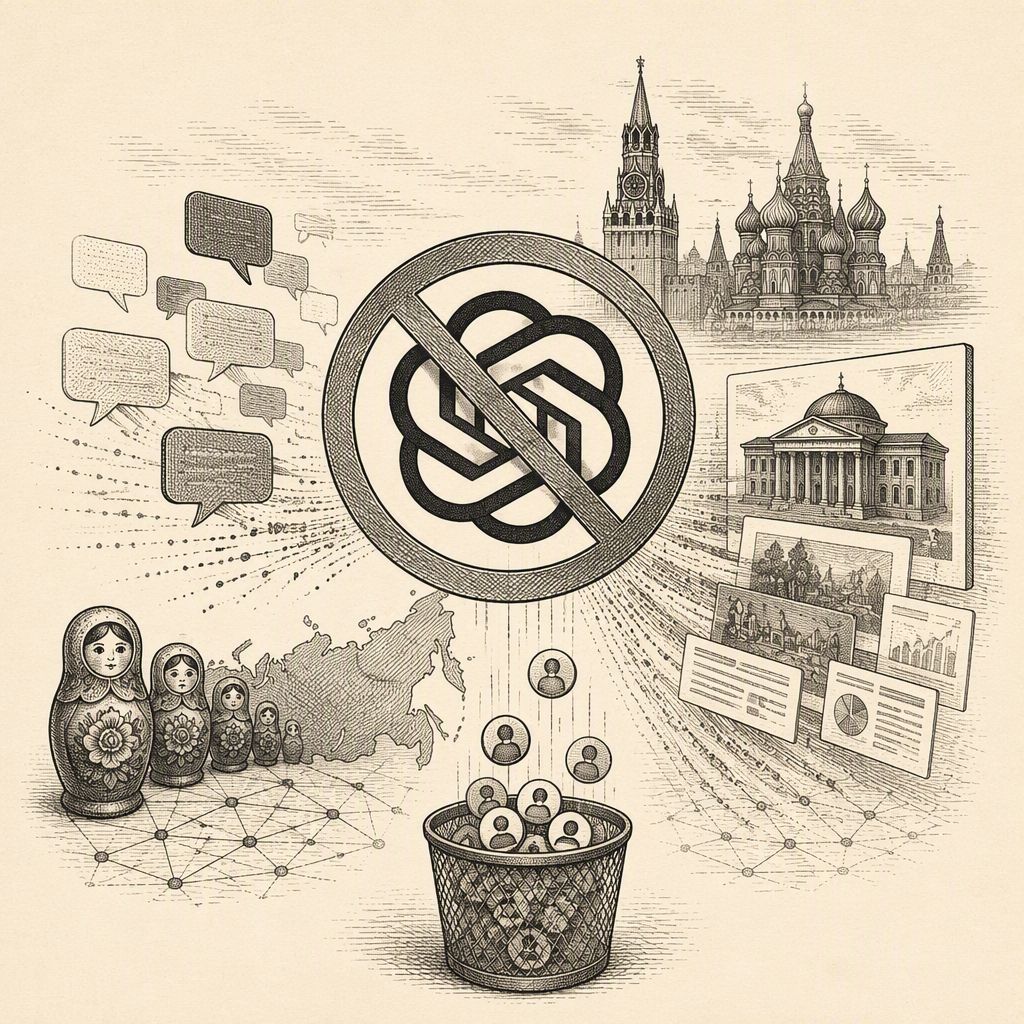
OpenAI announced on Tuesday that it has banned a cluster of Russian-linked ChatGPT accounts that were being used to conduct an influence operation. These accounts employed Virtual Private Networks (VPNs) to circumvent access restrictions and leveraged OpenAI's artificial intelligence tool to generate social media posts and comments. The generated content was then disseminated across multiple platforms, including Substack, Telegram, X (formerly Twitter), Facebook, and LinkedIn, with the apparent goal of promoting the International Burke Institute (IBI).
The operation utilized ChatGPT to create a steady stream of content, aiming to amplify the IBI's messaging and potentially influence public discourse. By using AI to generate these posts, the actors could produce content at a scale and speed that would be difficult to achieve manually, making the operation more pervasive and harder to detect through traditional means.
OpenAI stated that it has taken action against these accounts as part of its ongoing efforts to prevent the misuse of its AI models for malicious purposes, such as spreading disinformation and conducting influence operations. The company's policy prohibits the use of its services for such activities, and the ban reflects its commitment to enforcing these guidelines.
The International Burke Institute (IBI) is described as a think tank that focuses on geopolitical issues. While the article does not directly link the IBI to the influence operation, the AI-generated content was explicitly used to promote the institute. This raises questions about the IBI's awareness of or involvement in the operation.
This incident highlights the growing concern over the use of AI tools by state-sponsored or state-aligned actors to conduct influence operations. The ability of AI to generate human-like text at scale makes it a powerful tool for spreading propaganda and disinformation, posing a significant challenge to cybersecurity professionals and social media platforms.
OpenAI's swift action in banning these accounts demonstrates the company's increasing vigilance against the weaponization of its technology. However, the incident also underscores the persistent cat-and-mouse game between AI developers and malicious actors seeking to exploit AI capabilities for nefarious purposes.
Further investigation may reveal more details about the specific tactics, techniques, and procedures (TTPs) employed in this operation, as well as the full extent of its reach and impact. The use of VPNs suggests an attempt to obscure the origin of the activity, a common tactic in cyber operations.
The incident serves as a stark reminder that AI, while a powerful tool for innovation, also presents new avenues for cyber threats and information warfare, requiring continuous monitoring and robust defense mechanisms from technology providers and security researchers alike.
The new reporting details the specific tactics used by the Russia-linked operation, including the creation of a "sovereignty index" that praised Russia while criticizing Western nations supporting Ukraine. It also highlights how the International Burke Institute (IBI) leveraged copied academic articles and false authorship to build credibility, and that operators used VPNs to bypass OpenAI's access restrictions from Russia.