
Obsidian Security Adds Runtime Policy Engine for AI Agents
Obsidian Security's new Runtime Policy Decision Engine provides centralized control over AI agent actions, analyzing context to permit, deny, or require approval before execution.
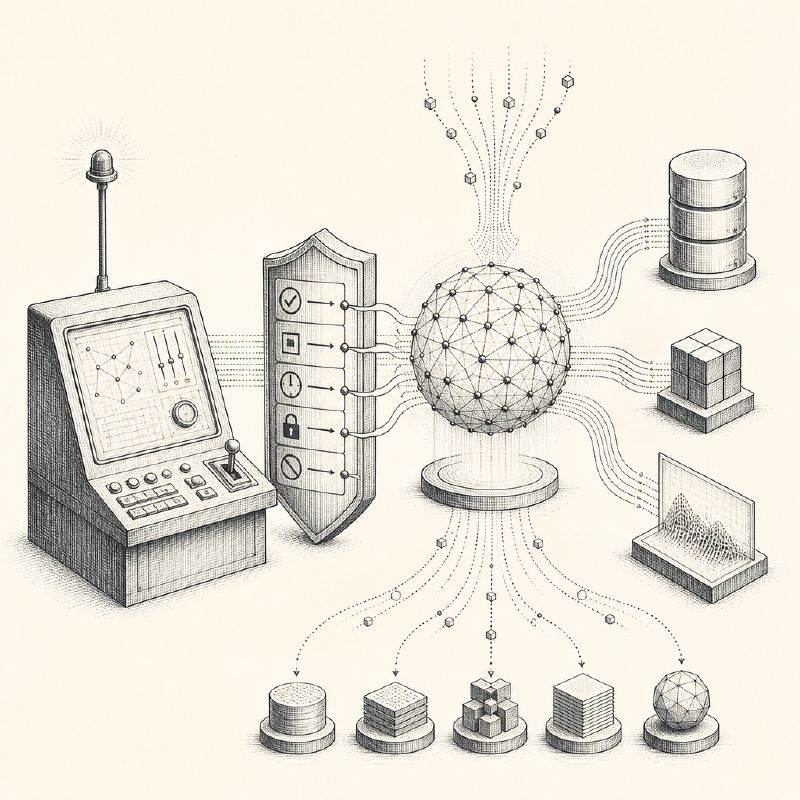

Obsidian Security has introduced its Runtime Policy Decision Engine, a new capability designed to grant security teams centralized oversight and control over the actions of AI agents before they are executed. This engine builds upon Obsidian's existing AI agent discovery and governance features by analyzing critical context, including the identity of the user operating the agent, their access privileges, and any third-party applications involved. This detailed analysis enables security teams to make informed decisions, either permitting, denying, or requiring human approval for agent operations, thereby enhancing governance and mitigating potential risks.
Enterprises are increasingly exposed to risks stemming from both employees utilizing AI platforms for coding and workflow automation, and from third-party vendors embedding AI agents directly into their products. Obsidian's platform addresses this dual threat by offering discovery and governance across a wide array of platforms. This includes popular tools like Codex, Claude Code and Cowork, Cursor, Microsoft Copilot, Amazon Bedrock, and Google Vertex, as well as agents integrated into enterprise applications such as Snowflake, Databricks, ServiceNow, and Workday.
The ability to identify AI agents, understand their granted access, and address risky configurations is paramount. While deploying an AI agent often necessitates accepting a certain level of access risk, it is crucial to establish limits. For instance, an agent might legitimately require access to customer records but should have restrictions on how that data can be utilized. Obsidian's Runtime Policy Decision Engine aims to provide these essential mitigating controls precisely at the moment an agent attempts to act.
The engine evaluates proposed actions against centrally managed policies, leveraging available context from identity systems, HR data, and application information. It also incorporates customer-defined context, such as data classification labels, to ensure decisions are as precise as possible. This allows for granular control, where enforcement points can either allow an action, block it entirely, or, in supported scenarios, mandate human approval before proceeding.
Obsidian has also introduced new and expanded capabilities to support this engine. The Runtime policy for coding agents now extends to OpenAI Codex, complementing existing support for Claude Code and Cowork, and Microsoft Copilot. This unified console approach allows developers to continue using their preferred coding tools without friction, while security teams maintain comprehensive oversight across multiple vendors and platforms. Furthermore, Obsidian now offers discovery and governance for agents built directly into critical enterprise applications like Salesforce Agentforce, Databricks, GitHub, Microsoft 365, Snowflake, ServiceNow, and Workday.
To facilitate enforcement, Obsidian has developed the MCP Security Proxy, which scrutinizes agent tool calls before they reach business applications. This proxy acts as a governed layer between the AI client and supported applications, identifying the user, routing requests correctly, and preventing the AI client from directly handling application tokens. Additionally, the new Policy Decision API extends Obsidian's decision-making capabilities to customer-operated gateways and custom agent tools, offering flexibility for diverse deployment scenarios.
"AI agents have changed the economics of security. An agent can hold valid credentials, use an approved tool and still take an action that costs the business millions," stated Hasan Imam, CEO of Obsidian Security. "We’ve spent years mapping the full chain of authority across the third-party estate. That gives security teams the context whether an agent’s action should proceed based on who is behind it, what third-party applications it can reach and what the data is worth. With Obsidian, policies are defined once and enforced at the moment of action. Defense gets cheaper, mistakes stay contained, and enterprises can move faster on AI."
The integration of customer-provided context, such as data classification labels, further refines decision-making. This allows for highly specific policies, like blocking access to "Highly Sensitive" files for agents acting on behalf of individuals outside the Executive team, ensuring that policies are enforced only when and where they are intended, thereby minimizing false positives and maintaining operational efficiency.