
NVIDIA GPU Drivers Vulnerable to Denial-of-Service via TLS State Deadlock
Zero Day Initiative disclosed a denial-of-service vulnerability in NVIDIA GPU Display Drivers, allowing local attackers to crash the driver by exploiting a TLS state deadlock.
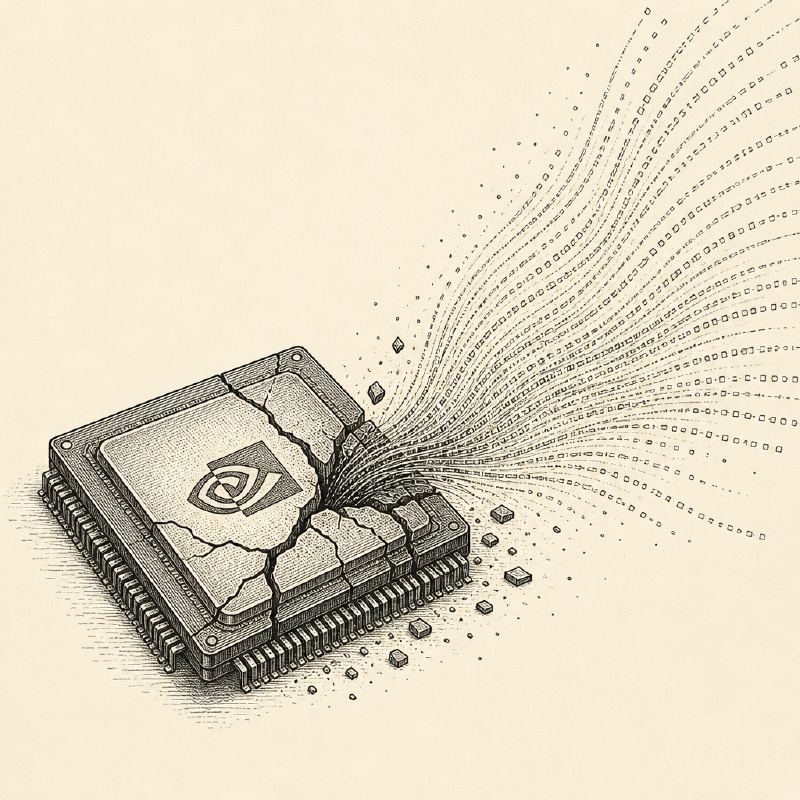

The Zero Day Initiative (ZDI) has publicly disclosed a denial-of-service (DoS) vulnerability affecting NVIDIA GPU Display Drivers. Identified as ZDI-26-1108 and assigned CVE-2026-24182, the flaw allows local attackers with low-privilege code execution capabilities to crash the graphics driver, leading to a system-wide denial of service.
The vulnerability stems from an issue within the driver's handling of IRQL_RAISED flags. A specially crafted IOCTL request can trigger a deadlock on a worker thread, effectively freezing the driver's operation. While the vulnerability requires initial code execution on the target system, this can be achieved even within a containerized environment, broadening the potential attack surface.
Successful exploitation of this vulnerability results in a denial-of-service condition, rendering the affected system unstable or inoperable. The CVSS score assigned by ZDI is 3.8, indicating a moderate severity, but the impact on system availability can be significant for users relying on NVIDIA hardware.
NVIDIA has acknowledged the vulnerability and released a security update to address it. Users are strongly advised to apply the latest driver updates provided by NVIDIA to mitigate the risk. Further details on the patch can be found in NVIDIA's official advisory.
The vulnerability was discovered by 0xDACA (Daniel Cohen Hillel) and reported to NVIDIA on May 29, 2026. ZDI coordinated the public release of the advisory on November 24, 2026, following the vendor's patch.
This disclosure highlights the ongoing need for diligent security practices, including regular software updates, particularly for critical system components like graphics drivers. While the vulnerability requires local access, the potential for system disruption underscores the importance of patching promptly.
This advisory details a local privilege escalation vulnerability (ZDI-26-1103) in NVIDIA GPU Display Drivers, distinct from the previously reported denial-of-service flaw. The new vulnerability stems from an improper update of a reference count within the video encoder component, allowing attackers with initial low-privileged code execution to gain elevated privileges. NVIDIA has released a patch for this specific issue, which carries a CVSS score of 8.8.