
North Korean Remote Workers Infiltrate Businesses by Posing as Legitimate Hires
North Korean IT workers are increasingly infiltrating government and corporate systems by posing as legitimate remote employees, a tactic that the FBI is actively investigating.
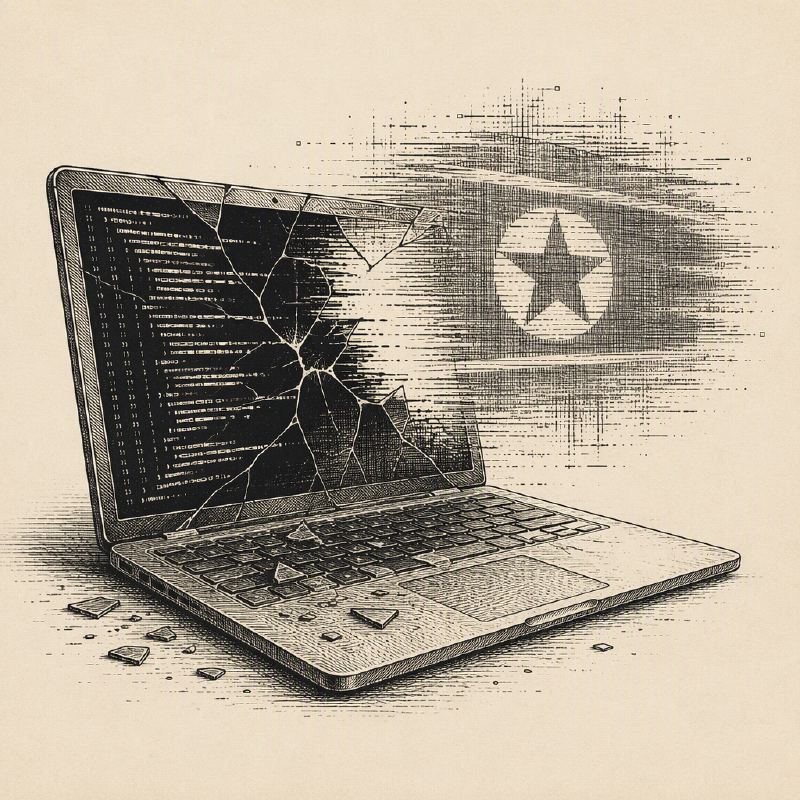
Organizations are increasingly facing a sophisticated insider threat, not from disgruntled employees, but from North Korean IT workers who successfully navigate the hiring process to gain access to sensitive systems. These operatives apply for remote positions, pass interviews, and obtain legitimate credentials, effectively becoming trusted insiders within the very networks companies strive to protect.
A recent joint investigation by researchers from BCA LTD, NorthScan, and ANY.RUN shed light on the methods employed by these operatives, often linked to the Lazarus Group. The investigation involved deliberately hiring suspected DPRK developers and observing their activities within controlled ANY.RUN Sandbox environments. This allowed researchers to capture real-time data on their operations, revealing the use of forged identities, remote-access tools, AI-assisted workflows, and a complex network of VPN and VPS infrastructure.
The findings underscore that the warning signs often appear as subtle inconsistencies throughout the hiring process rather than a single, obvious red flag. Security and hiring teams are advised to scrutinize identity details for contradictions in addresses, states, documents, or banking information. Signs of document manipulation, such as unusual metadata, visual anomalies, or evidence of AI alteration, should also raise concerns.
Furthermore, interview behavior can provide crucial clues. Candidates exhibiting repeated off-screen glances, delayed responses, or an over-reliance on live translation and AI tools may be attempting to mask their true capabilities or origins. Location mismatches, where network activity contradicts the candidate's claimed location, are another significant indicator that warrants deeper investigation before granting access.
To combat this threat, CISOs are urged to implement robust verification processes that go beyond simply accepting identity documents. Multiple independent signals, including consistent personal information, verifiable employment history, and coherent location data, should be cross-referenced. Roles with access to critical assets like source code, cloud infrastructure, or financial systems require the highest level of scrutiny from the outset.
Security teams can leverage interactive sandboxing environments, similar to ANY.RUN, to safely analyze suspicious files, links, or scripts associated with employee activity. This provides crucial visibility into how potential threats behave without exposing real corporate systems, enabling faster and more informed decisions regarding containment or escalation.
Cross-referencing observed infrastructure, such as specific IP addresses and VPN exit nodes used by suspected DPRK operatives, against historical logs and security telemetry can help identify potential compromises. While a match alone is not definitive proof, it serves as a strong indicator for further investigation when combined with other suspicious signals.
Ultimately, the strategy involves turning these investigative findings into ongoing detection mechanisms. By establishing continuous monitoring and analysis of potential indicators, organizations can build a more resilient defense against this evolving threat of North Korean operatives infiltrating their ranks through legitimate hiring channels.
This latest report from Dark Reading details specific indicators that organizations can use to identify North Korean operatives posing as IT workers. These red flags are crucial for preventing these operatives from successfully infiltrating networks and conducting espionage or disruptive activities, building upon the initial FBI investigation into this growing threat.