
NIST Demonstrates Quantum Entanglement for Physical Location Verification
NIST researchers have developed a quantum entanglement-based protocol to verify physical location, promising enhanced security for digital transactions and physical access control.
Researchers at the National Institute of Standards and Technology (NIST) have successfully demonstrated a novel protocol that leverages the peculiar properties of quantum entanglement to verify a person's physical location. This breakthrough, detailed in peer-reviewed research published this month, could pave the way for significantly more secure digital transactions and robust access controls for sensitive facilities.
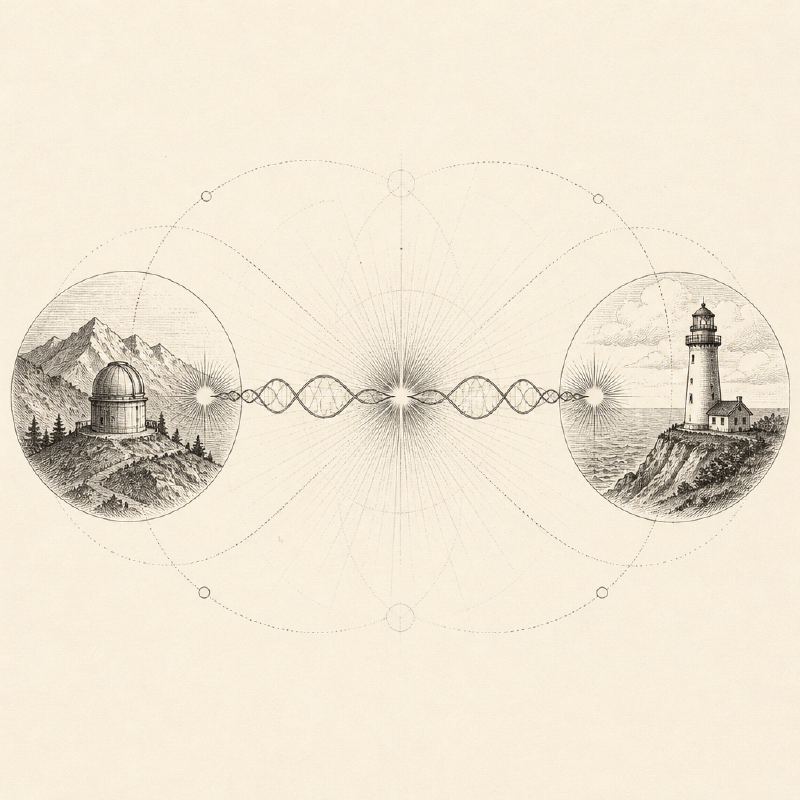
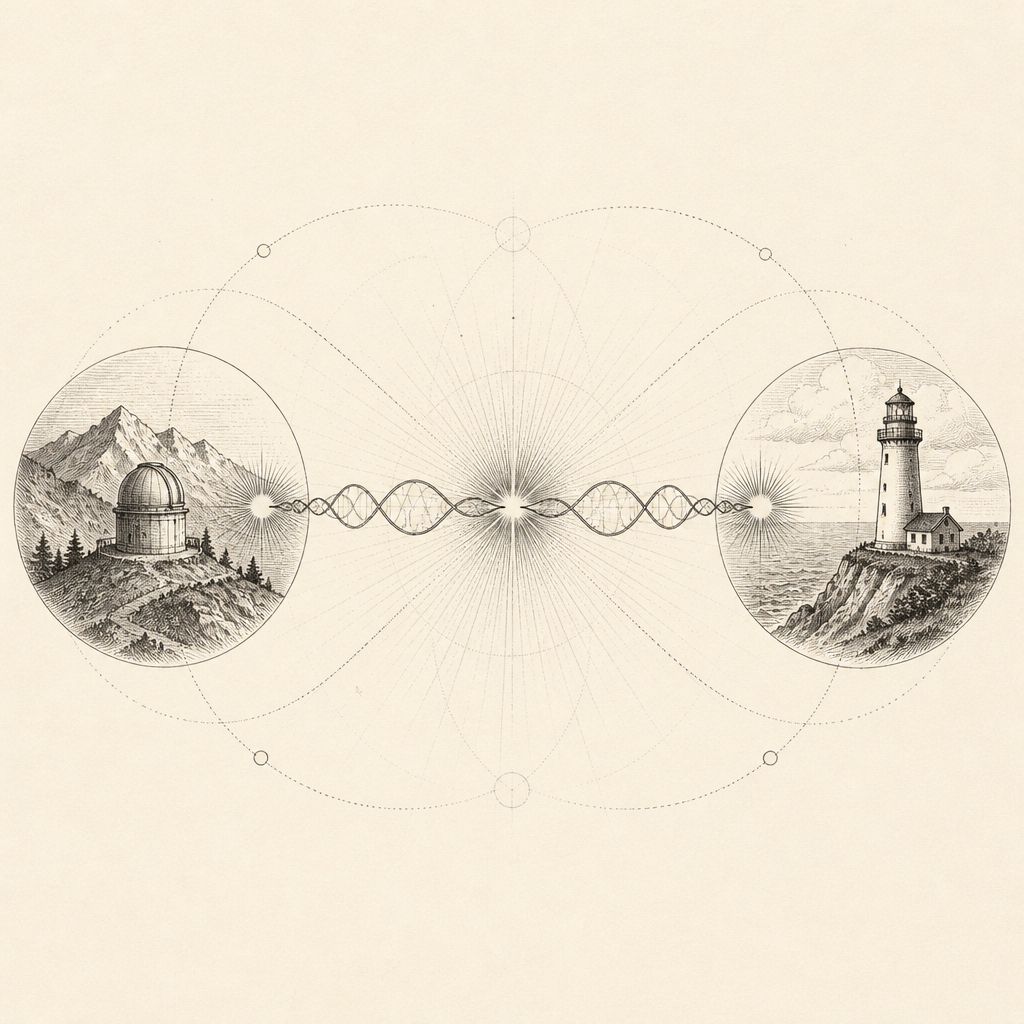
The core of the system relies on quantum entanglement, a phenomenon where two particles become linked and share the same properties regardless of the distance separating them. NIST researchers established two 'verifier' stations, positioned approximately a tenth of a mile apart on their Boulder, Colorado campus. These stations sent photons from an entangled pair to a 'prover' located between them, while retaining the other photon of each pair.
The prover then uses random numbers provided by the verifiers to measure a specific property of the entangled photons – their polarization. The time it takes for the prover to complete this measurement and send the result back to the verifiers allows for triangulation of the prover's exact location. The inherent security of this method stems from the fact that any attempt to intercept or tamper with the entangled photons during transit would be immediately detectable, as an imposter would not be able to complete the process within the expected timeframe.
This procedure is repeated millions of times, allowing the verifiers to analyze the correlations between their measurements and those of the prover. A key innovation in NIST's experiment is an additional 'loophole-free Bell test.' This test verifies the prover's location without requiring the quantum devices themselves to be fully trusted. It checks if the observed correlations between the entangled photons are stronger than what classical physics would permit.
If the results of the Bell test meet the quantum criteria, the verifiers can authenticate the prover's location with a high degree of confidence, based solely on the inputs and outputs of the experimental devices. This 'device-independent security' approach significantly mitigates risks associated with attackers trying to subvert the quantum hardware or exploit side-channel vulnerabilities.
While promising, the technology is still in its nascent stages. NIST estimates that practical applications are at least a decade away, primarily due to the requirement for cutting-edge equipment and stringent experimental conditions. Challenges remain in deploying such systems over existing fiber networks, which can experience substantial signal loss over longer distances, potentially impacting the protocol's efficiency.
This quantum-based location verification system offers a compelling vision for future security architectures. By anchoring digital security to the verifiable physical world, it could provide a powerful defense against sophisticated fraud, such as unauthorized fund transfers, and prevent breaches by ensuring that access to critical systems is granted only to individuals present at authorized physical locations. The research marks a significant step towards realizing the potential of quantum physics for practical cybersecurity applications.