
New 'Interrupt Injection' Attack Bypasses Spectre v2 Mitigations on Intel and AMD CPUs
Researchers have discovered a novel attack technique called 'Interrupt Injection' that can bypass Spectre v2 defenses on modern Intel and AMD processors, potentially re-enabling speculative execution attacks.
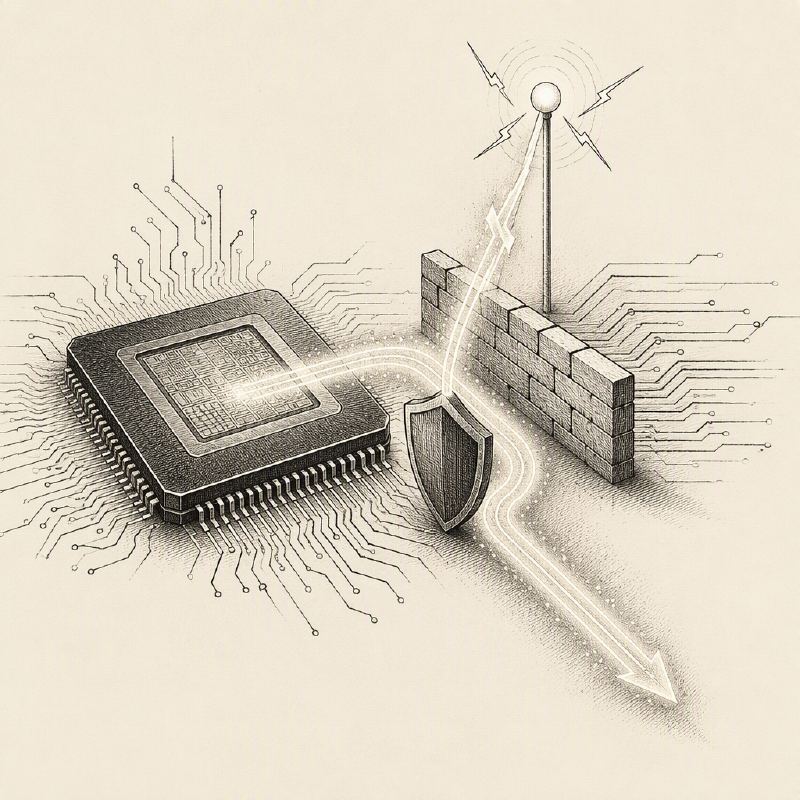
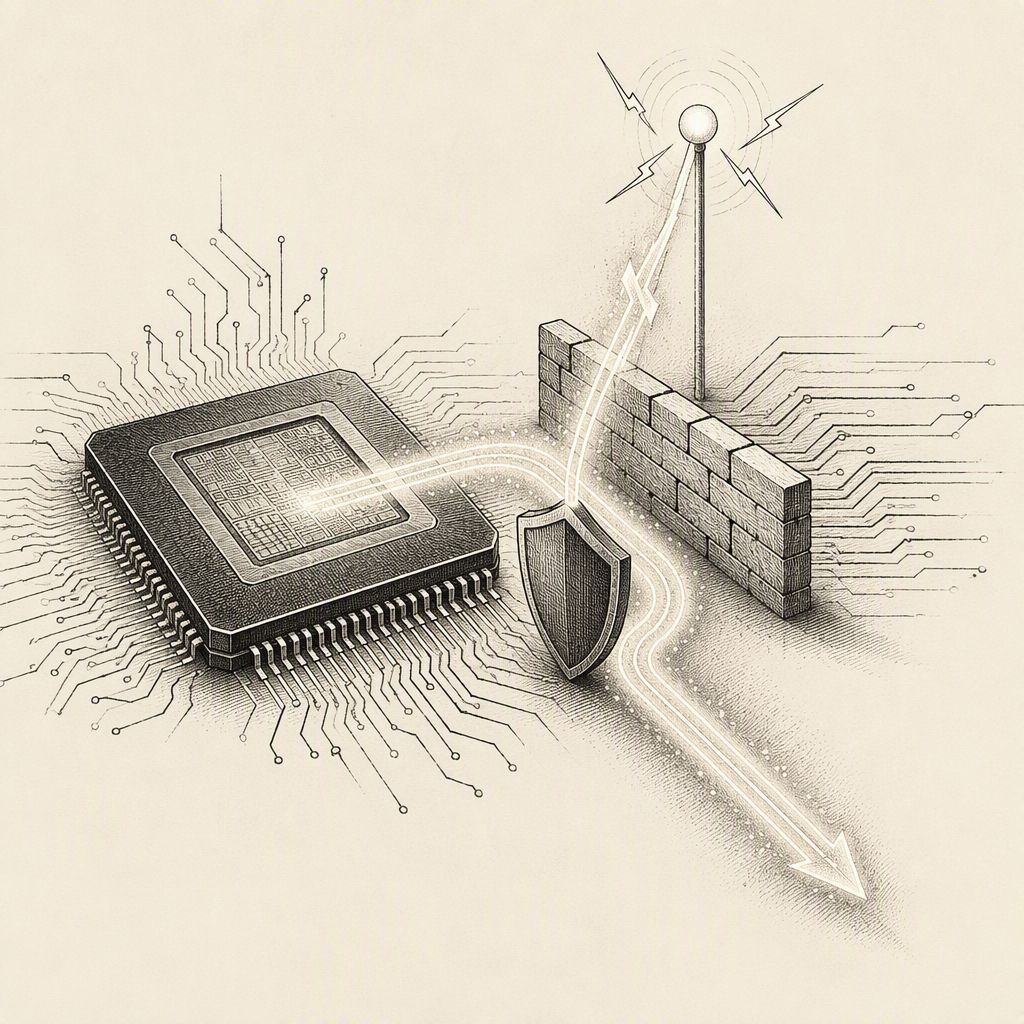
Researchers from MIT CSAIL have unveiled a new speculative execution attack technique dubbed 'Interrupt Injection,' capable of circumventing the Spectre v2 mitigations implemented on both Intel and AMD processors. This sophisticated attack exploits a critical timing window that exists between a processor sanitizing its branch predictor and the operating system's kernel utilizing that predictor.
By carefully timing a hardware interrupt, an unprivileged program can effectively 're-poison' the branch predictor after the Spectre v2 defenses have already run. This allows an attacker to manipulate the processor's speculative execution path, potentially leading to the leakage of sensitive information that would otherwise be protected. The attack was demonstrated successfully on an AMD Zen 2 machine running Linux 6.14, even with all default Spectre v2 mitigations enabled.
Spectre v2, also known as Branch Target Injection, is a vulnerability that allows attackers to trick a processor into speculatively executing code in unintended locations. Defenses against Spectre v2 typically involve sanitizing the branch predictor to prevent it from being poisoned with malicious targets. However, the 'Interrupt Injection' attack highlights a subtle flaw in the implementation of these defenses, where a precisely timed interrupt can reset the predictor's state before it's securely used by the kernel.
The implications of this discovery are significant, as it suggests that even systems considered protected against Spectre v2 variants may still be vulnerable. The attack requires precise timing and a deep understanding of processor microarchitecture and interrupt handling, making it a complex exploit to develop and deploy. Nevertheless, its existence poses a renewed threat to the security of modern CPUs.
While the researchers successfully demonstrated the attack on specific hardware and software configurations, the underlying principle could potentially affect a broader range of systems. The effectiveness and exploitability on different CPU architectures and operating systems will require further investigation. The attack's success underscores the ongoing challenge of securing processors against sophisticated side-channel and speculative execution attacks.
Mitigation strategies for 'Interrupt Injection' are still under development. Potential solutions might involve more robust interrupt handling mechanisms within the operating system kernel or hardware-level modifications to ensure the branch predictor's state is consistently secure during interrupt processing. The researchers are expected to release further details and potential patches in the near future, but for now, the vulnerability represents a new frontier in CPU security research.
This discovery serves as a stark reminder that the race between exploit development and security mitigation is continuous. As processors become more complex and defenses more sophisticated, attackers are finding new, intricate ways to bypass them. The 'Interrupt Injection' attack is a prime example of how subtle timing issues can be exploited to undermine fundamental security guarantees.
The MIT researchers' work, dubbed TONTOU, specifically targets a 'post-neutralization window' that exists between when speculative execution defenses are activated and when they are actually used. By injecting precisely timed interrupts during this narrow window, attackers can re-poison branch predictor states on both Intel and AMD CPUs, effectively bypassing Spectre v2 mitigations. While the attack is complex and demonstrated to be slow, the researchers successfully achieved an end-to-end exploit on AMD Zen 2, breaking KASLR and leaking sensitive kernel data, highlighting a practical, albeit challenging, new avenue for speculative execution attacks.