
New Framework Aims to Bolster Ransomware Resilience for AI Systems
A new, free framework called RAID-AI helps organizations assess and improve their defenses against ransomware attacks specifically targeting artificial intelligence systems.
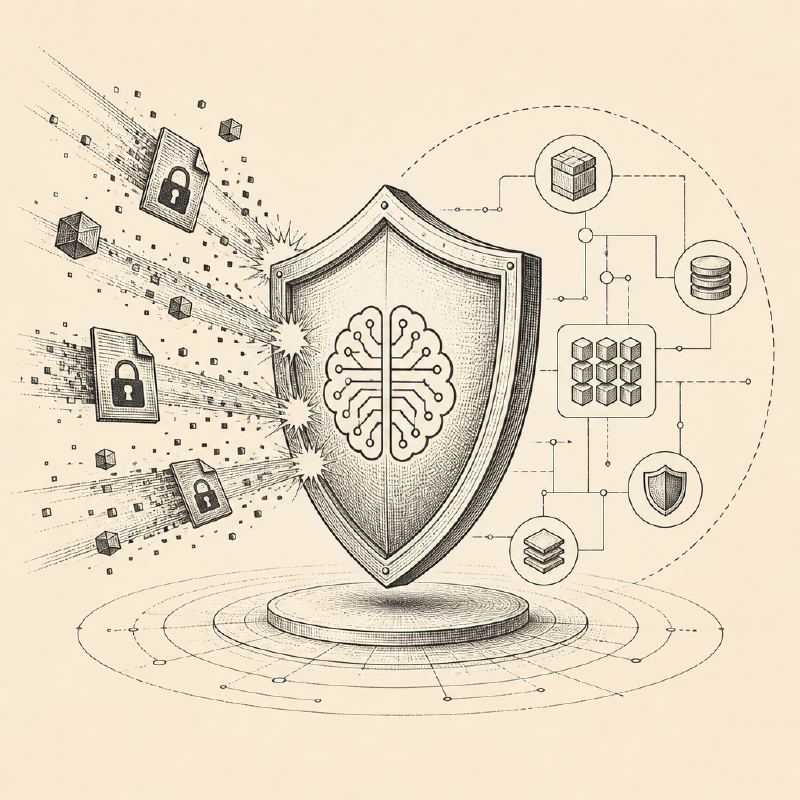

Cybersecurity leaders now have a new tool to identify and address potential weaknesses that could leave their artificial intelligence systems vulnerable to ransomware attacks. Developed over two years by Behnaz Karimi and Yuvaraj Govindarajulu, co-leads of the Open Worldwide Application Security Project’s (OWASP) AI Bill of Materials (AIBOM) initiative, the Ransomware Assessment and Incident Defense Framework for AI Systems (RAID-AI) is now available online for free.
RAID-AI focuses on ransomware attacks against AI systems, regardless of whether the attackers themselves use AI. The framework employs a hands-on, manual approach, prompting security teams to assess their existing controls rather than connecting to or scanning their systems. This manual assessment is crucial, as Karimi noted that ransomware attacks specifically targeting AI systems are beginning to emerge. She cited examples such as a report detailing ransomware actors using data poisoning techniques and an alleged cyber-attack on Novo Nordisk where hackers claimed to have stolen AI models.
The assessment covers both general cybersecurity measures and risks unique to AI models, data, and their supporting infrastructure. Delivered through a web console designed for CISOs, cybersecurity officers, and security engineers, the framework guides users through a self-assessment process. Participants evaluate their controls by selecting maturity levels on a scale from zero to five, with controls categorized into general (e.g., recovery, training, sensitive-data protection) and AI-specific areas (e.g., data, tools, runtime).
RAID-AI maps these assessed controls to established voluntary security frameworks, including the US National Institute of Standards and Technology’s (NIST) Cybersecurity Framework 2.0 (CSF 2.0) and the US Cybersecurity and Infrastructure Security Agency’s (CISA) Cybersecurity Performance Goals 2.0 (CPG 2.0). Furthermore, it facilitates the mapping of potential adversarial attacks against these controls using frameworks like MITRE ATT&CK, MITRE ATLAS, and NIST Adversarial.
Organizations using RAID-AI do not need to connect internal systems or upload sensitive company documents, ensuring the assessment remains private and non-intrusive. The tool does not perform automated audits; instead, it relies on the self-evaluations provided by security teams. Karimi suggests that bringing together security managers, engineers, and AI-security specialists in workshops would be an ideal way to conduct these assessments.
The console presents results through interactive dashboards, offering maturity views and mappings to other frameworks. Users can also generate PDF reports that highlight identified weaknesses and assist teams in prioritizing remediation efforts. The dashboard provides a high-level overview for senior leadership, while the detailed control information guides technical teams in deeper discussions.
Looking ahead, Karimi and Govindarajulu plan to expand the framework's utility by providing practical implementation resources, such as videos and blueprints, to help security engineers apply individual controls. They also aim to develop a similar tool specifically for ransomware threats targeting agentic AI systems, recognizing the evolving landscape of AI-driven cyber risks.
The introduction of RAID-AI addresses a critical gap in cybersecurity preparedness, offering a structured approach for organizations to proactively defend their increasingly vital AI infrastructure against the growing threat of ransomware. As AI adoption accelerates, ensuring the resilience of these systems against sophisticated attacks becomes paramount.