
Microsoft Windows dxgkrnl Vulnerability Allows Local Privilege Escalation
A Time-Of-Check Time-Of-Use vulnerability in Microsoft Windows' dxgkrnl component, CVE-2026-50375, allows local attackers to escalate privileges.
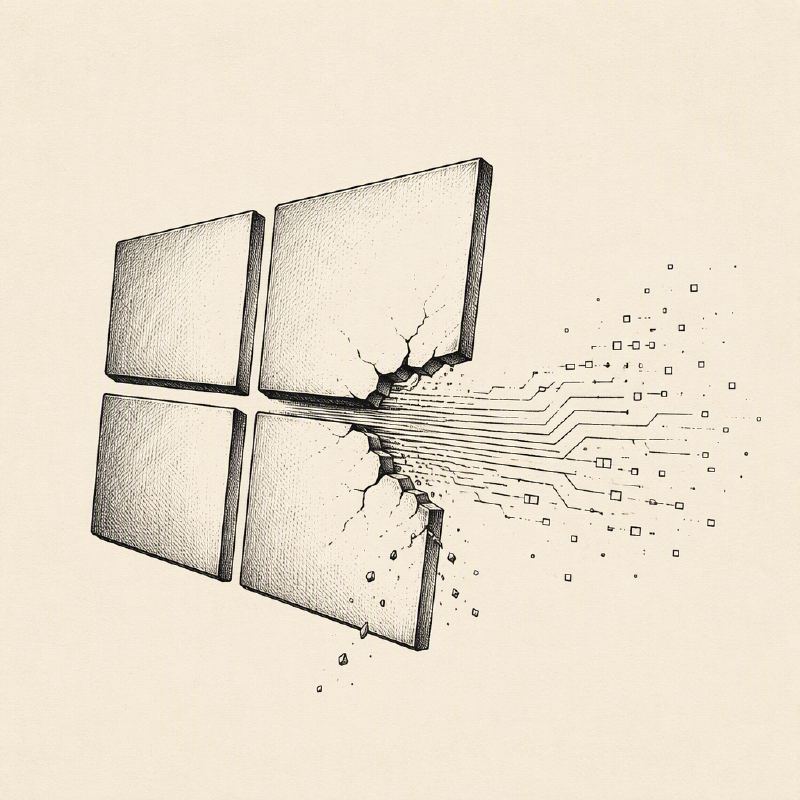

Zero Day Initiative (ZDI) has disclosed a critical vulnerability, identified as ZDI-26-751 and assigned CVE-2026-50375, affecting Microsoft Windows. This flaw resides within the dxgkrnl component, which is integral to the system's graphics kernel.
The vulnerability is classified as a Time-Of-Check Time-Of-Use (TOCTOU) issue. TOCTOU vulnerabilities occur when a program checks the state of a resource at one point in time, but then uses that resource later, during which time its state may have changed. In this specific case, an attacker can exploit this race condition to manipulate the system's behavior after an initial check, leading to a security compromise.
Exploitation of CVE-2026-50375 requires an attacker to first gain the ability to execute low-privileged code on the target system. This means the vulnerability is not remotely exploitable without prior access. However, once low-privileged code execution is achieved, the attacker can leverage the TOCTOU flaw to escalate their privileges to a higher level, potentially gaining administrative control over the affected Windows machine.
The Zero Day Initiative has assigned this vulnerability a high CVSS (Common Vulnerability Scoring System) score of 8.8, indicating a significant security risk. This high score reflects the potential impact of a successful privilege escalation, which can grant attackers the ability to install programs, view, change, or delete data, and create new accounts with full user rights.
While the specific details of the exploitation vector are not fully disclosed by ZDI to prevent immediate widespread abuse, the nature of TOCTOU vulnerabilities often involves manipulating file system objects, inter-process communication, or other shared resources in a time-sensitive manner. Attackers could potentially use this flaw to bypass security restrictions or gain elevated access to sensitive system components.
As of the disclosure, Microsoft is expected to address this vulnerability through its regular security update cycle. Users and organizations are strongly advised to apply any available patches and security advisories released by Microsoft to mitigate the risk associated with CVE-2026-50375. Keeping systems updated is crucial for protecting against such local privilege escalation threats.
This vulnerability highlights the ongoing challenges in securing complex operating system components like the graphics kernel. Even with robust security measures, subtle race conditions can persist, offering avenues for attackers to elevate their privileges. The disclosure serves as a reminder for developers to implement secure coding practices, particularly around resource access and state management, and for users to maintain vigilant patching schedules.