
Microsoft Urges Proactive Post-Quantum Authentication Testing
Microsoft's security blog emphasizes the critical need for organizations to begin testing their certificate ecosystems for post-quantum cryptography (PQC) readiness, highlighting authentication as a distinct challenge from data confidentiality.
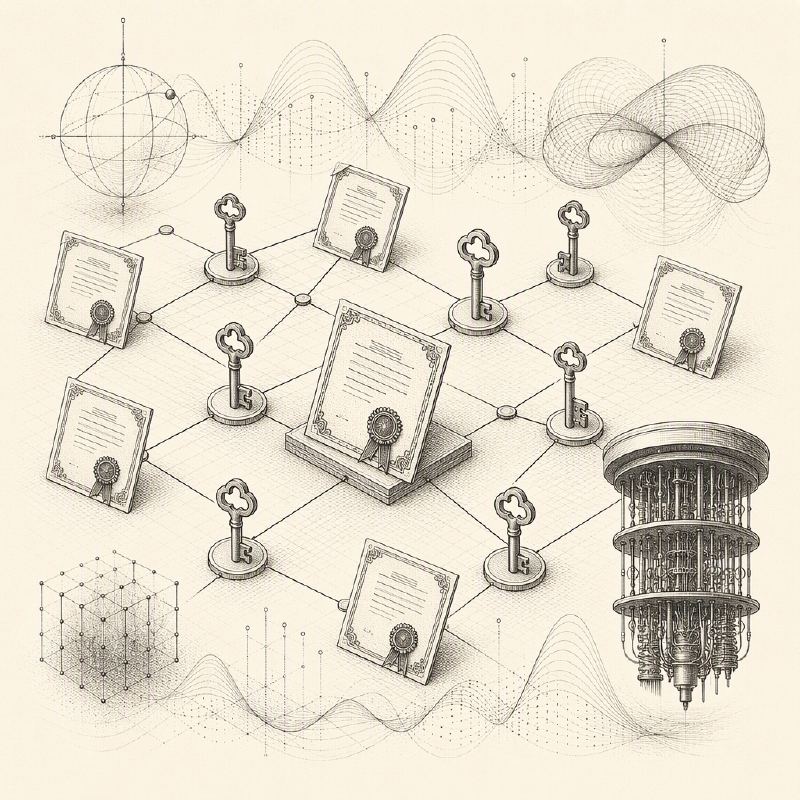
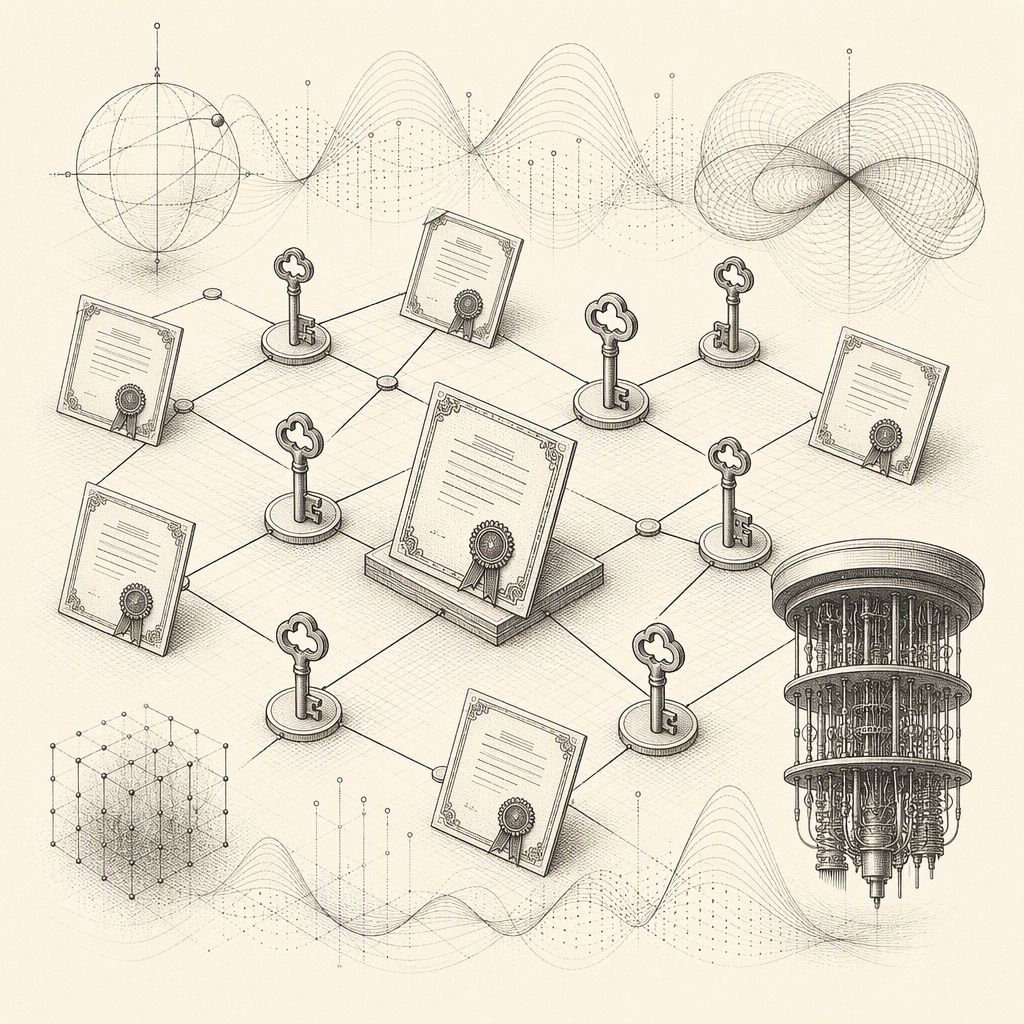
The accelerating development of quantum computing poses a significant threat not only to the confidentiality of encrypted data but also to authentication systems. Microsoft's latest security blog post underscores that while much of the current post-quantum cryptography (PQC) discussion centers on the 'harvest now, decrypt later' threat to data at rest, the evolution of authentication mechanisms presents a separate, complex challenge. This transition impacts a wide array of technologies, including digital certificates, Public Key Infrastructure (PKI) services, applications, devices, and hardware security modules, all of which rely on cryptographic algorithms that will need to be updated to resist quantum attacks.
Unlike data confidentiality, which primarily focuses on safeguarding encrypted communications, authentication relies on a vast and intricate ecosystem of technologies and trust relationships. The issuance, distribution, storage, validation, renewal, and management of certificates and private keys are embedded across diverse environments and vendor solutions. Consequently, changes to cryptographic algorithms for authentication can have far-reaching implications that extend beyond mere cryptographic correctness, affecting operational processes, interoperability, and the overall readiness of enterprise infrastructure. Many organizations possess a clear understanding of where Transport Layer Security (TLS) protects their communications, but a complete inventory of every system involved in certificate issuance, validation, storage, distribution, or dependency is often lacking.
Microsoft highlights that the transition to post-quantum authentication is unlikely to be a singular, straightforward technology upgrade. Enterprise environments are frequently characterized by decades of accumulated infrastructure, encompassing internally managed PKI deployments, embedded devices, operational technology, security appliances, custom applications, third-party services, and hardware-backed trust systems. Some of these technologies may have long deployment lifecycles, fixed cryptographic assumptions, or operational constraints that are not readily apparent until rigorous testing is undertaken. The primary challenge for organizations is not the unavailability of post-quantum standards, but rather understanding how proposed post-quantum certificate hierarchies will interact with the myriad of systems and processes already deployed across their complex environments.
To address these challenges, Microsoft has launched its Post-Quantum Cryptography (PQC) Transport Layer Security (TLS) Pilot Program. This initiative, launched on August 27, 2026, aims to provide eligible certificate authorities (CAs) with a controlled environment to evaluate the interoperability and operational readiness of PQC TLS roots and certificate issuance using the quantum-resilient Module-Lattice-Based Digital Signal Algorithm (ML-DSA-87). Certificates issued through this pilot are explicitly designated for interoperability and ecosystem-readiness testing in closed environments and custom applications; they are not publicly trusted and must not be used for production trust scenarios or public-facing websites.
Microsoft advocates for a multi-year planning approach to post-quantum authentication readiness, viewing it as an ongoing effort rather than a future migration project. Organizations are strongly encouraged to begin immediately by inventorying their certificate dependencies, assessing vendor roadmaps for PQC support, identifying long-lived infrastructure components with fixed cryptographic assumptions, and establishing non-production test environments. Early and comprehensive testing is crucial for surfacing compatibility and process gaps before post-quantum authentication becomes a mandatory requirement at scale.
Security leaders, PKI administrators, and architects who proactively engage in these preparatory steps will be better positioned to make informed decisions as PQC standards, platform support, and industry requirements continue to evolve. The pilot program is a step towards creating a more robust and resilient digital future, ensuring that authentication mechanisms can withstand the advent of quantum computing.