
Microsoft's Email Authentication Overhaul Bounces Legitimate Outlook.com Messages
Microsoft's stricter enforcement of email authentication protocols for Outlook.com has led to legitimate emails being rejected, causing widespread disruption for users.
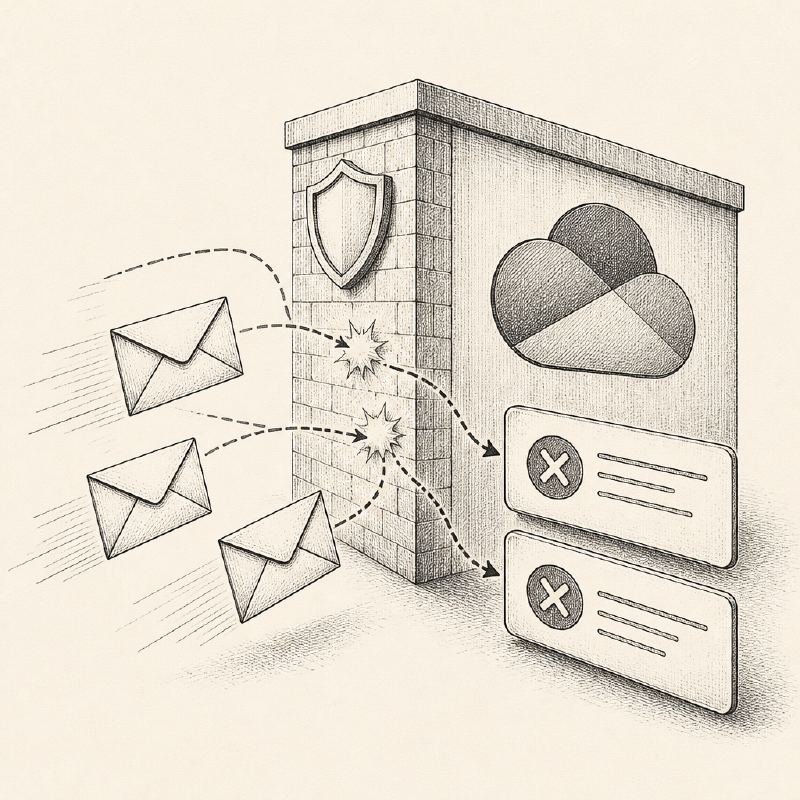

Microsoft's recent efforts to bolster email security for Outlook.com users have inadvertently created a significant problem, causing legitimate emails to be bounced back to senders. Users have reported receiving non-delivery reports (NDRs) citing failures in Sender Policy Framework (SPF) and Domain-based Message Authentication, Reporting, and Conformance (DMARC) validation. This issue, which began surfacing late last week, appears to be a consequence of Microsoft tightening its enforcement of these email authentication standards, impacting even small-scale senders.
The stricter rules are designed to combat spam and malicious email campaigns by ensuring that sending domains properly authenticate their emails. While Microsoft had previously announced new requirements for domains sending over 5,000 emails daily, including DMARC and DKIM compliance, the current situation suggests these policies are being applied more broadly or with less flexibility than anticipated. The problem arises when a domain lacks a correctly configured SPF record or a DMARC record altogether, leading Outlook.com to flag emails from such sources as suspicious and reject them.
Compounding the issue, Microsoft has not issued a formal advisory to its users explaining the changes or the scope of the problem. Many affected users claim their SPF, DKIM, and DMARC settings were previously compliant, yet they are still experiencing rejections. However, some users have reported that adjusting their email authentication configurations to align more closely with Microsoft's apparent preferences has resolved the delivery issues, suggesting a potential misconfiguration or an overly aggressive validation process on Microsoft's part.
For a domain's emails to be accepted, SPF records must accurately list authorized sending IP addresses or hosts. DKIM must pass to verify the integrity and authenticity of the email's content, and DMARC policies, even if set to 'p=none' (monitor mode), must align with either SPF or DKIM. The current situation has left many users frustrated, as the rejection messages are often vague, and the problem can be intermittent, with resending an email sometimes succeeding after an initial failure.
A moderator on Microsoft's support forum has acknowledged the problem, classifying it as a "service degradation." The moderator stated that "Microsoft is actively investigating the underlying cause of this email delivery issue, and engineering teams are actively analyzing service telemetry and customer-provided data to identify the source of the issue." However, no timeline for a resolution has been provided.
This email authentication issue is not the only recent hiccup for Microsoft services. Earlier today, a separate "service change" caused abrupt connection terminations for users in Europe, the Middle East, and Africa, affecting Outlook on the web and the Purview and Defender portals. Microsoft has since reverted that specific change. The current email bounce problem, however, remains under investigation, leaving users uncertain about when normal email flow will be fully restored.
The broader implications of this incident highlight the delicate balance between enhancing email security through robust authentication protocols and ensuring the continued deliverability of legitimate communications. As organizations increasingly rely on email for critical business operations, such disruptions can have significant operational and financial consequences. The incident also underscores the need for clear communication from service providers during periods of policy changes or technical difficulties.