
Microsoft Patches Critical Remote Desktop Client Vulnerability
Microsoft has released security updates for CVE-2026-69485, an Important-rated RCE vulnerability in the Windows Remote Desktop Client, allowing attackers to execute code on affected servers.
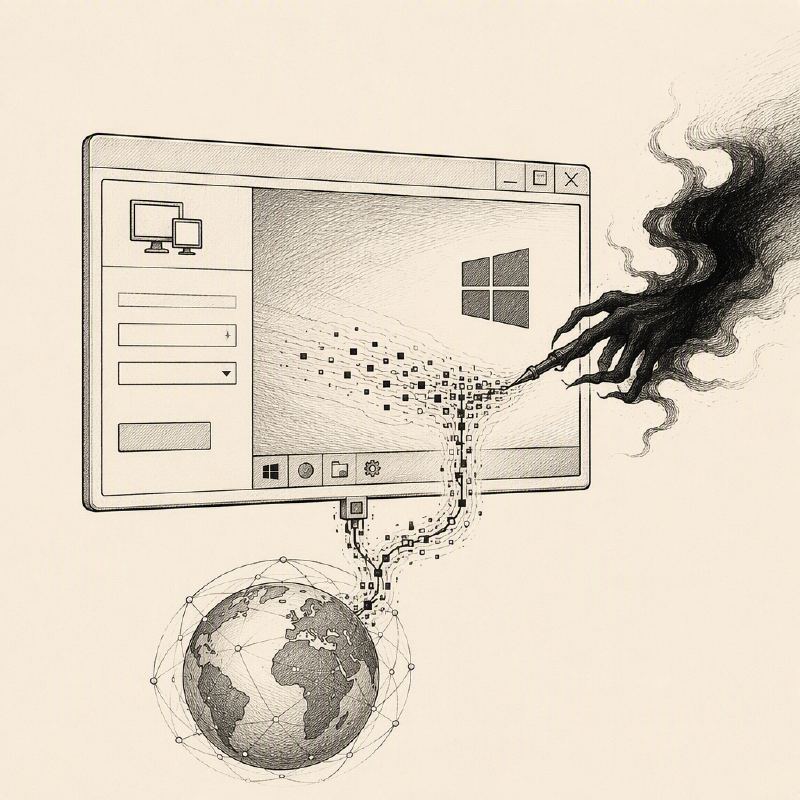
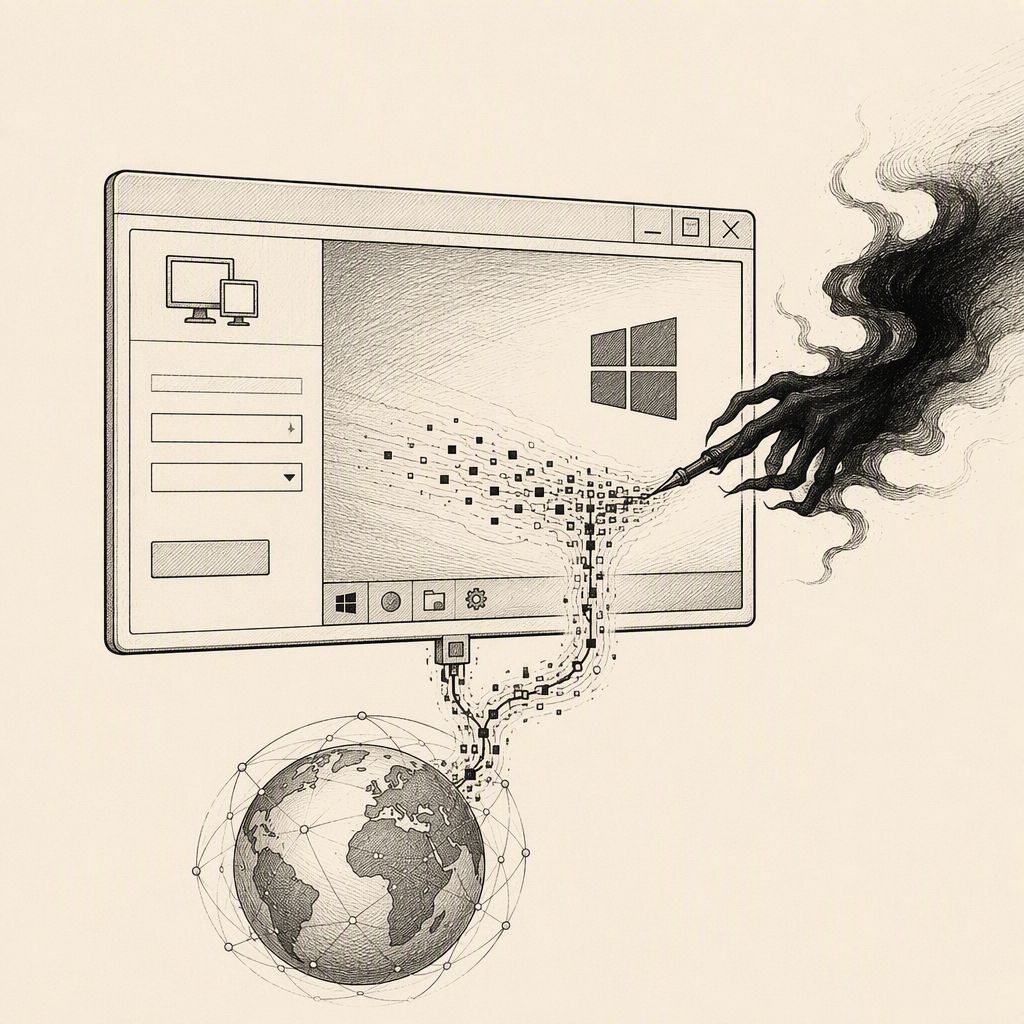
Microsoft has issued security updates to address CVE-2026-69485, a significant remote code execution (RCE) vulnerability discovered in the Windows Remote Desktop Client. This flaw, rated as 'Important' by Microsoft, could permit an authenticated attacker with low-privilege access to compromise a target server by sending a specially crafted network request.
The vulnerability, disclosed on September 8, 2026, is identified by the CVE identifier CVE-2026-69485. Microsoft has assigned it a CVSS 3.1 base score of 8.8, with a temporal score of 7.7. The technical details indicate a network attack vector, low complexity, and the requirement for low privileges, with no user interaction needed for exploitation. The root cause is attributed to the Remote Desktop Client utilizing an uninitialized resource, which can lead to unpredictable behavior and memory corruption when not properly handled.
Remote code execution vulnerabilities are particularly concerning as they can grant attackers extensive control over vulnerable systems. Successful exploitation of CVE-2026-69485 could lead to a compromise of the targeted device's confidentiality, integrity, and availability. Depending on the privileges of the compromised account, an attacker might gain access to sensitive data, alter system configurations, deploy additional malicious tools, or disrupt critical services.
Exploitation of this vulnerability necessitates that an attacker first authenticate to an affected server with low-level access. Once authenticated, the attacker can then send a malicious network request to trigger the vulnerability and execute arbitrary code. The absence of a user interaction requirement means that traditional security measures relying on user awareness, such as avoiding suspicious links or files, are less effective in preventing this type of attack.
At the time of its security advisory, Microsoft stated that CVE-2026-69485 had not been publicly disclosed prior to the release of the security update and had not been observed in active exploitation. The company assessed the likelihood of exploitation as "Exploitation Less Likely." However, the release of patches often prompts threat actors to analyze vulnerabilities and develop exploit techniques, making prompt patching a critical defense measure.
The vulnerability affects a wide range of Microsoft products, including Windows Server 2016, Windows Server 2019, Windows Server 2022, and Windows Server 2025, along with their Server Core installations. Several Windows client editions are also impacted, including Windows 10 versions 1607, 1809, 21H2, and 22H2, and Windows 11 versions 23H2, 24H2, 25H2, and 26H1 for supported x64 and ARM64 systems.
Microsoft strongly advises administrators to deploy the September security updates as soon as possible to mitigate this risk. Beyond patching, security teams are encouraged to review their Remote Desktop exposure, restrict RDP access to trusted networks only, enforce the principle of least privilege, and diligently monitor Remote Desktop and authentication logs for any signs of suspicious activity. The vulnerability was reported through coordinated disclosure by security researchers yhw and txz.