
Microsoft August Updates Cause WPF Printing and PDF Export Failures
Microsoft's August 2026 .NET Framework cumulative updates are causing System.IO.FileFormatException errors in WPF applications when generating PDFs/XPS or printing, impacting multiple Windows versions.
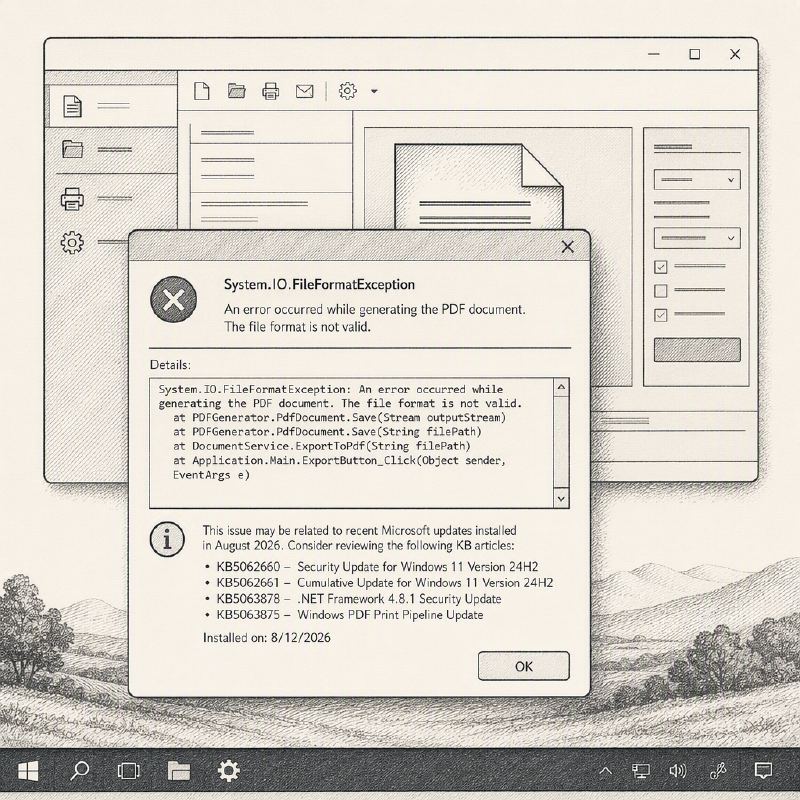
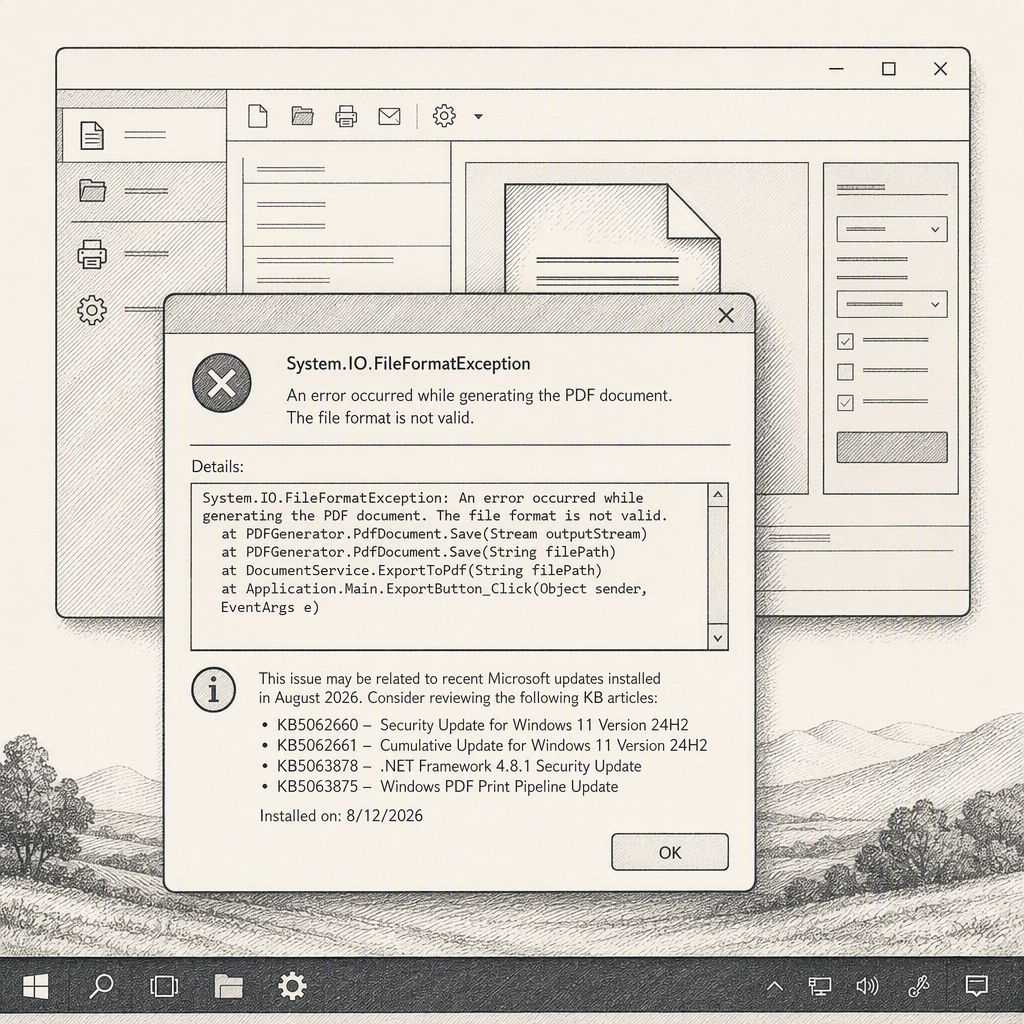
Microsoft has confirmed that its August 2026 .NET Framework cumulative updates are causing printing failures and PDF/XPS generation errors in Windows Presentation Foundation (WPF) applications. This regression, stemming from enhanced font validation for security hardening, specifically impacts TrueType fonts like Calibri, disrupting business workflows across various Windows and server operating systems.
The issue surfaces in WPF applications that rely on TrueType font subsetting during printing or document export operations. Community testing has traced the bug to the ClearType font family, meaning Calibri, Cambria, Constantia, and Corbel trigger the crash, while other fonts like Arial and Times New Roman continue to work normally. The root cause lies within the internal ComputeSubset function inside MS.Internal.TrueTypeSubsetter, which now applies stricter validation to font glyph tables as part of the security hardening introduced in this update cycle.
This problem is not confined to a single Windows release. Microsoft's release health alerts confirm it affects Windows 10, Windows 11, and Windows Server versions from Windows Server 2012 through Windows Server 2025. The broad impact means that everyday business operations, from generating invoices and reports through line-of-business WPF applications to third-party software like Crystal Reports-based tools, can be disrupted.
The regression is an unintended consequence of genuine security fixes bundled into the same update. The August 2026 .NET Framework rollup patches six vulnerabilities, including remote code execution flaws (CVE-2026-62886, CVE-2026-62897, CVE-2026-70354) and elevation-of-privilege issues (CVE-2026-65810, CVE-2026-62872). The tightened font validation, intended to close these security gaps, is what now causes the subsetter to reject otherwise legitimate Calibri-based fonts.
While a permanent fix is still pending, Microsoft has published a workaround. Developers can apply the Switch.MS.Internal.TtfDelta.DisableCmapAndSbitOverflowProtection AppContext switch to an application's configuration file. This switch restores printing and PDF/XPS generation functionality by disabling the new security overflow validation. However, Microsoft explicitly states that this workaround rolls back the very security protections the August update introduced, increasing exposure to the vulnerabilities it was designed to fix.
Organizations are advised to treat the AppContext switch strictly as a stopgap and remove it once an official patch is released. Alternatively, administrators can substitute affected fonts, such as switching document templates from Calibri to Arial or Times New Roman, which bypasses the subsetting bug without compromising security settings. Microsoft's status for this known issue remains listed as "Investigating" across all affected KB articles, with no confirmed timeline for a permanent resolution.
IT teams managing enterprise patch management strategies should test the AppContext workaround in staging environments before broad deployment. They are also advised to monitor Microsoft's release health dashboard for updates and prioritize font substitution where document security is paramount until a corrected build is shipped.