
Mail Bombing Attacks Precede IT Helpdesk Impersonation Scams
Cybercriminals are using 'mail bombing' to flood inboxes, obscuring alerts and enabling IT helpdesk impersonation scams to steal credentials.
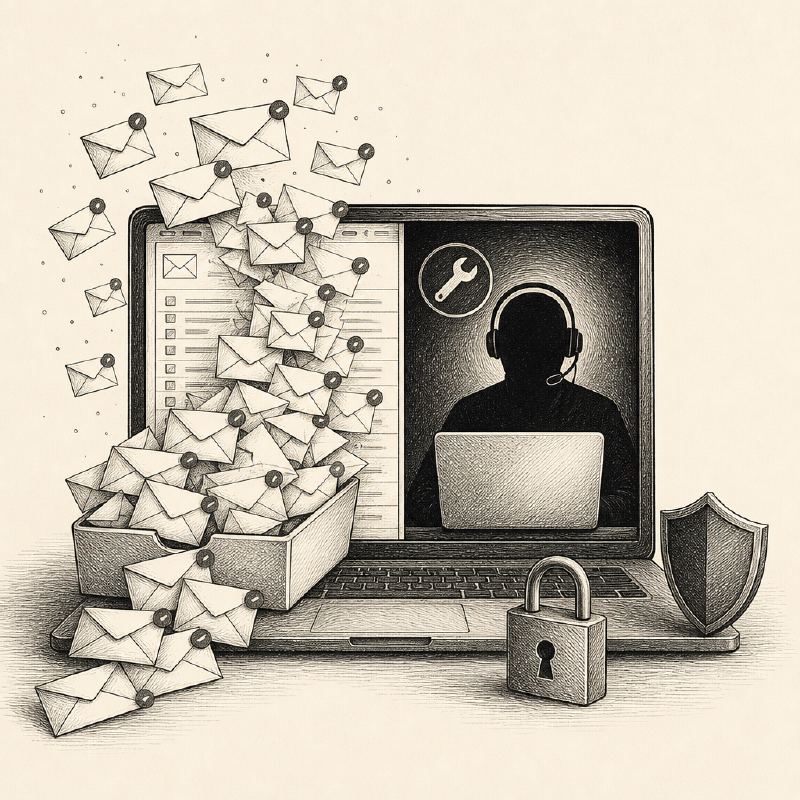
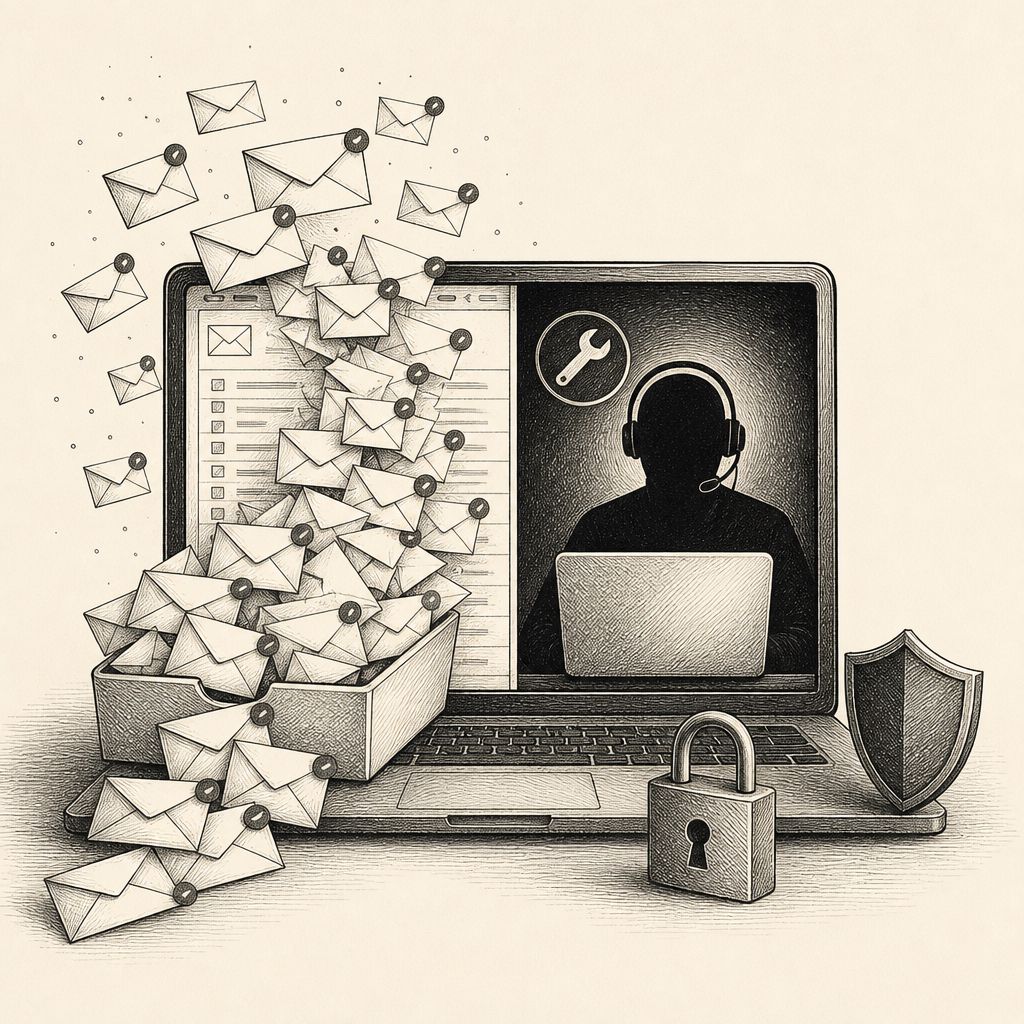
Cybercriminals are employing a two-pronged attack strategy that begins with "mail bombing" campaigns designed to overwhelm target inboxes, followed by sophisticated IT helpdesk impersonation scams aimed at stealing user credentials. This tactic, tracked by Fortra's Fortra Intelligence and Research Experts (FIRE), involves deliberately flooding a victim's inbox with a massive volume of subscription emails from various websites.
The mail bombing phase does not require direct access to a target's mailbox. Instead, attackers submit a victim's email address to numerous online forms, triggering a deluge of newsletters, registration confirmations, and other signup notifications. This overwhelming influx of messages can effectively bury legitimate alerts, payment notifications, and other critical communications, making it difficult for users and security teams to identify malicious activity.
Researchers from FIRE have observed indications that these campaigns may be orchestrated by AI agents. These agents are reportedly instructed to crawl web pages and automatically subscribe to newsletters via any available signup forms. The primary delivery services observed in these attacks include Mailchimp and its transactional service Mandrill, followed by Amazon SES and SendGrid. FIRE noted that active campaigns can peak at approximately 10,000 messages per campaign, averaging around 1,000 emails per day.
During these mail bombing waves, attackers often introduce phishing attempts that are harder to detect amidst the noise of legitimate-looking subscription emails. Following the email flood, the campaign escalates to vishing calls, where threat actors impersonate internal IT support staff. These actors contact victims, often via platforms like Microsoft Teams, offering 'solutions' to stop the email bombardment. The instructions provided, however, are designed to trick users into compromising their accounts or systems.
The effectiveness of this attack lies in its subtlety. Individual subscription emails can appear entirely normal and may not contain malicious links, making them difficult to flag automatically. Furthermore, legitimate allowlist exceptions for email delivery platforms can complicate containment efforts, as these platforms may be carrying the flood of malicious subscription emails.
Fortra advises security teams to monitor email volumes per recipient against established baselines. Suspicious bursts of emails from numerous unrelated senders, characterized by common subscription wording and mailing-list headers, warrant further investigation. Verifying the scope and duration of such bursts directly with email delivery providers is also recommended.
Mailchimp has indicated that senders can request temporary subscription blocking for specific recipients. Additionally, Mailchimp has an automatic control that restricts an address from joining additional audiences for 24 hours after rapid, repeated signups, a feature that could help mitigate the impact of mail bombing.
While Fortra has not yet attributed this specific campaign to a particular threat actor group, the coordinated nature of the mail bombing followed by social engineering highlights a growing trend in sophisticated, multi-stage attacks designed to exploit both technical vulnerabilities and human trust.