
Leaked n8n API Tokens Expose Live Instances to Credential Theft
Researchers discovered 321 n8n instances with exposed API tokens in public GitHub commits, allowing attackers to access sensitive data and downstream credentials without exploiting software flaws.
Researchers from GitGuardian have identified a significant security risk stemming from exposed API tokens belonging to the n8n workflow automation platform. A scan of public GitHub commits revealed 321 live n8n instances where API tokens were inadvertently leaked, providing attackers with a direct pathway to sensitive data and stored credentials without needing to exploit any software vulnerabilities.
The investigation uncovered a total of 4,576 unique credentials associated with 1,255 distinct hostnames within these public commits. Of the 896 n8n instances that were publicly reachable and tested, a substantial 321 instances accepted at least one of these leaked tokens. This means that nearly 36% of the reachable instances, and approximately 26% of all identified hostnames, were vulnerable to unauthorized access through these compromised credentials.
The implications of this exposure are far-reaching, given n8n's role in connecting a wide array of critical systems. Organizations leverage n8n to integrate databases, source code repositories, cloud environments, AI services, and customer support platforms. A compromised n8n token can grant an attacker access to workflow definitions, execution data, and crucially, the underlying credentials stored within the platform, potentially leading to a cascade of further compromises across an organization's technology stack.
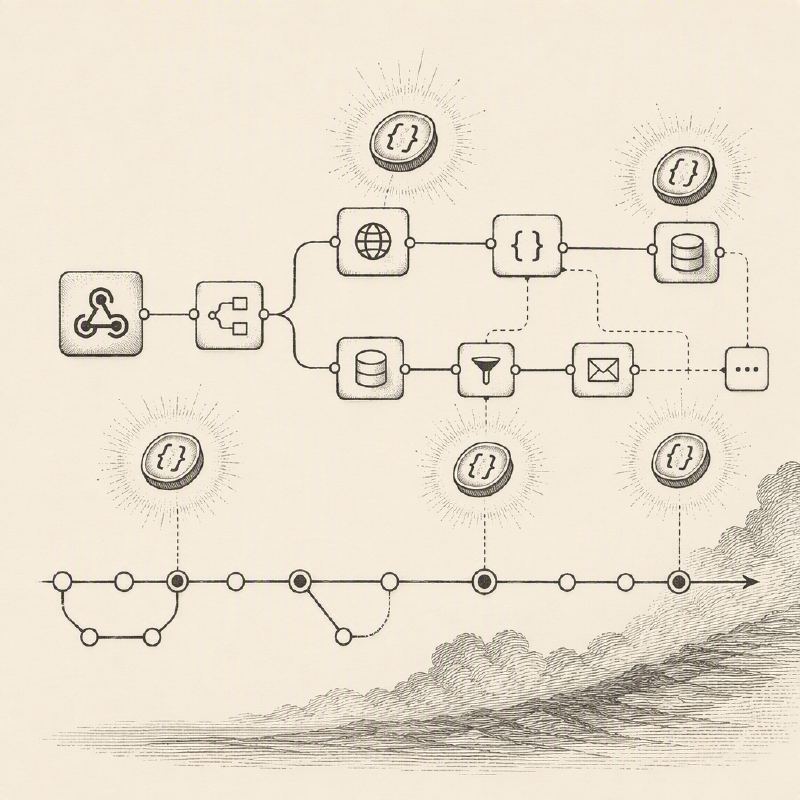
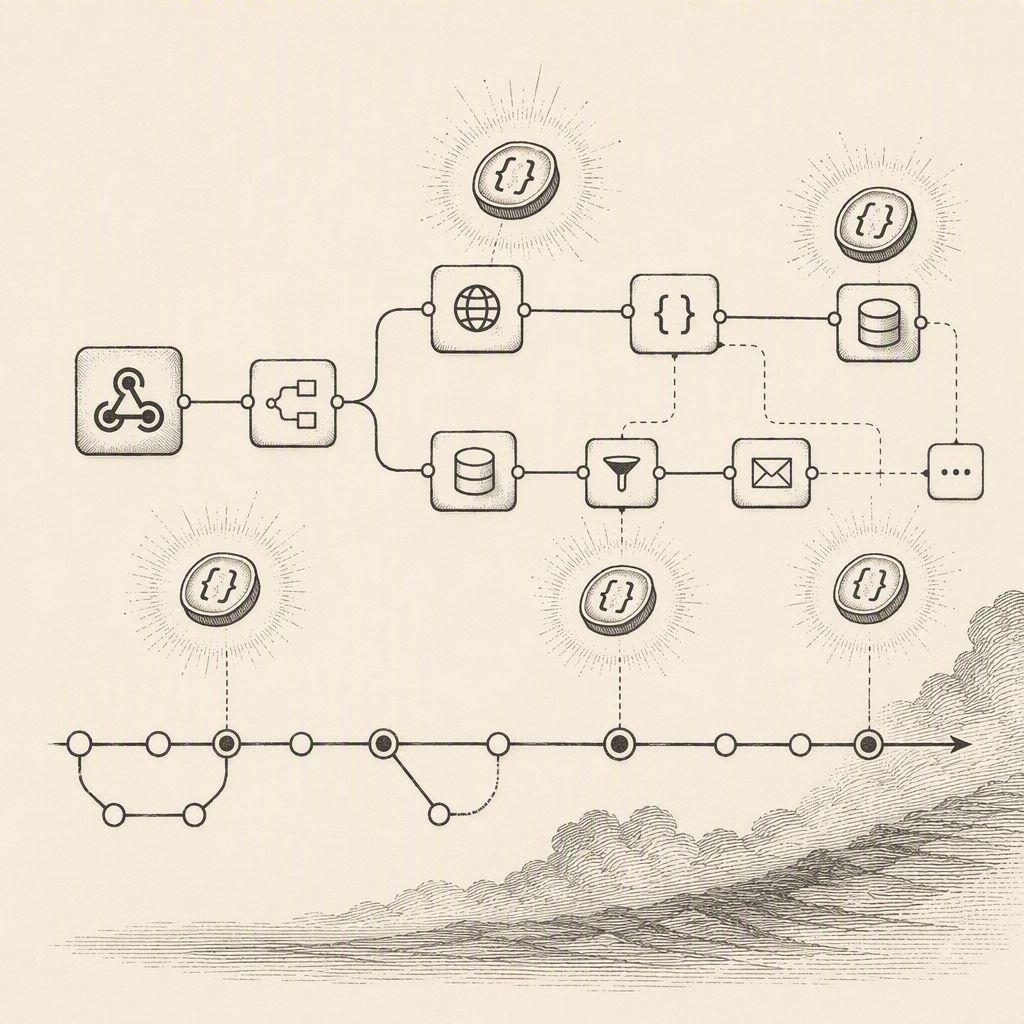
To demonstrate the potential impact, GitGuardian researchers simulated four attack scenarios using only documented REST API functionalities and standard HTTP requests. These demonstrations proved that attackers could leverage the leaked tokens to access sensitive information and downstream credentials without requiring any specialized tools or exploiting known software vulnerabilities. This highlights a critical supply-chain risk where exposed secrets, rather than software flaws, become the primary attack vector.
n8n, an open-source workflow automation tool, is popular for its low-code interface and extensive integration capabilities. It allows users to connect various internal tools, automate pipelines, and orchestrate API integrations. While n8n offers robust security features, including encrypted storage of credentials, the platform still needs to decrypt these credentials for workflow execution. This inherent process, combined with the potential for API token exposure, creates a potent attack surface.
While n8n has seen numerous security advisories, including critical CVEs like CVE-2025-68613 (CVSS 9.9) which is already being exploited in the wild and listed on CISA's KEV catalog, the leaked API token issue presents a distinct and immediate threat. Attackers can bypass the need to exploit complex vulnerabilities if they possess valid, authenticated access through a leaked token.
The research also noted that while n8n introduced a 30-day default expiration for API keys in version 1.78.0 (February 2025), many older tokens lacked expiration dates. This means tokens committed to GitHub months or even years prior could remain valid and exploitable until explicitly revoked. The validation process for these tokens involves a simple read-only API request, making it easy for attackers to test the validity of stolen credentials.
This discovery underscores the persistent challenge of managing secrets in development workflows. Organizations must implement robust practices for detecting and revoking exposed credentials, alongside diligent vulnerability management, to protect against such widespread credential-based attacks. The findings serve as a stark reminder that even seemingly minor oversights, like committing API tokens to public repositories, can have severe security consequences.