
ICANN Accelerates Quantum-Resistant DNS Security Efforts
ICANN is fast-tracking preparations for DNSSEC to withstand future quantum computing threats, addressing challenges like larger key sizes and potential protocol shifts.
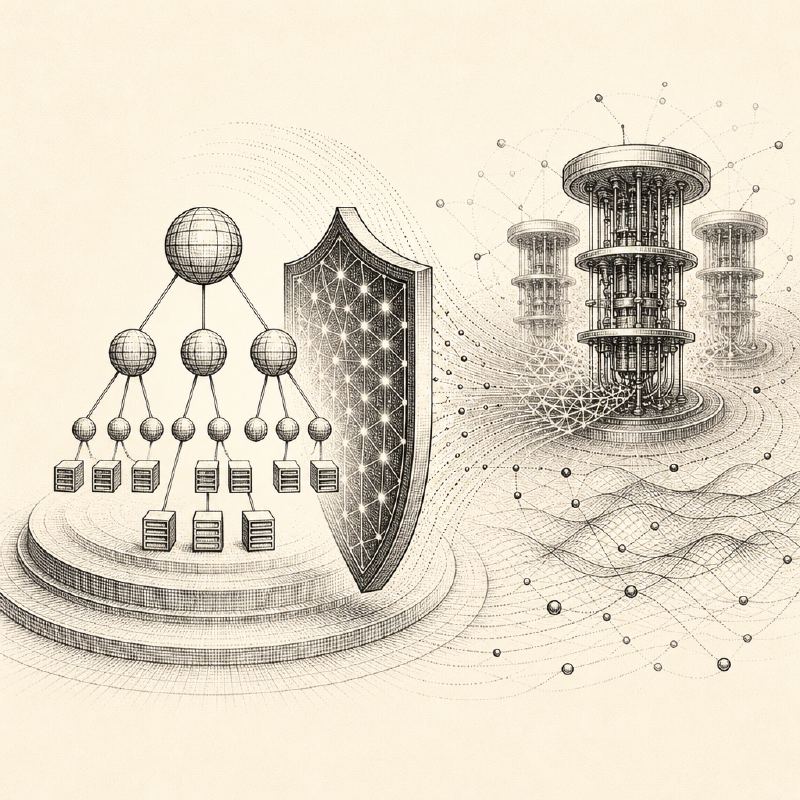

Internet governance bodies, led by ICANN, are intensifying efforts to fortify the Domain Name System (DNS) against the impending threat of quantum computing. The advent of commercially viable quantum computers capable of easily deciphering current encryption methods poses a significant risk to DNSSEC, the security extensions that verify the authenticity of DNS records. ICANN's Chief Technology Officer, John Crain, indicated a shift in the organization's timeline, suggesting that readiness for quantum decryption attacks may be needed sooner than previously anticipated, potentially within three to five years rather than a decade.
One primary strategy to achieve quantum-proofing for DNSSEC involves the adoption of larger cryptographic keys. However, this approach introduces technical hurdles. Larger keys necessitate larger DNS zone files and consequently larger data packets, which can exceed the standard message size limits inherent in the DNS protocol. This limitation could force a transition from the preferred UDP protocol to TCP, a shift that requires substantial development and testing.
Crain acknowledged these challenges, stating that the internet community, including ICANN and the IETF, is actively aware of the issue. Preliminary work has commenced to address the potential migration from UDP to TCP, a process expected to take several years to implement in a predictable and stable manner. The increasing urgency surrounding this threat has prompted ICANN to "ramp up the speed of development" for these quantum-resistant solutions.
Beyond the quantum threat, the article also touches upon other significant developments within ICANN. Discussions at the recent ICANN meeting in Bali highlighted ongoing reforms to the Number Resource Organization (NRO) and its governance documents, specifically ICP-2. This revision aims to provide a comprehensive framework for the entire lifecycle of Regional Internet Registries (RIRs), including audit, continuity operations, and derecognition, with ICANN playing a more prominent oversight role.
Furthermore, the meeting addressed concerns regarding the abuse of certain top-level domains (TLDs). ICANN's research indicates that "Category 1" GTLDs, designated for regulated sectors like .bank or .pharmacy, are disproportionately targeted by DNS abusers. While these domains also exhibit lower overall abuse volumes, ICANN is developing policies to require registrars to implement stricter measures against domain owners facilitating abuse and to regulate automated domain registrations.
The ongoing expansion of new gTLDs was also a topic of discussion, with indications that ICANN's new application round is progressing well. There is a growing expectation that future rounds will occur more frequently and follow a predictable cadence, with the current application process serving as a potential template.
The confluence of these developments underscores a period of significant evolution for the DNS infrastructure. As the internet grapples with the long-term implications of quantum computing, ICANN and its partners are proactively working to ensure the foundational security and integrity of the global domain name system remain robust.