
Horizon3.ai Enhances NodeZero with AI-Driven Web Application Attack Path Testing
Horizon3.ai's NodeZero platform now autonomously tests web applications, chaining vulnerabilities to identify exploitable attack paths and quantify business risk.
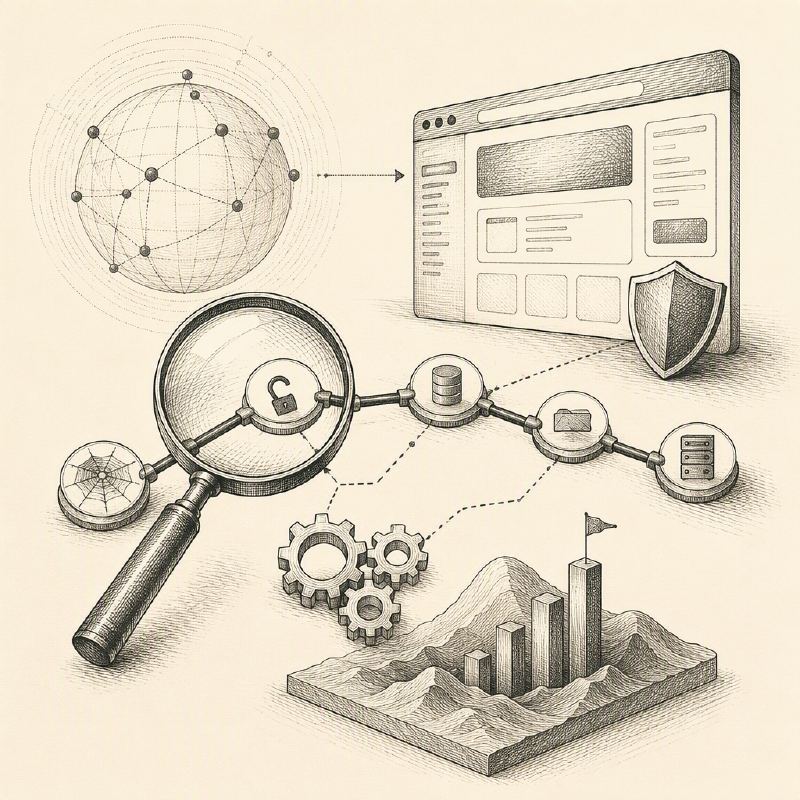

Horizon3.ai has significantly expanded its NodeZero platform by integrating AI-powered capabilities for web application penetration testing. This new functionality allows the platform to autonomously test web applications, identify complex attack paths, and chain together various security weaknesses – including application vulnerabilities, credential theft, lateral movement, cloud access, and data exposure risks.
The cybersecurity landscape is increasingly challenged by the rapid proliferation of applications, many of which are developed using generative AI. These "vibe-coded" applications often introduce a wave of exploitable flaws that threat actors can quickly discover and weaponize, outpacing defenders' ability to patch them. Traditional security testing methods, which often examine web applications in isolation, are falling short because these applications are rarely the ultimate target but rather the initial entry point into an organization's network.
Attackers typically leverage a compromised web application to steal credentials, move laterally across the network, pivot into cloud environments, and ultimately access sensitive business data. NodeZero WebApp Pentesting aims to bridge this gap by providing production-safe, autonomous testing that spans web applications, underlying infrastructure, cloud deployments, and identity systems. The platform's core value proposition is its ability to demonstrate what is actually exploitable, quantify the business consequence of each identified attack path, and map these paths to the tactics employed by known threat actors.
Snehal Antani, CEO of Horizon3.ai, highlighted the limitations of existing tools, stating, "Legacy web application security tools are notoriously noisy. They flood teams with theoretical findings that lack context or business impact." He further elaborated on the evolution of AI in pentesting, noting that while early AI-driven tools performed well in controlled environments like cyber ranges, they were not designed for safe operation against real enterprise production systems. NodeZero's differentiator is its ability to chain vulnerabilities across application, infrastructure, cloud, and identity at scale, a feat previously unachievable.
Antani emphasized that NodeZero has been developed by running hundreds of thousands of production-safe tests against large and sensitive networks, continuously improving its AI engine. This same engine now provides end-to-end testing, starting from the web application and extending to the potential business impact. This comprehensive approach allows organizations to move beyond theoretical risks and focus on vulnerabilities that pose a genuine threat.
The new NodeZero WebApp Pentesting capabilities offer several key benefits. It provides continuous, autonomous testing for both pre-production and production applications, utilizing the same production-safe engine that already powers NodeZero's internal, external, and cloud penetration testing. This ensures consistency and safety across all testing environments.
Furthermore, the platform delivers full attack-path chaining, demonstrating how weaknesses such as SQL injection or broken access control can escalate into critical security incidents like host compromise, domain control, or data exposure. This detailed mapping of exploitability and business risk enables organizations to prioritize and remediate vulnerabilities more effectively, contrasting sharply with the often noisy and theoretical output of legacy security scanners.
NodeZero WebApp Pentesting also covers a broad range of threats, including the OWASP Top 10, complex access-control failures that traditional scanners frequently miss, and credential-based attack techniques that closely mirror the methods used by modern adversaries. This comprehensive coverage ensures that organizations are better equipped to defend against the evolving threat landscape.