
Holiday Scams Leverage Familiarity for Credential Theft and Malware Delivery
Researchers uncover five Thanksgiving and Black Friday cyberattacks using deceptive holiday themes to steal corporate credentials and deploy unauthorized remote access software.
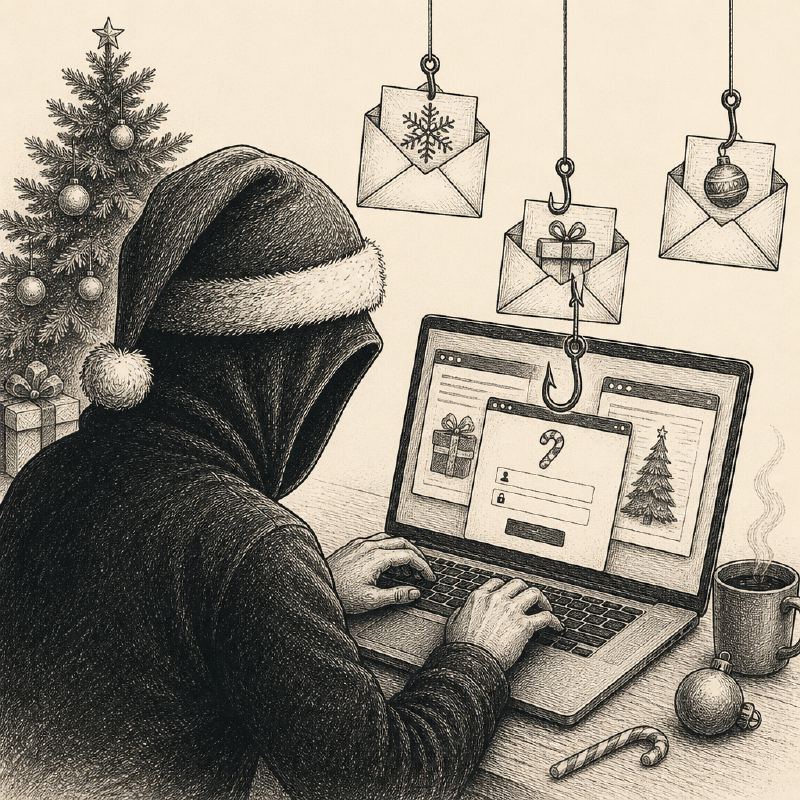

Cybercriminals are exploiting the trust and familiarity associated with holiday communications to launch sophisticated attacks, according to recent findings by ANY.RUN researchers. Five distinct campaigns, themed around Thanksgiving and Black Friday, have been identified, utilizing tactics ranging from credential phishing via fake invitations to the delivery of remote access software through deceptive e-cards.
Three of these attacks specifically leveraged Thanksgiving themes. One campaign employed a fake potluck invitation from a US real estate franchise to trick employees into revealing their Google Workspace credentials. The "View & RSVP" button on the invitation led to a fraudulent verification page and subsequently a fake Google login form designed to harvest corporate credentials. ANY.RUN's interactive sandbox analysis revealed the redirect chain, the iframe-hosted phishing form, and the POST requests used to transmit stolen data, also highlighting how threat intelligence lookups can uncover related infrastructure and connected attacks.
Another Thanksgiving-themed attack disguised itself as a Blue Mountain e-card, with the PDF attachment named "Invitation RSVP.pdf." Clicking the "VIEW INVITATION" link initiated a series of redirects through DocSend to a Cloudflare R2-hosted page. This page automatically downloaded ScreenConnect.ClientSetup.msi, a legitimate remote access tool that, when installed without authorization, can grant attackers control over corporate devices. The attackers also collected visitors' public IP addresses and sent them to a Telegram bot.
The third Thanksgiving-themed campaign impersonated MyChart, a US healthcare patient portal, by offering a free medical monitoring kit. This attack used an image-based email to direct recipients to a fraudulent eight-question survey. After collecting personal information, the survey prompted users for a $10.55 processing fee, effectively combining personal data harvesting with a small-scale financial scam. ANY.RUN's analysis exposed the multi-stage redirection through a traffic distribution system (TDS) and a fake verification page, demonstrating how attackers conceal malicious destinations behind trusted brands.
Moving into the Black Friday period, attackers continued to blend legitimate promotional content with malicious infrastructure. One identified campaign targeted US businesses, including construction contractors and service providers, by combining fake Non-Disclosure Agreement (NDA) signing requests with genuine Black Friday promotional newsletters. These newsletters contained numerous links, with most leading to legitimate websites, but a few were designed to direct users to phishing infrastructure. This tactic of embedding malicious links within seemingly benign promotional content makes detection more challenging for security teams.
These attacks underscore a broader trend of threat actors leveraging familiar contexts and legitimate-looking lures to bypass security measures. The use of services like Cloudflare R2 and Telegram bots, alongside sophisticated redirection techniques and browser fingerprinting, highlights the evolving tactics employed by cybercriminals. Security Operations Centers (SOCs) are urged to utilize behavioral analysis, investigate related infrastructure, and pay close attention to image-based phishing and traffic distribution systems to effectively detect and mitigate these holiday-themed threats.