
Hackers Weaponize AI Coding Tools, Exploiting Trust for Credential Theft
A new report reveals attackers are increasingly targeting AI coding assistants and developer tools to steal credentials, with 103 AI-linked cyber incidents documented over a year.
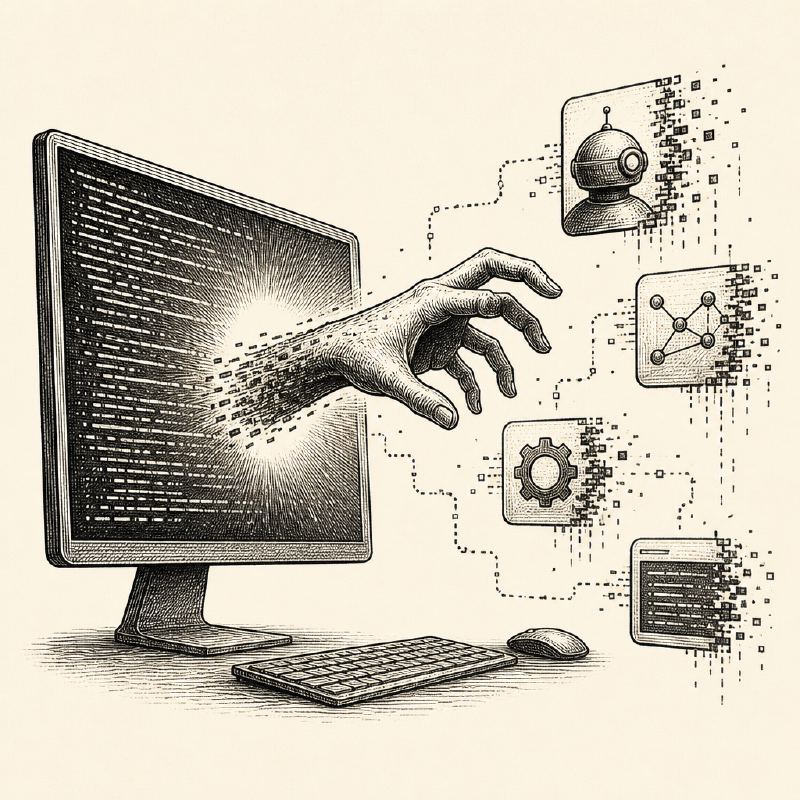
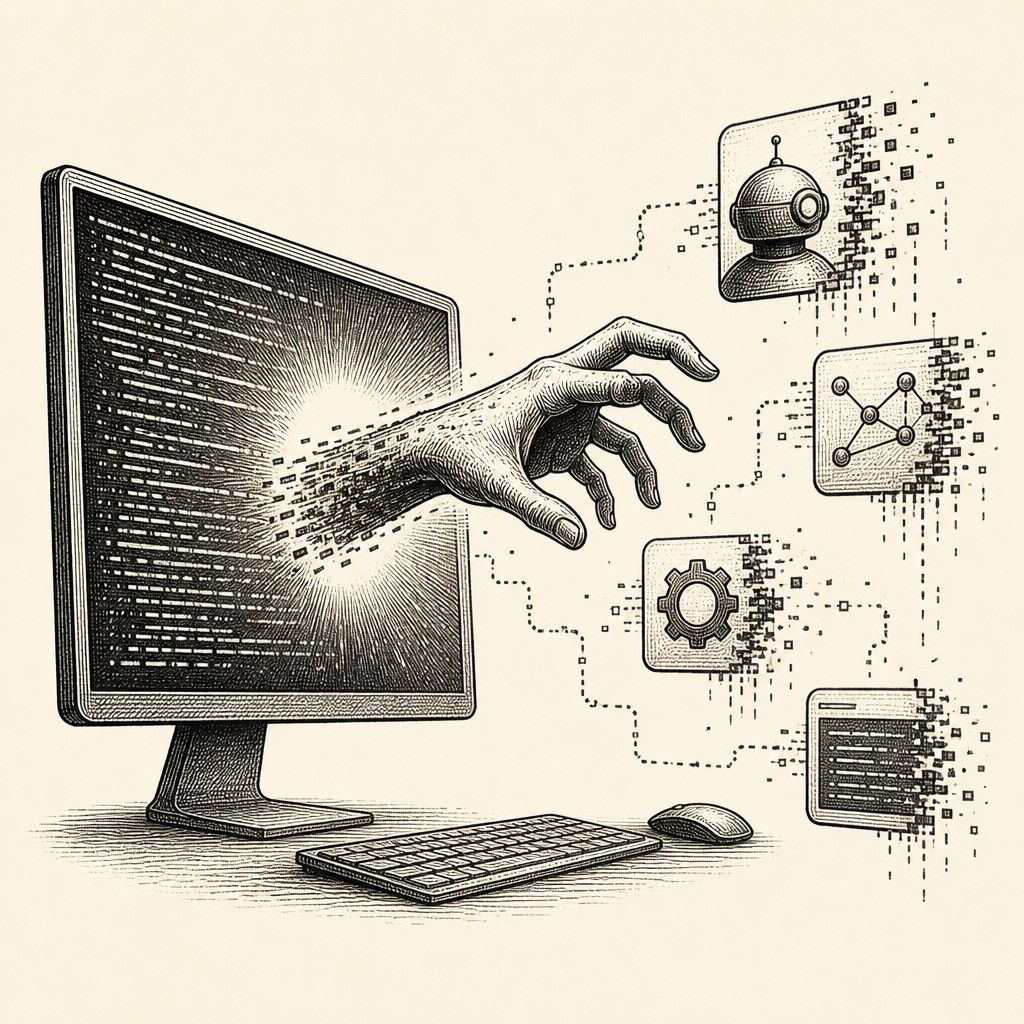
Attackers are actively exploiting the trust developers place in AI coding assistants and integrated developer tools, turning these powerful aids into entry points for credential theft and broader system compromise. A recent threat intelligence report, covering incidents from July 2025 to July 2026, identified 103 distinct cyber incidents linked to AI technologies. The findings indicate a shift from AI-driven autonomous attacks to criminals leveraging AI to enhance familiar malicious tactics such as supply-chain compromises, sophisticated phishing campaigns, and credential harvesting.
The core of these attacks lies in exploiting the extensive access that AI coding assistants and their associated packages already possess. These tools often connect to code repositories, store sensitive credentials, integrate with other business applications, and handle proprietary data. Consequently, a compromise in a seemingly innocuous AI tool or dependency can provide attackers with a direct pathway to exfiltrate data, establish persistent access, and move laterally across an organization's network. Researchers highlighted instances where malicious updates to AI proxy packages enabled credential theft and backdoor installations, while other compromised AI tool packages were used to harvest credentials, steal data, and access cryptocurrency wallets.
A significant trend observed is the abuse of developer trust through seemingly useful extensions. Developers have been tricked into inputting sensitive provider API keys directly into these extensions, which then secretly transmit the keys to attacker-controlled infrastructure. This highlights a critical security gap: the approval of an AI plugin or extension does not guarantee its safety, and the integration of these tools requires rigorous vetting. The report also noted the expansion of the Shai-Hulud worm into Claude Code, demonstrating how malware can adapt to target AI development environments to maintain access and propagate.
Beyond direct tool compromise, attackers are also capitalizing on the high demand for AI products through deceptive online tactics. This includes creating fake download pages, employing search engine poisoning to lure victims, and using "ClickFix" lures to trick users into executing malicious commands. Separate investigations into fake Claude Code installers revealed pages designed to prompt users into running PowerShell commands that ultimately led to credential theft. The prevalence of AI-themed lures saw a notable increase after March 2026, indicating a growing sophistication in social engineering tactics.
The 103 incidents documented by Recorded Future's Insikt Group encompass a range of AI involvements, from AI as an attack tool or delivery mechanism to attacks targeting AI infrastructure itself. While 32 incidents involved AI directly in malware or offensive operations—including state-sponsored intelligence collection using AI to develop or conceal malware—the majority of the remaining 71 covered AI-themed malware delivery or abuse of legitimate AI services. The report clarifies that these figures do not represent 103 fully autonomous AI attacks or breaches of AI providers, but rather documented malicious activities.
Despite the growing threat, fully autonomous AI-driven attacks remain uncommon due to operational risks, reliability issues, and high usage costs. However, AI is proving instrumental in helping cybercriminals maximize the value extracted from stolen data. For instance, the Gentlemen ransomware group has reportedly used language models to analyze victim data and craft more effective extortion demands. The rise of infostealers specifically targeting AI credentials underscores the need for defenders to broaden their focus beyond traditional passwords to include access tokens, refresh tokens, and API keys.
For organizations, the primary defense strategy must revolve around stringent control over what AI coding agents can access and modify. Recorded Future recommends isolating these agents from sensitive systems, mandating approval for critical actions, implementing independent monitoring, and regularly auditing AI dependencies, plugins, and model repositories for malicious code. Proactive monitoring of exposed developer API keys, corporate OAuth tokens, and compromised AI subscriptions is also crucial. The report emphasizes that human-directed automation will likely precede fully autonomous campaigns, making robust access controls and third-party oversight immediate priorities.
The threat landscape is evolving rapidly, with AI tools becoming both targets and weapons. As attackers refine their methods to exploit the trust and access granted to AI coding assistants, organizations must adapt their security postures to account for these new vectors. The focus on human-directed automation and the exploitation of trusted AI integrations signals a new era of cyber threats that demand enhanced vigilance and robust security practices.