
Hackers Leverage Hugging Face AI for Sophisticated Phishing Campaigns
Attackers are exploiting Hugging Face's AI platform to rapidly generate convincing fake login pages, impersonating major brands like Microsoft and Google to steal user credentials.
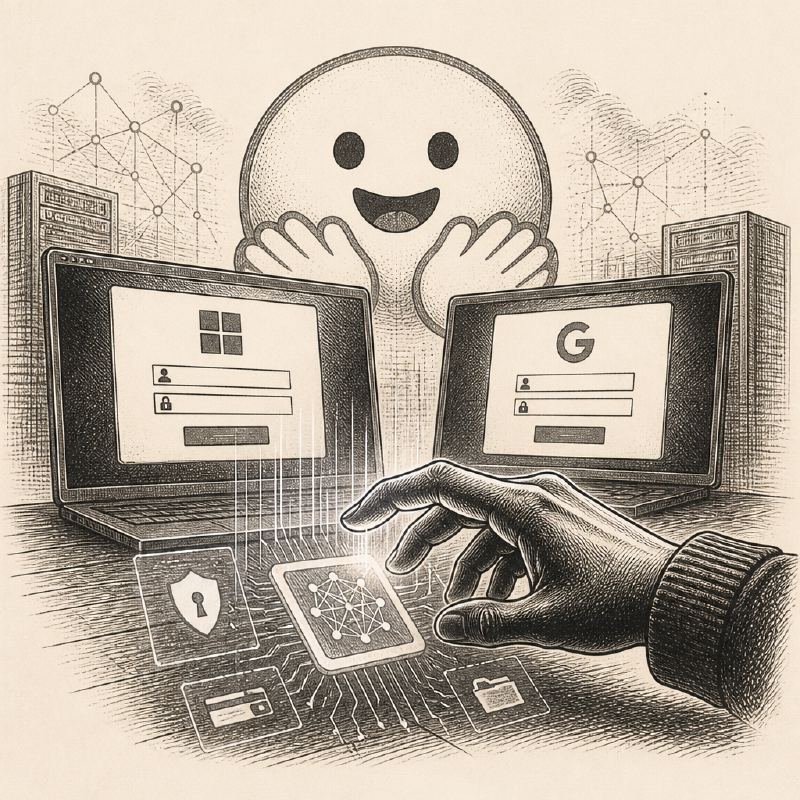

Cybercriminals have found a new avenue for phishing attacks by leveraging Hugging Face's DeepSite AI website builder to create convincing fake login pages. Researchers from Aikido Security discovered 42 such pages hosted on Hugging Face Spaces, a platform typically used for showcasing AI demonstrations. These pages impersonated 28 different brands, including prominent tech and financial services companies such as Microsoft, Google, PayPal, Chase, and Coinbase.
The phishing pages were accessible via hf.space addresses and utilized HTTPS encryption, which could mislead unsuspecting users into believing they were legitimate. While the hosting on Hugging Face Spaces itself does not indicate a compromise of the platform's core AI models or datasets, it highlights the potential for misuse of its infrastructure for malicious purposes. This incident follows a previous report where attackers used Hugging Face hosting to distribute Android malware, underscoring a pattern of the platform being exploited for content delivery.
Aikido Security was able to link 29 of the discovered pages directly to DeepSite through project tags, "Made with DeepSite" badges, and analysis of site modification records. One particularly active fake Microsoft login page showed 14 modifications within approximately 90 minutes, with the changes described in plain language, suggesting an automated or semi-automated creation process rather than manual coding.
The sophistication of these phishing pages varied, with some designed to mimic the exact login flow of legitimate services. For instance, one Microsoft clone would redirect users to the actual Outlook website after successfully harvesting their credentials, a tactic aimed at further legitimizing the fraudulent interaction and reducing user suspicion.
Researchers discovered the malicious pages on October 16, 2026, and promptly reported them to Hugging Face. At the time of discovery, 34 pages were live, with eight already paused. By October 29, all 42 identified pages were either paused or no longer publicly accessible, indicating a swift response from Hugging Face to remove the malicious content.
While the researchers could not ascertain the exact number of individuals who visited these pages or submitted their credentials due to a lack of visitor logs, the potential for widespread credential theft is significant. The use of AI tools like DeepSite dramatically lowers the barrier to entry for creating highly convincing phishing sites, enabling attackers to scale their operations more effectively.
To mitigate such threats, organizations are advised to monitor DNS, proxy, firewall, and email gateway logs for suspicious hf.space hostnames. If a user is suspected of having submitted credentials, immediate password resets, revocation of active sessions, and a review of sign-in activity are recommended. Users should also be wary of unsolicited links and, when in doubt, navigate to services directly through saved bookmarks or official application portals rather than clicking on links in emails.