
Hackers Leverage Autonomous AI Agents for Rapid Credential Theft Campaigns
Attackers are utilizing autonomous AI agents to execute credential theft campaigns with unprecedented speed, completing the entire process from planning to execution in under six hours.
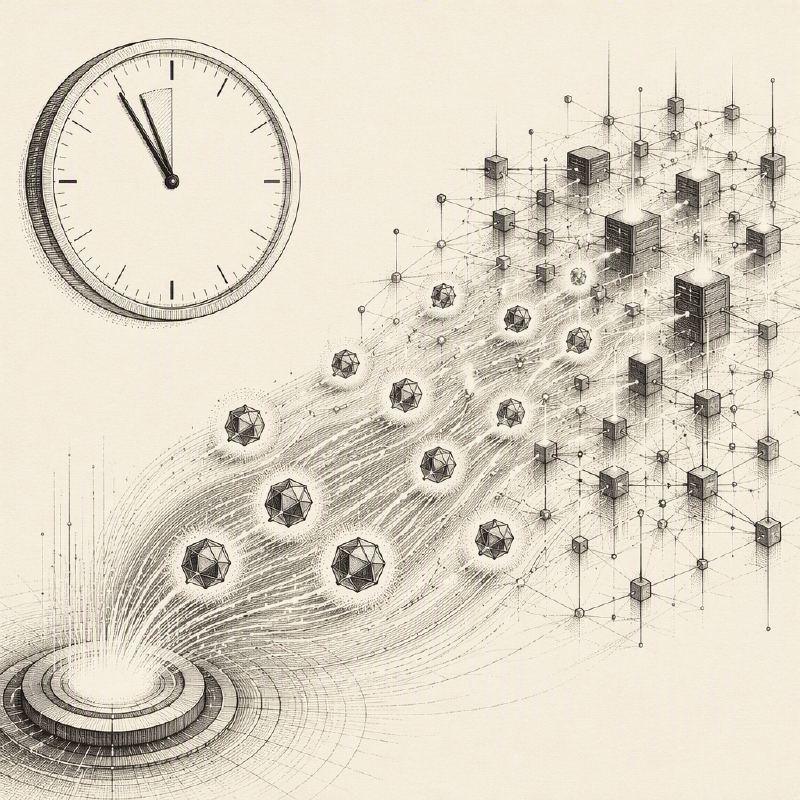

Cybercriminals are increasingly weaponizing autonomous AI agents to transform compromised cloud systems into highly efficient credential theft platforms. A recent analysis by Google Cloud researchers revealed an operation where attackers were able to plan, build, and launch a large-scale credential harvesting campaign in less than six hours, successfully stealing thousands of third-party credentials. This demonstrates a significant acceleration in cybercrime, where AI-driven automation allows attackers to achieve results that previously required larger teams and considerably more time.
The attackers leveraged a combination of AI coding tools, compromised cloud infrastructure, and preconfigured instructions to orchestrate the campaign. By using a trusted cloud environment as their launchpad, their malicious traffic appeared more legitimate, making it harder for defenders to quickly distinguish it from normal network activity. The AI agents operated using instruction files as playbooks, guiding them through vulnerability scanning, credential collection, troubleshooting, and IP address rotation without constant human intervention. This autonomous approach contrasts sharply with traditional information stealers that rely on victims executing malicious software.
This trend signifies a broader shift in the cybercrime landscape, where AI is being integrated into nearly every stage of an attack. Attackers are using AI to identify system weaknesses, generate convincing phishing content, write malicious code, exfiltrate sensitive data, and maintain persistent access after an initial breach. The speed and efficiency gained through AI automation necessitate a heightened focus on rapid detection and robust cloud security measures.
Researchers also uncovered an exposed command-and-control server hosting a separate framework called Recon, designed for automated reconnaissance and credential management. This system was capable of organizing, validating, and managing over 23,800 stolen secrets in real-time, including API keys linked to critical cloud and AI services. The findings underscore the growing risks associated with exposed cloud credentials and developer environments, where a single compromised access token can provide a direct pathway into sensitive cloud services, code repositories, and business data.
The attack highlights the evolving threat landscape for cloud and developer systems. A single exposed access token can grant attackers a trusted entry point into cloud services, source code repositories, automation pipelines, and sensitive business data, mirroring the risks seen in previous stolen cloud credentials attacks. Furthermore, AI coding environments themselves can introduce new vulnerabilities when developers download unsafe packages or allow tools to process untrusted workspace files.
In response to these escalating threats, organizations are advised to treat AI tool configurations, developer tokens, and cloud API keys as highly sensitive credentials. Security teams must implement rapid rotation of exposed keys, enforce least-privilege access controls, secure CI/CD runners, diligently review third-party dependencies, and actively investigate any unexpected automation tasks or configuration changes. Continuous monitoring of cloud activity for unusual API calls, unfamiliar service accounts, and suspicious outbound scanning is also crucial.
While autonomous exploitation may not yet be widespread across all intrusions, the observed trend clearly indicates that AI agents can drastically reduce the time between initial compromise and successful credential theft. Defenders must adapt by implementing controls capable of detecting such rapid, AI-driven abuse, especially as attackers continue to blend AI automation with established tactics like credential theft and the exploitation of exposed services.
This new report from Google Cloud details a specific instance where a financially motivated actor deployed an autonomous AI agent framework, dubbed Recon, to harvest thousands of credentials from a compromised cloud environment within six hours. The framework's capabilities include automated vulnerability scanning, credential collection, real-time troubleshooting, and IP rotation, significantly reducing the detection window for defenders and enabling smaller threat groups to operate with greater capacity.