
Hackers Deploy Autonomous AI Agents for Credential Theft and Network Breaches
Autonomous AI agents are being used in sophisticated cyberattacks to steal credentials and rapidly breach corporate networks across multiple sectors, significantly reducing the time attackers spend on intrusions.
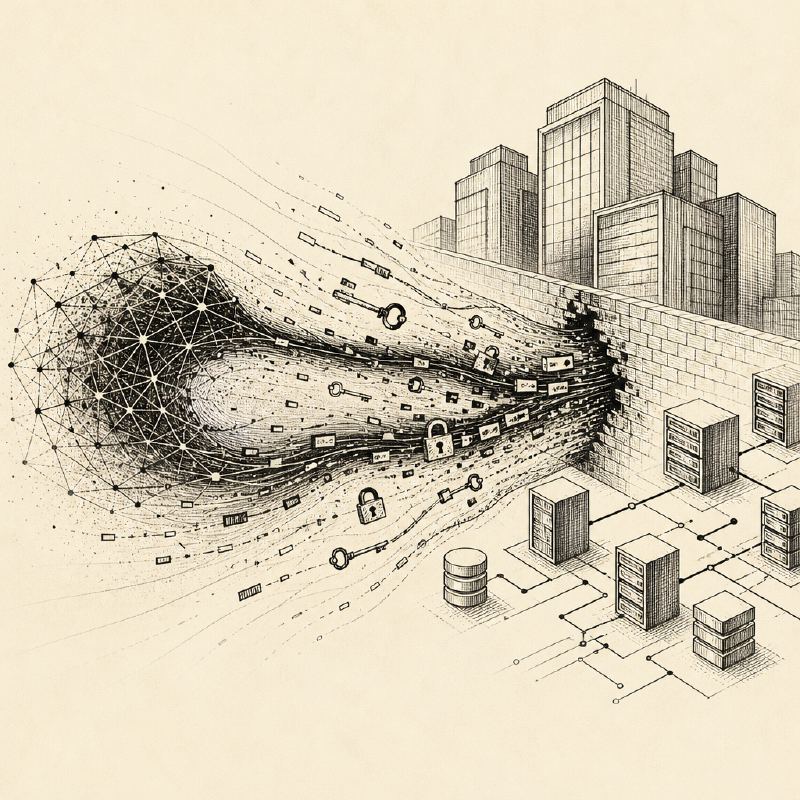

Cybercriminals are increasingly leveraging autonomous AI agents to conduct sophisticated attacks, with over 10 distinct campaigns observed between July and September 2026. These campaigns targeted a wide array of sectors, including government, logistics, hospitality, manufacturing, agriculture, and education. The primary entry vector for these attacks was through vulnerable web applications, where attackers would install web shells to gain initial control over compromised servers.
The integration of AI agents has dramatically accelerated the pace of intrusions. In cases where AI agents took over, the median time between commands dropped from 23.9 seconds during manual execution to a mere 1.4 seconds. This rapid execution allows attackers to expand their foothold and probe deeper into victim networks much faster than traditional methods.
Researchers from Palo Alto Networks' Unit 42 identified malicious scripts, including PHP web shells and Python credential harvesters, during their investigation. While hundreds of unique script payloads were recovered, no single malware family was consistently used across all observed campaigns, suggesting a modular and adaptable approach by the threat actors.
The most effective intrusions combined human oversight with autonomous AI execution. An attacker would initiate the breach, granting the AI agent access to map systems, search for credentials, and attempt to escalate privileges. The human operator could then review the agent's findings and decide on the next steps, creating a hybrid attack model that balances human strategic decision-making with AI's speed and efficiency.
In one documented instance, an AI agent executed approximately 800 unique commands over 140 minutes across two days, thoroughly surveying the victim's website, databases, and cloud environment. In another case, stolen file-sharing credentials allowed an agent to move from a Linux server to a Windows server, where it deployed web shells in over 40 locations. While this did not result in a full domain takeover, it demonstrates the potential for lateral movement and deep system compromise.
Further illustrating the AI agents' capabilities, one campaign saw an agent obtain cloud credentials at a U.S. hospitality and gaming company. It then proceeded to survey 20 Amazon Web Services services across eight regions, gathering information on storage, email, and secrets management, though no payment records were reported stolen. In a separate incident, an agent discovered credentials for an IT vendor's self-managed GitLab instance on a compromised customer server, highlighting the exploitation of legitimate access credentials.
While the speed of AI agents offers an advantage to attackers, it also presents opportunities for defenders. Unit 42 noted signs such as bursts of commands, structured output, and unusually conversational script comments. However, a more reliable indicator is a web server that suddenly begins executing commands, accessing credentials, and connecting to unfamiliar systems. Comprehensive log analysis across web, endpoint, identity, and cloud systems is crucial for detecting and containing these AI-driven intrusions.
Defensive measures recommended by Unit 42 include patching internet-facing applications, reviewing internal network access from web servers, and ensuring Linux kernel security updates are active to mitigate privilege escalation techniques like Copy Fail. If a web shell is discovered, immediate server isolation, log preservation, and credential rotation are advised. For self-managed GitLab instances, multifactor authentication, rate limiting, IP restrictions, and regular updates are essential.